

What is the purpose of a geosynthetics horizontal penetration tester?
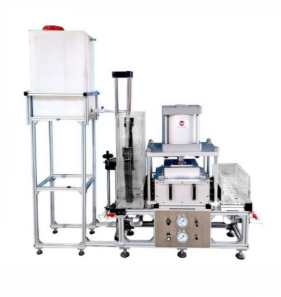
A Geosynthetics Horizontal Penetration Tester is an experimental apparatus designed to evaluate the horizontal water permeability of geosynthetic materials. It is primarily used to determine the capacity of these materials to transmit water in a horizontal direction, allowing for the assessment of their horizontal permeability performance under various hydraulic conditions. During testing, a specimen of the geosynthetic material is secured within a specialized test fixture; water is then forced through the material in a horizontal direction by applying a specific water pressure or hydraulic gradient, while the flow rate and other relevant parameters are measured over a set period.
Operating Principle
First, the geosynthetic material to be tested is cut to the dimensions required by the test standard and subjected to necessary pre-treatment to ensure the surface is clean and the structure remains intact, preventing impurities or external damage from affecting the results. The specimen is then installed into the instrument’s dedicated clamping fixture or test chamber, positioned horizontally as specified. The edges of the specimen are sealed to prevent leakage around the perimeter, ensuring that all water flows exclusively through the material along the intended path. Next, test water is introduced into the instrument’s supply system, which delivers a stable flow or pressure to one end of the specimen. A hydraulic head differential is established between the inlet and outlet ends, driving the water to flow horizontally through the material. As water passes through the pores, inter-fiber gaps, or drainage channels within the geosynthetic, it encounters resistance from the material's internal structure; the resulting flow velocity and rate are influenced by factors such as the material's pore structure, thickness, compression state, and the applied hydraulic gradient. Throughout the test, a pressure control system regulates the inlet pressure or hydraulic head differential to maintain the required hydraulic conditions at both ends of the specimen. Depending on the specific test requirements, various hydraulic gradients or loading conditions can be applied to simulate the horizontal drainage environment the geosynthetic would encounter in actual engineering applications. Once the water flow through the specimen has reached a relatively stable state, the flow rate measurement begins. The water exiting the specimen is collected using a flow-measuring device or a volumetric collection system, and the volume of water discharged over a specified duration is recorded. Simultaneously, the hydraulic head difference across the specimen, the specimen dimensions, the test duration, and relevant environmental parameters are recorded. By measuring the water flow rate and hydraulic gradient, one can analyze the resistance to flow through the specimen and calculate the material's in-plane hydraulic transmissivity. For geosynthetics designed for drainage, water typically flows through internal drainage cores, fibrous structures, or dedicated drainage channels. The instrument simulates specific hydraulic conditions to measure the volume of water the material can transport per unit of time, thereby evaluating its in-plane drainage capacity. For various types of geosynthetics, the test pressure or hydraulic gradient can be adjusted to investigate how the material's hydraulic transmissivity changes under different operating conditions. Upon completion of the test, the water supply system is shut off, the pressure within the test chamber is released, the specimen is removed, and the test data are compiled and analyzed. Based on parameters such as the measured water flow rate, hydraulic head difference, and the effective dimensions of the specimen, the in-plane permeability coefficient, hydraulic transmissivity, or other relevant performance indicators are calculated in accordance with applicable testing standards to produce the final test results.
Applications
This instrument is primarily used to assess the in-plane hydraulic transmissivity of geosynthetics, evaluating the capacity for water to flow through the material's internal pores, inter-fiber gaps, or dedicated drainage channels. By controlling the hydraulic head difference and flow conditions during the test and measuring the volume of water passing through the specimen over a given period, the material's hydraulic transmissivity under specified hydraulic conditions can be determined. This testing is particularly critical for geosynthetics designed for in-plane drainage, as it evaluates the material's ability to effectively transport water—which may accumulate within an engineering structure—horizontally toward a designated drainage outlet. In projects such as roads, railways, tunnels, and underground construction, geosynthetic drainage materials often serve the function of collecting and conveying seepage water. This instrument can be used to evaluate the in-plane drainage capacity of such materials, assess the continuity of their internal drainage channels, and determine whether they can maintain stable water-transport performance under specific hydraulic conditions. The data obtained from these tests help determine the suitability of a material for use in engineering drainage systems, thereby reducing the risks of water accumulation, increased pore-water pressure, or structural damage caused by inadequate drainage capacity. For geocomposites—composed of geotextiles, drainage cores, and other functional layers—drainage performance depends not only on the structure of the materials themselves but also on how these layers are combined and the nature of the internal drainage space. This instrument is designed to measure the overall horizontal water-transmitting capacity of geocomposites, allowing for the evaluation of how individual structural layers influence fluid transport. By conducting comparative tests on various products or structural configurations, one can analyze the impact of material thickness, internal pore structure, and drainage channel design on water-transmitting performance, thereby providing a basis for the product design and performance optimization of composite drainage materials. The water-transmitting capacity of geosynthetics can be influenced by factors such as hydraulic gradient, material structure, specimen thickness, and external operating conditions. The instrument allows for the configuration of specific hydraulic conditions in accordance with relevant test methods; it can be used to perform multiple tests on a single material, or to conduct comparative evaluations across different types, specifications, or production batches. By comparing water flow rates and related performance parameters under various test conditions, one can analyze the behavioral patterns of a material’s hydraulic performance, as well as assess its stability and range of applicability.
Significance
The application of the Geosynthetics Horizontal Penetration Tester is of great significance for enhancing the quality testing of geosynthetics, ensuring the effective operation of engineering drainage systems, and improving the safety and durability of geotechnical projects. By providing quantitative measurements of a material’s horizontal water-transmitting capacity, the instrument enables a scientific assessment of its drainage performance. It offers reliable data support for quality control by manufacturers, product inspection by testing agencies, technical research by scientific institutions, and material selection by construction entities. Furthermore, it helps promote the standardization and scientific rigor of geosynthetic testing technologies, fosters the development and application of high-performance geosynthetics, and contributes positively to improving construction quality, extending the service life of infrastructure, and reducing maintenance costs.