

How should the AATCC Viewing Board be used?
The AATCC Viewing Board is a professional tool used for the color evaluation and visual comparison of textiles. It is primarily employed in the textile, apparel, dyeing and printing, and quality inspection industries. It is typically used to observe the color appearance of fabrics, yarns, fibers, or dyed samples under standardized lighting and background conditions, enabling inspectors to determine whether a color difference exists between a sample and a reference standard.
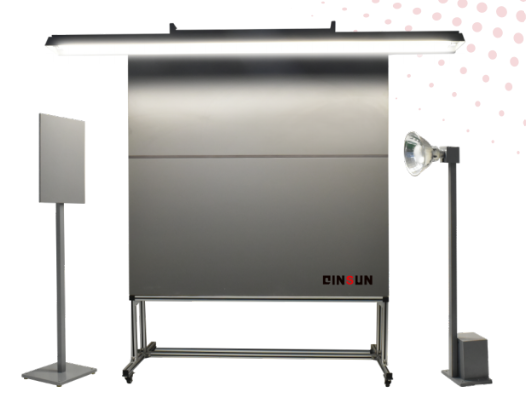
Operating Procedure
Begin by inspecting the AATCC Viewing Board—including its structural components, light tubes, power supply, and sample-securing mechanisms—to ensure that the lighting functions reliably and that the viewing area is illuminated uniformly. Prepare the fabric or apparel samples to be tested, along with the corresponding AATCC standard reference samples. Ensure that the test samples have undergone the specified washing, drying, and conditioning processes in accordance with the relevant standards, so that their condition meets the testing requirements. Additionally, verify the testing environment; minimize interference from natural light or other external light sources to ensure consistent observation conditions. Power on the equipment, activate the lighting switch, and confirm that the standard light source is operating correctly. Utilize the specific light source required by the equipment configuration and the applicable test standard. The viewing area must be illuminated evenly, avoiding localized areas that are too bright or too dark. Turn off any other lights that might affect the observation, thereby reducing external interference with the assessment of the sample’s color and surface texture (such as wrinkles). Place the pre-washed and dried test samples onto the viewing board and secure them according to the requirements of the specific test method. For flat fabric samples, maintain the prescribed orientation and ensure the fabric lies naturally; for apparel samples, use the appropriate securing devices or display methods as required by the test protocol. During mounting, ensure the sample remains in its natural state—do not stretch, flatten, or iron it, as this could alter its original appearance. Once secured, check the sample to ensure it is not improperly positioned, twisted, or folded. With the sample properly mounted, conduct the observation under the specified lighting conditions. Inspectors should focus on identifying any wrinkles, creases, wavy distortions, or localized unevenness on the fabric surface. Furthermore, observe the quantity, size, depth, and distribution of any wrinkles present. For sewn samples, it is necessary to inspect for any puckering, shrinkage, or distortion along the seams. For pressed samples, one must observe whether the original creases remain sharp and intact. An overall assessment is conducted to determine if there are any significant changes in the sample's appearance following the washing process. This constitutes the most critical step when using the AATCC Viewing Board. Inspectors must select the appropriate AATCC standard reference replicas corresponding to the specific test criteria and compare the test sample against these replicas under identical lighting conditions. By evaluating the degree of surface wrinkling, smoothness, and overall appearance, the inspector assigns the standard grade that most closely matches the test sample. Once the observation and grading are complete, the results must be promptly recorded—including the sample ID, fabric type, test standard, number of wash cycles, processing conditions, final grade, test date, and the name of the inspector. If multiple samples from the same batch are tested, each must be evaluated and graded individually, with results compiled and reported in accordance with the applicable test standards to facilitate future quality analysis and traceability.
Application Value
By observing and grading fabric smoothness, seam puckering, and the retention of pressed creases, one can promptly identify issues such as wrinkling, distortion, or surface unevenness that may arise after washing. This helps enterprises determine whether a product meets its intended appearance quality requirements, thereby enhancing the overall quality of textiles and apparel. Traditional visual inspection of fabrics often relies on the individual experience of the inspector, making it susceptible to variations in the viewing environment, lighting conditions, and subjective judgment. The AATCC Viewing Board provides a standardized environment for lighting and observation; when used in conjunction with standard reference replicas, it ensures a more consistent testing process and minimizes discrepancies in judgment between different inspectors. During fabric development and garment design, this equipment can be used to assess how various factors—such as fiber composition, fabric structure, dyeing and finishing processes, and post-processing treatments—affect the final appearance of a product. For instance, by comparing fabrics treated with different anti-wrinkle finishes, one can evaluate their smoothness after washing, providing a basis for optimizing fabric formulations and production processes. During the production of textiles and the manufacturing of garments, issues such as wrinkling and seam distortion can arise due to improper washing, drying, or processing techniques. Regular appearance grading allows for the early detection of potential quality defects, enabling companies to adjust production processes in a timely manner. This helps prevent substandard products from reaching the market and reduces the risks associated with rework, product returns, and customer complaints. The visual quality of a garment directly influences the consumer's purchasing experience and the brand's image. By implementing standardized appearance testing, companies can better control the post-wash appearance of fabrics and finished garments, ensure consistent product quality, strengthen consumer trust in the brand, and ultimately enhance market competitiveness.
Summary
The AATCC Viewing Board is primarily used to evaluate the appearance quality of textiles after washing through the use of standardized lighting and visual comparison. By following standardized procedures, companies can effectively assess fabric smoothness, seam appearance, and crease retention. This facilitates the formalization of appearance inspection processes, improves the consistency of quality grading, and provides a reliable basis for textile research and development, production, and quality control of finished goods.