

How Does a Flame Radiant Protective Tester Evaluate Thermal Protection Performance?
In the fields of modern industrial safety and personal protective equipment (PPE), thermal hazards are among the most severe challenges faced by firefighters, metallurgical workers, and personnel working in the petrochemical industry. When exposed to the dual threats of high-temperature flames and intense thermal radiation, the performance of protective materials is directly related to the life safety of the users.As a key piece of equipment for evaluating the flame and radiant heat protection performance of flame-retardant fabrics and protective clothing, the Flame Radiant Protection Performance Tester plays a critical role in assessing the core protective properties of these materials. With its high-precision simulation capabilities and rigorous testing standards, it has become an essential tool for safeguarding the safety of personnel working on the front lines.
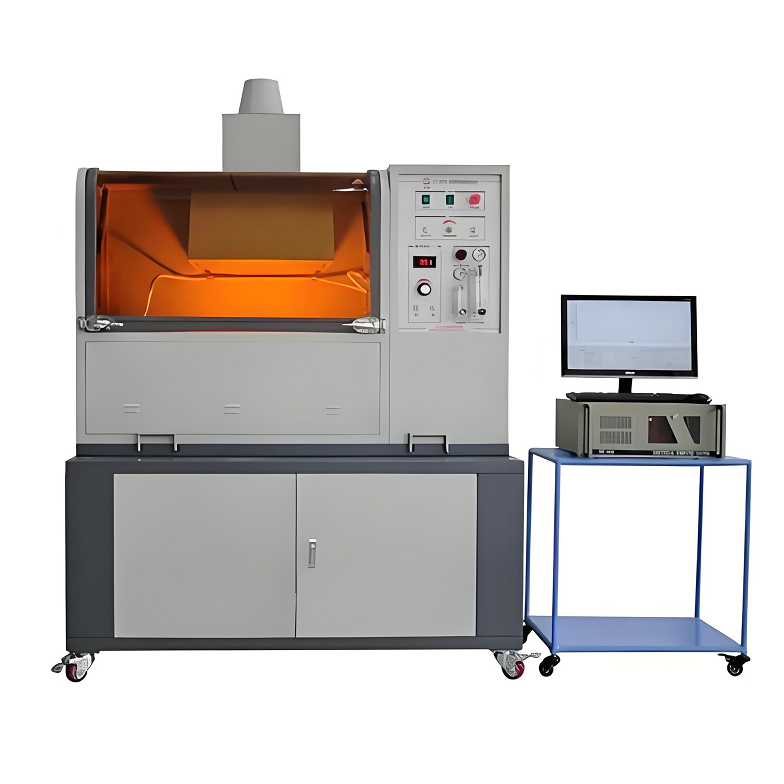
Core Principle: Simulating Real-World Fire Conditions
The Flame Radiant Protection Performance Tester is designed to reproduce the thermal exposure conditions encountered in real fire environments under controlled laboratory conditions. Unlike conventional testing methods that rely on a single heat source, this instrument can simultaneously provide convective heat and radiant heat.
Its operating principle is based on the physical mechanism of energy transfer. The instrument is typically equipped with a high-energy gas burner to generate convective heat, together with a quartz tube heater or metal radiant panel to produce radiant heat. By precisely controlling the proportion of these two heat sources, the tester can simulate different heat-flux conditions corresponding to various stages of a fire, ranging from flashover to fully developed combustion.
During the test, a multilayer fabric specimen is fixed in front of the sensor. Heat penetrates through the fabric and is transferred to a copper calorimeter or sensor positioned behind the specimen. The system continuously records the temperature-rise curve in real time. When the temperature on the back surface of the sensor reaches the critical level associated with a second-degree burn to human skin, the instrument automatically stops the timer. The cumulative heat exposure measured during this period is used to determine the material's Thermal Protective Performance (TPP) value.
This dual-heat-source configuration significantly improves the realism of the test. In an actual fire environment, heat is transferred not only through air convection but also through intense infrared radiation. Testing with only a single heat source may therefore fail to fully represent the actual protective performance of protective clothing. The Flame Radiant Protection Performance Tester addresses this limitation by combining convective and radiant heat sources to provide a more realistic evaluation of thermal protection performance.
Technical Advantages: The Integration of Precision and Intelligence
With the continuous development of sensor technology and automated control systems, modern Flame Radiant Protection Performance Testers have achieved significant improvements in both testing accuracy and ease of operation.
High-Precision Heat Flux Control: Advanced models employ closed-loop feedback systems to effectively maintain stable heat flux levels. Whether simulating low-intensity thermal exposure encountered in routine working environments or reproducing high-intensity, extreme fire conditions, these systems can keep measurement deviations within a very small range, ensuring the repeatability and comparability of test results.
Intelligent Data Acquisition: Built-in high-frequency data acquisition systems can capture temperature changes at the millisecond level. Combined with dedicated software, the system can not only automatically calculate and generate TPP values, but also plot complete heat-transfer curves. This enables researchers to analyze the thermal insulation efficiency of materials over different periods of exposure.
Multi-Function Compatibility: Modern testers are typically designed with multiple test ports or interchangeable fixtures, allowing them to evaluate both single-layer flame-retardant fabrics and multilayer garment systems consisting of an outer shell, waterproof and breathable layer, and inner lining. Some high-end models are also equipped with cooling systems that can simulate the effect of sweat evaporation on thermal protection performance, making the test results more representative of actual conditions when the garment is worn.
Safety Protection Mechanisms: Since testing involves open flames and high temperatures, these instruments are generally equipped with safety features such as gas leakage alarms, automatic over-temperature shutoff, and emergency stop buttons. These protective mechanisms provide comprehensive safety for laboratory personnel during operation.
Wide-Ranging Applications: From Standards Development to Product Research and Development
The applications of the Flame Radiant Protection Performance Tester extend far beyond routine quality inspection. It plays an important role throughout every critical stage of the protective clothing industry chain.
During the research and development stage, materials scientists use this equipment to screen and evaluate advanced flame-retardant fibers, such as aramid, polybenzimidazole (PBI), and pre-oxidized acrylic fibers. By comparing the TPP values of blended fabrics with different fiber ratios, researchers can optimize material structures with the goal of developing fabrics that are lightweight and comfortable while providing excellent thermal insulation and protection. For example, emerging biomimetic nanocomposite materials have been evaluated using such testing equipment to verify their ability to form protective char layers under extreme thermal radiation and their effectiveness in blocking heat transfer.
During manufacturing and quality control, the tester is an essential tool for verifying whether products comply with applicable international standards. Major safety standards, such as NFPA 1971 for structural and proximity firefighting protective clothing, NFPA 2112 for flame-resistant garments for protection of industrial personnel against short-duration thermal exposures from fire, and EN ISO 17492 for heat transmission on exposure to both flame and radiant heat, specify thermal protection performance testing requirements involving this type of equipment. Products must undergo the required testing and meet the applicable criteria before they can obtain the relevant certification and enter the target market.
The tester also plays an important role in accident investigation and service-life evaluation. By conducting residual thermal protection performance tests on retired protective clothing, engineers can assess the degree of material degradation after repeated washing, wear, and minor thermal exposure. The resulting data provide a scientific basis for establishing appropriate retirement criteria and help reduce the risk of safety incidents caused by declining protective performance.
Future Outlook: Toward More Advanced Thermal Protection
As fire scenarios become increasingly complex and new material technologies continue to advance, Flame Radiant Protection Performance Testers are also undergoing continuous development and upgrading. Future developments will place greater emphasis on dynamic simulation and multidimensional performance evaluation.
On the one hand, testing instruments will incorporate a wider range of test variables, enabling thermal protection performance to be evaluated under conditions involving different wind speeds, humidity levels, and mechanical tensile states. This will help simulate the actual mechanical and thermal conditions encountered by firefighters during dynamic activities such as running and climbing.
On the other hand, with the integration of artificial intelligence algorithms, test data can be combined with images of material microstructures to establish performance prediction models. This could make it possible to predict the macroscopic thermal protection performance of new materials during the early stages of material development, significantly shortening the research and development cycle.
In addition, environmental protection and sustainability are becoming increasingly important areas of focus. Future testing methods are expected to place greater emphasis on evaluating the release of toxic substances and degradation products from bio-based flame-retardant materials under high-temperature conditions, helping ensure that protective equipment meets environmental sustainability requirements throughout its entire life cycle.
Conclusion
The Flame Radiant Protection Performance Tester is far more than a conventional testing instrument. It serves as an important bridge connecting materials science with human life safety. Every precise test represents an effort to identify and mitigate potential risks in advance, while every reliable set of test data contributes to protecting the lives of personnel working on the front lines.As technology continues to advance, continuously improving thermal protection testing methods and pushing the performance limits of protective equipment are essential steps in addressing fire-related hazards and enhancing public safety. For companies and organizations committed to improving industrial safety, investing in and effectively utilizing advanced flame and radiant heat protection testing technologies is not only a means of meeting applicable compliance requirements, but also an important way to place the highest value on human life and safety.