

Why Is a Zipper Torsion Tester Important for Quality Control?
Zippers, as essential fastening components in everyday products such as garments and luggage, have torsional resistance that directly affects the service life of the products and the user experience. The Zipper Torsion Tester is a specialized instrument designed to evaluate the torsional strength of zippers. By simulating torsional conditions encountered during actual use, it provides a scientific basis for zipper material selection, structural optimization, and quality control.
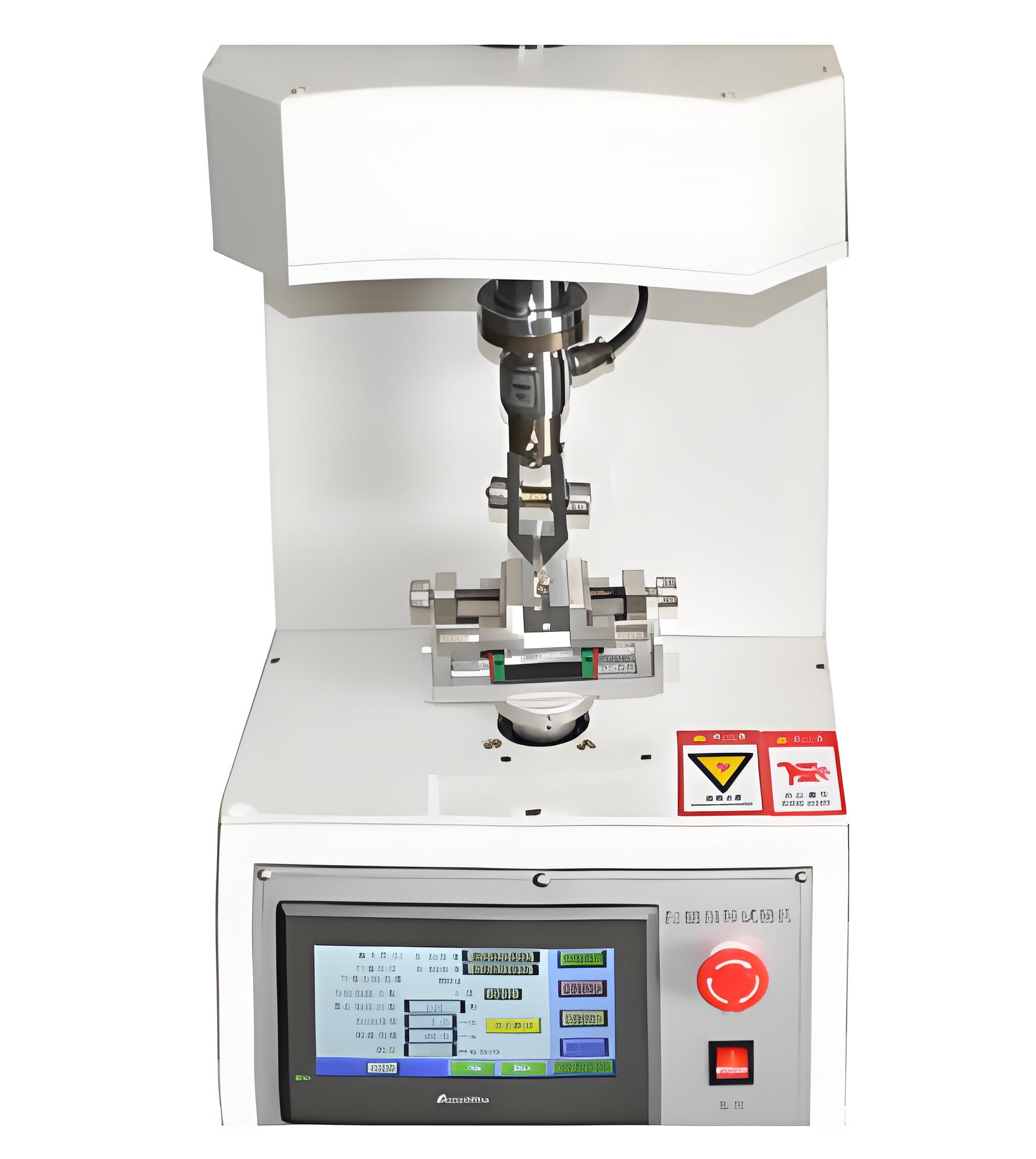
Equipment Design and Principle: Precise Coordination of Torque and Angle
1. Working Principle
The core principle of the Zipper Torsion Tester is based on dual control of torque loading and angle measurement. The equipment uses an electric servo system to drive the rotary fixture, applying a controllable torque to the zipper slider or teeth, while a high-precision angle encoder records the torsion angle in real time. During the test, the torque sensor converts the mechanical force into an electrical signal, and the data acquisition system synchronously records the torque-angle curve. By analyzing characteristic parameters of the curve, such as yield torque, maximum torque, and torsion angle, the mechanical performance of the zipper under torsional loading can be evaluated.
2. Structural Design
The core structure of the Zipper Torsion Tester consists of the following components:
Main Machine Frame
The tester adopts a horizontal layout, which helps minimize measurement errors caused by the self-weight of the specimen and imbalance during clamping. The equipment base plate is generally made of aluminum alloy, providing both easy cleaning and stable support.
Drive and Transmission System
Power source: Stepper motor or servo motor;
Reduction mechanism: Low-noise gearbox to ensure smooth operation and controllable rotational speed;
Output end: Torsion head/fixture mounting shaft, capable of forward and reverse rotation at any angle.
Clamping System
A dedicated stainless-steel torsion fixture is used to accommodate zipper sliders or pulls of different specifications. The fixed end and rotating end work together to ensure effective torque transmission while preventing slippage.
Sensing and Measurement Unit
High-precision torque sensor: Measures and records torque values in real time;
Angle encoder: Precisely tracks the rotation angle;
Some models are equipped with an integrated computer-based force measurement system supporting peak value hold and automatic tracking functions.
Control and Human-Machine Interaction System
The tester adopts a touchscreen operation interface with menu-based control. It supports multiple test modes, including constant-load testing, constant-angle testing, and torsional failure testing.
The built-in controller enables closed-loop control and data recording. A printer and/or computer interface can be optionally provided for report output and online data analysis.
Auxiliary Components
The equipment is equipped with safety limit devices and an emergency stop switch. Some models are fitted with a protective enclosure, and the entire machine incorporates a grounding protection structure.
Practical Applications and Significance of the Zipper Torsion Tester
1. Simulating Actual Use Conditions and Verifying Torsional Durability
During actual use, zippers in garments, luggage, and other products are frequently subjected to repeated torsional forces during opening, closing, lifting, and handling. Such forces may cause problems such as misalignment of zipper teeth, tape breakage, or slider jamming.The Zipper Torsion Tester can simulate alternating clockwise and counterclockwise torsion, such as ±180° or ±360° cycles. Combined with a preset rotational speed, such as several tens of cycles per minute, and a specified number of cycles, such as tens of thousands of cycles, the tester can effectively reproduce the fatigue process that occurs during long-term use of a zipper. It can determine whether zipper teeth become detached or the zipper tape tears after repeated opening and closing, helping ensure that the zipper meets requirements for everyday use.
2. Quantifying Key Performance Indicators and Optimizing Product Design
Maximum Torque Capacity
By gradually increasing the torsional force, the tester determines the ultimate torque value before zipper failure and evaluates its resistance to torsional damage. For example, it can be used to determine whether the zipper of a mountaineering backpack can withstand sudden pulling forces during lifting.
Torsional Fatigue Life
The tester records the condition of the zipper after completing a specified number of cycles, such as 50.000 cycles, under a defined torsion angle and frequency. This helps determine whether problems such as loss of elasticity, zipper tooth wear, or slider loosening have occurred.
Functional Recovery After Torsion
The zipper is tested to determine whether it can still open and close normally after being subjected to torsional loading, thereby evaluating its structural stability. For example, a garment zipper can be checked to determine whether it still slides smoothly after being twisted.
3. Improving Product Quality Control
Raw Material Selection
Zippers made with different materials, such as metal and plastic zipper teeth, can be compared under the same torsional conditions to identify more durable material combinations.
Basis for Process Improvement
Failure modes observed during torsion testing, such as zipper tooth misalignment and tape breakage, can provide guidance for optimizing manufacturing processes. For example, manufacturers can adjust zipper tooth spacing or improve the weaving process of the zipper tape.
Batch Consistency Testing
Samples from the same production batch can be subjected to torsion testing to verify that product performance meets specified requirements and reduce quality problems caused by individual variations.
4. Meeting Industry Standards and Certification Requirements
The Zipper Torsion Tester can be used to conduct tests in accordance with applicable international or industry standards, such as ASTM and ISO standards, helping manufacturers meet relevant quality and certification requirements. Typical applications include:
Garment Industry:
Testing the durability of zippers under repeated torsional loading to help ensure compliance with applicable safety requirements for children's clothing.
Luggage Industry:
Verifying the torsional resistance of zippers during lifting, handling, and transportation to meet relevant transportation testing requirements.
Outdoor Products Industry:
Evaluating zipper torsional performance under challenging environmental conditions, such as low temperatures and high humidity, to ensure that product functionality meets specified requirements.
5. Promoting Product Innovation and Differentiated Competition
Based on data obtained from torsion testing, manufacturers can develop differentiated zipper products with specialized performance characteristics:
High-Elasticity Zippers:
Suitable for wearable devices and other applications requiring frequent bending and deformation while maintaining normal functionality.
Anti-Jamming Zippers:
Slider structures can be optimized to reduce opening and closing resistance after torsional deformation.
Lightweight Zippers:
Material consumption can be reduced while maintaining torsional durability, thereby lowering the overall weight of the product.
6. Reducing After-Sales Risks and Costs
By identifying torsional fatigue defects in zippers at an early stage, manufacturers can reduce the risk of product returns, recalls, and other issues caused by zipper failures after products enter the market. This helps minimize potential damage to brand reputation as well as repair and after-sales costs.For example, a luggage manufacturer may discover through torsion testing that the zipper tape is prone to tearing. By promptly adjusting its supplier or improving the zipper specification, the manufacturer can reduce the occurrence of zipper-related after-sales complaints.
In conclusion, the Zipper Torsion Tester, as a professional testing instrument, plays a crucial role in the quality control, performance evaluation, and R&D innovation of zipper products. Its application value and importance deserve our in-depth attention and systematic understanding. If you would like to learn more about the specific technical parameters, applicable testing standards, practical application cases, or other detailed product information of this equipment, please feel free to contact us directly. We are always ready to provide comprehensive and professional answers and support.