

What is the Elastic Tape Fatigue Testing Machine?
In daily life and industrial production, elastic bands may seem insignificant, but they play a crucial role. From the comfortable fit of waistbands in underwear, to the secure wrapping of sports shoe openings, and the precise fixation provided by medical bandages, the elastic durability of elastic bands directly determines product service life and user experience. However, repeated stretching and contraction can easily cause rubber band breakage, elasticity degradation, or permanent deformation. To quantify these performance characteristics, the Elastic Band Fatigue Testing Machine was developed and has become an indispensable quality control instrument in the textile, apparel, and medical industries.
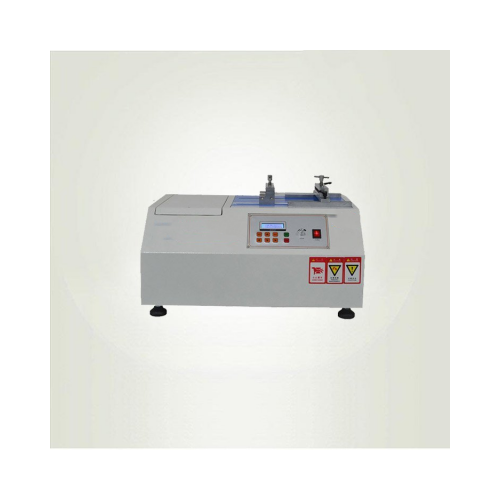
Core Principle: Simulating Real Wearing Conditions
The core concept of the Elastic Band Fatigue Testing Machine is “accelerated aging.” It simulates the thousands of stretching and recovery cycles that elastic bands undergo during actual use through a mechanical system. The equipment is typically composed of a drive system, fixture assembly, control system, and data acquisition module.
During operation, the test specimen is fixed between the upper and lower fixtures. The drive motor moves the fixtures back and forth through an eccentric cam or connecting rod mechanism according to the preset stroke. For example, the elastic band can be stretched to 1.5 times its original length and tested at a cycling frequency of 60 cycles per minute. This high-frequency mechanical movement can simulate months or even years of wearing wear within a short period, enabling rapid evaluation of the material’s fatigue resistance performance.
Why Ordinary Tensile Testing Cannot Replace Fatigue Testing
The actual failure of elastic bands is often caused by cumulative damage from repeated stretching and recovery cycles rather than a single tensile breakage. The fatigue testing machine simulates this process through high-frequency cyclic loading, and its core value lies in reproducing the material performance degradation patterns under real usage conditions.
A common misconception in the market is that static tensile testing is equivalent to fatigue testing. In fact, the former can only reflect the instantaneous strength, while the latter can capture progressive failure characteristics such as reduced elastic recovery rate and the expansion of structural micro-cracks.
When determining whether a testing machine meets the requirements, the test standards’ requirements for cycle count, frequency, and deformation mode should be clarified first, rather than simply comparing basic parameters such as maximum load.
Application Scenarios of the Elastic Band Fatigue Testing Machine
1. Raw Material Incoming Inspection and Production Quality Control
During the raw material receiving stage, manufacturers conduct fatigue tests on samples woven from different batches of latex threads and spandex yarns to select high-quality elastic materials. During production, semi-finished products are randomly inspected to optimize weaving density and elastic arrangement processes. Before final product delivery, fatigue tests are performed according to national standards to strictly control elastic durability, reducing after-sales issues caused by elastic relaxation and failure after products are delivered.
2. Incoming Material Inspection for Apparel and Footwear Manufacturers
Underwear manufacturers and sports footwear companies use elastic band fatigue testing as a mandatory incoming inspection item. Samples from supplier batches are tested, and only materials that meet fatigue performance requirements are approved for production. This prevents problems such as loss of elasticity, loose waistbands, and detached shoe openings during short-term use of finished products.
3. Product Research and Development Optimization
R&D engineers use the testing machine for comparative experiments by adjusting spandex content, fabric structure, and covered yarn ratios, and comparing the elastic recovery data of different elastic band formulations after fatigue testing. For elastic bands used in low-temperature outdoor protective equipment, fatigue testing helps optimize rubber material ratios, improve defects such as breakage caused by repeated stretching in cold environments, and shorten the product development cycle.
4. Medical Elastic Bandage Performance Verification
Medical elastic bandages require long-term repeated stretching during wrapping and fixation applications. The fatigue testing machine is used to verify the elasticity stability of bandages after multiple stretching and recovery cycles, preventing loss of fixation performance caused by relaxation during clinical use and ensuring compliance with relevant testing requirements for medical device accessories.
5. Quality Inspection, Failure Analysis, and Material Research
Market supervision authorities conduct quality inspections of apparel products by sampling finished products and performing fatigue tests on the integrated elastic bands to identify inferior products. When companies receive feedback regarding elastic relaxation issues, they can reproduce fatigue tests with samples to accurately locate defects in raw materials or weaving processes and implement targeted product improvements. Textile material laboratories also use the equipment for fatigue mechanism research on spandex elastic materials, studying the effects of yarn composition and weaving processes on elastic durability, supporting the development and training of new environmentally friendly elastic fibers.
Large Differences in Testing Requirements Between Webbing and Rubber Bands: How to Avoid Selecting the Wrong Equipment Type
The key difference in elastic band fatigue testing lies in the material characteristics. Webbing usually requires evaluation of repeated tensile fatigue in warp and weft directions, while rubber bands focus more on elastic recovery performance. If the two testing requirements are confused, problems such as mismatched fixture designs or insufficient testing frequency ranges may occur.
Key Selection Points for Different Materials:
Webbing Materials:
A webbing fatigue testing machine equipped with multi-directional fixtures should be selected to ensure it can simulate the multi-angle forces experienced during actual use.
Rubber/Elastic Band Materials:
An elastic band fatigue tester with constant tension control is required, with emphasis on elastic recovery rate testing functions.
Composite Materials:
A dynamic fatigue testing system with modular fixtures should be considered, allowing convenient switching between different testing modes.
Testing Standards Are Often Overlooked:
Medical elastic bands must meet the reciprocating test cycle requirements specified in YY/T standards, while industrial webbing focuses more on breakage fatigue testing under ASTM/DIN standards. Before equipment selection, the product export destination or industry-specific regulatory requirements must be clearly defined.
When a testing application involves both tensile strength and fatigue life evaluation, a universal material testing machine can perform basic tests, but a professional fatigue testing machine provides better performance in terms of data acquisition accuracy and long-term operational stability. The choice requires balancing testing requirements and equipment investment costs.
In summary, with the rapid development of functional elastic webbing, the demand for highly elastic, wear-resistant, and low-temperature weather-resistant elastic bands continues to grow. The industry is becoming increasingly strict in controlling product fatigue durability indicators. In the future, elastic band fatigue testing machines will develop toward intelligent solutions featuring integrated high/low-temperature environmental testing, independent speed control for each station, AI-based automatic residual elongation measurement, and cloud-based test data storage. These advancements will further improve simulation accuracy of real operating conditions and testing automation, continuously supporting process optimization and product quality improvement in the elastic webbing industry, while promoting standardized and high-quality development of the textile auxiliary materials sector.