
Tel:+86-21-6780 0179
Fax:+44(0) 207 398 0999
Email:market@qinsun-lab.com

Elastic Tape Fatigue Testing Machine
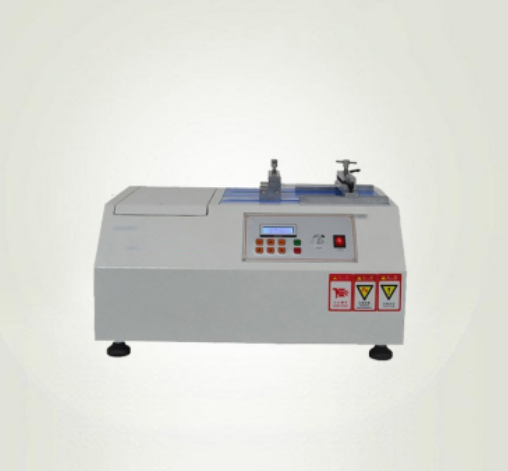
This instrument is used to test the elasticity of elastic belt after reciprocating movement.
Application
Elastic Tape Fatigue Testing Machine is used to determine its repeatedly extend performance under maximum extension for elastic fabric and elastic band, also can be used to determine fatigue resistance of extensible material.
Standards
SATRA TM103:2018 Resistance of elastics to repeated extension
Features
Drive the elastomer sample to repeatedly elongate until it reaches effective growth limit. Regularly evaluate the damage and stop test when it reaches test times or damage exceeded a predetermined level.
Technical Parameters
| Parameter | Specification |
|---|---|
| Sample set | 1 set |
| Maximum stroke | 150mm |
| Test clip width | 170mm |
| Speed | (65±5) cpm |
| Counter | Six-digit LCD display, 0 —— 999.999 |
| Volume | (60×30×40) cm |
| Weight | About 50kg |
| Power supply | AC220V 50Hz |
Accessoriess
1 machine unit
1 power cord
1 instruction manual
1 delivery note
1 packing list
Test Procedures
1. Sample Pre-treatment
Cut a sample to fit the 170mm test clamp width and place it in a standard environment (23±2℃, relative humidity 50±2%, or 20±2℃, relative humidity 65±2%) for 24 hours.
2. Equipment Preparation
Connect to a 220V 50Hz AC power supply, check the overall status of the instrument, clear the test station, and ensure the equipment is free of any abnormalities.
3. Parameter Setting
Set the parameters through the instrument panel – the maximum stroke should not exceed 150mm, and the test speed should be adjusted to (65±5) cpm. Then, set the target number of cycles using the six-digit LCD counter (e.g., 10000 cycles).
4. Sample Installation
Securely clamp the pre-treated sample onto the test clamp, ensuring that the sample is subjected to even force and is not loose or skewed.
5. Start Testing
After confirming that the parameter settings and sample installation are correct, start the instrument to begin the reciprocating tensile test.
6. Process Monitoring
Regularly observe the sample status during the test and record any abnormalities such as damage or breakage.
7. Test Termination
The test automatically stops when the instrument reaches the preset number of cycles, or the test is manually terminated if the sample damage exceeds the standard (e.g., breakage rate > 10%).
8. Result Recording
Record the actual number of cycles using the LCD counter, and also record in detail any damage or breakage of the sample.