

What is the methods used for testing Anti-drill friction?
With the rapid growth of the down-filled and cold-weather apparel market, consumers are increasingly demanding higher levels of comfort and aesthetic quality in clothing. Down leakage has become a critical factor affecting product quality and user experience. To scientifically quantify the ability of fabrics to prevent the penetration of down and feathers, the Down Leakage Tester (Friction Method) was developed.As an essential instrument in the field of textile testing, this equipment is specifically designed to simulate the compression, rubbing, and frictional forces experienced by down-filled products during actual use. Through a standardized testing procedure, it accurately evaluates the down-proof performance of outer fabrics and lining materials, providing reliable data support and technical assurance for quality control of down jackets, cold-weather garments, and bedding products.
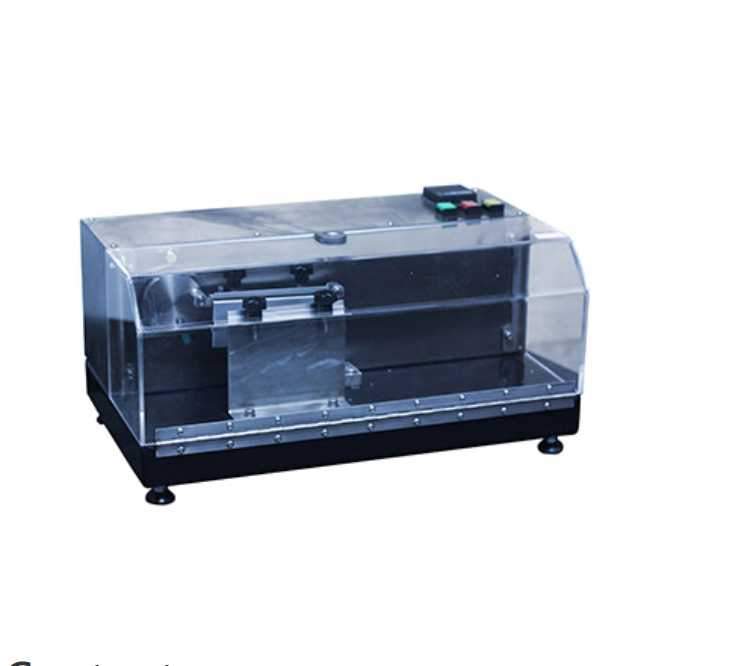
Key Features of the Down Leakage Tester (Friction Method)
The core feature of the Down Leakage Tester (Friction Method) is its ability to simulate the compression and rubbing actions that down-filled products experience during actual wear. The equipment uses a mechanical drive system to move the filled test specimen bag along an elliptical trajectory, applying frictional forces to promote down penetration. The number of escaped down or feather fibers is then counted to evaluate the fabric’s down-proof performance.
Simulation Mechanism:
The instrument uses a combination of fixed and movable clamps to drive the specimen in a regular elliptical motion, generating continuous compression, rubbing, and friction between the fabric layers. This effectively reproduces the stress conditions and mechanical actions encountered during real garment use.
Test Object:
The tester is specifically designed for evaluating the outer fabrics and lining materials of down-filled products. Finished garments can also be cut and prepared into bag-shaped specimens for direct testing, allowing assessment of their ability to prevent the penetration of down clusters and feather fibers.
Operation Method:
A specified amount of down filling material is placed inside the specimen, which is then covered with a collection bag. The entire test process is conducted inside a transparent protective cover. After testing, the escaped fibers can be directly observed and counted to determine the down leakage level.
Control Features:
The system adopts microprocessor-based control to accurately manage the movement cycles. It is equipped with automatic start/stop functions, digital counting display, and horizontal calibration capabilities, ensuring stable and repeatable friction testing conditions.
Result Evaluation:
The down-proof performance is qualitatively or semi-quantitatively evaluated based on the visible number of down or feather fibers that penetrate through the fabric. A lower number of escaped fibers indicates better fabric barrier performance and stronger resistance to down leakage.
How to Use the Down Leakage Tester (Friction Method)
The core operation process of the Down Leakage Tester (Friction Method) includes: specimen preparation and filling → installation into the tester → test setting and operation → counting and evaluation. The instrument simulates the friction and compression between fabrics during actual use to assess the down leakage resistance of textile materials.
1. Test Procedure
Specimen Preparation:
Cut the fabric specimen according to the specified dimensions and sew it into a sealed test bag. The stitching must comply with requirements to prevent additional needle holes from affecting the test results.
Filling and Sealing:
Place the specified amount of down or feather filling material into the specimen bag, then securely seal the opening. Gently pat and shake the specimen to ensure the filling material is evenly distributed and remains fluffy.
Protective Bag Installation:
Place the specimen bag into a specially designed smooth plastic collection bag, which is used to collect down and feather fibers that completely penetrate through the fabric. Ensure that the outer bag is properly fitted without wrinkles.
Specimen Installation and Fixing:
Place the specimen covered with the plastic collection bag between the instrument clamps. Adjust the distance between the upper and lower clamps according to the specimen thickness, then securely fix the specimen in position.
Starting the Test:
Close the transparent safety cover, set the required friction cycles, and start the motor. The instrument drives the specimen along an elliptical trajectory, producing repeated friction and compression movements.
Removing the Specimen:
After the test is automatically completed, remove the specimen bag and the outer plastic collection bag from the instrument and separate them carefully.
Result Calculation:
Under standard lighting conditions, count the number of down or feather fibers collected inside the outer plastic bag, as well as the number of fibers protruding from the specimen surface beyond the specified length. The total number of escaped fibers is calculated by adding both values together.
2. Important Precautions
Environmental Requirements:
Before testing, specimens should be conditioned under standard atmospheric conditions until moisture equilibrium is reached, ensuring consistent testing conditions.
Safety Protection:
Do not open the transparent protective cover during operation to prevent mechanical injury and avoid affecting the prescribed test motion.
Reuse of Filling Material:
The same batch of filling material should only be used for one complete test cycle and must not be reused for repeated testing.
Counting Requirements:
Penetrated fibers should be removed and counted individually to avoid duplication or omission. If the number of escaped fibers exceeds the specified limit, the test may be terminated and recorded according to the evaluation criteria.
Advantages of the Down Leakage Tester (Friction Method)
The key advantages of the Down Leakage Tester (Friction Method) lie in its ability to accurately simulate localized friction conditions during daily wear, quantitatively evaluate the down-proof performance of fabric materials, and provide standardized operation with highly repeatable results. It is widely applicable for fabric/lining material development, quality inspection, and incoming material control.
Key Advantages
Highly Targeted Simulation of Real Wearing Conditions:
The tester uses elliptical reciprocating friction motion (typically 2.700 cycles) to accurately reproduce the repeated friction conditions that occur in areas such as cuffs, shoulders, and back during actual garment use. Compared with the tumble method, which simulates overall rolling and impact, the friction method focuses more specifically on localized mechanical stress and fabric-to-fabric abrasion.
Focused Evaluation of Fabric Material Performance:
The test is conducted using standardized fabric specimens (such as a 170 × 120 mm filled down pouch), eliminating the influence of stitching, needle holes, and garment construction. It directly reflects the down-proof capability of the fabric structure, coating treatment, and finishing processes, making it more suitable for source-level quality control within the supply chain.
Accurate Quantitative Data Evaluation:
The instrument directly counts the number of down or feather fibers that penetrate through the fabric. The test results are objective, with low data variation, making it convenient to establish strict numerical grading standards (for example, ≤5 escaped fibers indicating excellent performance) and suitable for laboratory research and comparative analysis.
Controlled and Efficient Operation:
The tester features automatic counting and programmed stop functions. Testing parameters such as friction pressure, movement speed, and stroke distance are precisely controlled, reducing human errors. With a short testing cycle, the equipment is suitable for large-scale screening and quality evaluation of fabric materials.
Wide Applications of the Down Leakage Tester (Friction Method)
The Down Leakage Tester (Friction Method) is mainly used to simulate friction conditions during actual garment wear and quantitatively evaluate the ability of fabrics and lining materials in down-filled products to prevent filling materials from penetrating through the fabric. It is widely applied in fabric research and development, production quality control, and finished product inspection.
Main Applications
Raw Material Incoming Inspection:
The tester is used for batch inspection of outer fabrics and lining materials for products such as down jackets and bedding covers, helping manufacturers identify and select fabrics with excellent down-proof performance.
Process Verification and Optimization:
It is used to evaluate the influence of different fabric structures, weaving densities, coating technologies, and quilting methods on down leakage resistance, providing guidance for production process improvements and optimization.
Finished Product Quality Control:
The equipment can test down leakage performance of finished garments or semi-finished products after simulated friction, serving as an important reference for final product quality acceptance and compliance evaluation.
Overall, the Down Leakage Tester (Friction Method) plays a crucial role in the quality control of down-filled products and has broad application prospects. With increasing consumer expectations for product quality and continuous improvement of industry standards, this testing method will become increasingly important in future industry development due to its advantage of accurately simulating real wearing friction conditions.The tester not only helps manufacturers precisely evaluate the down-proof performance of fabrics but also provides scientific and reliable data support for product development, process optimization, and quality management. Therefore, the development trends of this testing technology and equipment are worthy of continuous attention. For more information about its testing principles, application solutions, or product specifications, please feel free to contact us. Our professional team is available to provide detailed technical support and services.