

What is the MMT Liquid Water Separation Tester?
The MMT Liquid Water Separation Tester is a precision testing instrument specifically designed to accurately evaluate the liquid water separation efficiency, surface repellency, and overall anti-permeation performance of various materials under defined conditions. By simulating real-world water contact and pressure scenarios, the tester quantitatively measures a material’s ability to resist water penetration or adhesion, providing essential data for material development and quality control.This instrument is widely applied across multiple key fields, including:Textile industry: Testing the water-repellent performance of fabrics.Medical protective equipment: Verifying barrier properties.Chemical industry: Assessing the durability of sealing materials.Research institutions: Studying material characteristics.As such, the MMT Liquid Water Separation Tester is an indispensable analytical tool in modern industrial production and scientific research.
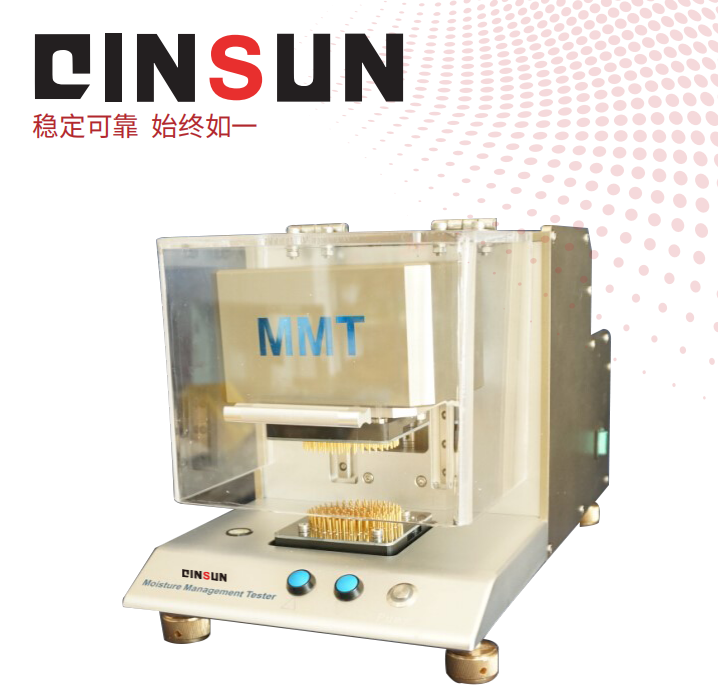
Applications of the MMT Liquid Water Separation Tester
The MMT Liquid Water Separation Tester is a precision instrument specifically designed to evaluate the behavior of liquids under defined conditions, with a particular focus on analyzing oil-water separation efficiency or the demulsification performance of emulsions. Its core applications span multiple industries, including petroleum extraction, chemical production, and power supply, primarily serving oil quality testing and monitoring purposes.
In assessing the anti-emulsification performance of petroleum and synthetic fluids, the tester simulates the natural separation process of oil-water mixtures in a static state, accurately measuring the time required for complete separation of the oil and water phases or recording the volume of any residual emulsion layer. This provides a scientific evaluation of oil cleanliness and its stability under actual operational conditions.
The instrument strictly adheres to multiple international and domestic standard testing methods, including ASTM D1401. GB/T 7305-2003. and GB/T 7605-2008. and is suitable for testing the water separation characteristics of various industrial oils, such as turbine oils, hydraulic oils, and cutting fluids.
In the maintenance of industrial equipment lubrication systems—particularly in critical sectors like power generation and petrochemical industries—the tester helps technicians accurately determine whether lubricating oil has deteriorated due to water ingress, enabling timely replacement and effectively preventing abnormal wear or operational failures caused by insufficient lubrication.
In oil production quality control and R&D, this instrument is commonly used for factory inspection and formulation optimization, ensuring that final products possess excellent anti-emulsification properties and meet high market and application standards.
Industries Applicable for the MMT Liquid Water Separation Tester
The MMT Liquid Water Separation Tester is primarily used to evaluate the separation ability of liquids—especially oils or synthetic fluids—from water, and is widely applied in industries that require strict control over liquid purity and anti-emulsification performance. Key applicable industries include:
Petroleum and Chemical Industry
Used to test whether petroleum products such as lubricating oils, hydraulic oils, and fuel oils are prone to forming emulsions with water during use, ensuring normal operation of equipment lubrication systems.
Power and Energy Industry
In equipment such as steam turbines and hydro turbines, it is essential to prevent lubricating oil from emulsifying with cooling water, thereby ensuring safe and efficient operation of the units.
Manufacturing and Industrial Maintenance
Used to monitor the water separation characteristics of industrial synthetic fluids, such as cutting fluids and quenching oils, preventing corrosion or degradation of processing quality due to emulsification.
Environmental Protection and Water Quality Monitoring
Applied in wastewater treatment and oil-water separation efficiency evaluation to assist in assessing the effectiveness of pollutant separation.
Research and Quality Control Laboratories
Used as a standard testing instrument for material R&D, product certification, and compliance testing according to national standards such as GB/T 7605 and GB/T 7305.
This type of instrument typically conducts tests in accordance with standards including GB/T 7605-2008 (Determination of Demulsibility of Steam Turbine Oils in Operation) and GB/T 7305-2003 (Determination of Water Separation of Petroleum and Synthetic Fluids).
Standards Complied with by the MMT Liquid Water Separation Tester
The MMT Liquid Water Separation Tester is primarily used to evaluate the absorption, diffusion, and transmission performance of textile fabrics against liquid water. According to the latest information, the device complies with the following standards:
GB/T 21655.2-2019
Chinese National Standard: Textiles — Evaluation of Moisture Management Properties — Part 2: Liquid Water Transmission Performance. This is the current valid version, replacing the earlier 2009 edition.
GB/T 21655.2-2009
The previous edition of the Chinese National Standard. Although replaced by the 2019 version, some enterprises or historical data may still reference this standard.
AATCC 195
Standard of the American Association of Textile Chemists and Colorists: Liquid Moisture Management Properties of Fabrics Test Method. This is widely recognized internationally.
SN 1689.1
Swiss National Standard applicable for liquid moisture management testing; some references indicate that this standard applies to this instrument.
Operating Procedure of the MMT Liquid Water Separation Tester
1. Sample Preparation
First, prepare textile specimens according to the required specifications. Use cutting tools to precisely cut standard square samples measuring (90±1) mm × (90±1) mm, ensuring smooth edges. Place the cut specimens flat and horizontally between the upper and lower sensors of the MMT tester. Make sure the fabric surface is wrinkle-free and in good contact with the sensors to ensure accurate test data.
2. Test Solution Preparation
Prepare the test solution used to simulate human sweat in accordance with relevant standards. Typically, a 0.9% sodium chloride (NaCl) solution is used, or a standard solution formulated according to specific standards (e.g., GB/T 21655.2 or AATCC 195). Ensure the solution concentration is precise to maintain consistent test conditions and comparable results.
3. Test Initiation
Using a micropipette, accurately dispense 20 μL of the test solution at the center of the specimen’s upper surface. Immediately after applying the liquid, start the MMT tester. The instrument automatically begins operation, with the upper and lower sensors simultaneously monitoring and recording real-time changes in electrical resistance caused by liquid contact, penetration, and diffusion.
4. Automated Data Collection
Once the test starts, the instrument continuously collects data over the set 2-minute test period. Key performance parameters recorded and analyzed include:
Initial wetting time of the upper and lower surfaces of the specimen.
Dynamic changes in water absorption rate on both surfaces.
Maximum wetting radius achieved on the upper and lower surfaces.
Diffusion rate of liquid water within the fabric.
Accumulated unidirectional water transport index (R value).
Overall OMMC (Overall Moisture Management Capacity) reflecting the fabric’s liquid water management performance.
5. Result Output and Performance Grading
After the test, the instrument’s built-in software automatically processes the collected data to generate a comprehensive test report, including all recorded parameters. The report provides numerical values for each parameter and automatically evaluates and classifies the fabric’s liquid water separation and transmission performance according to pre-set grading standards (e.g., “Very Fast,” “Excellent” as defined in Table 10.1), giving users an intuitive assessment of fabric performance.
The Most Suitable Method for Separating Oil and Water
Gravity Separation Method
As a classic and widely applied physical separation technique, gravity separation is generally considered one of the preferred methods for treating oil-water emulsions, particularly in mixed fluids such as produced fluids from oil wells.
The core principle relies on the natural density difference between the components of the mixture (e.g., oil and water). Because oil and water have significantly different densities, in a static or low-velocity flow state, the heavier water phase naturally settles under its own weight, while the lighter oil phase rises and accumulates.
This gravity settling effect allows effective preliminary separation of oil and water without the need for complex chemical additives or high energy consumption. The process is relatively simple and cost-effective, making it widely used in industries such as petroleum, chemical production, and wastewater treatment.
Importance of the MMT Liquid Moisture Management Tester
The MMT Liquid Moisture Management Tester is important because it can accurately evaluate the dynamic transport performance of liquids (such as sweat) through fabrics. This capability is critical in the development and quality control of functional textiles, especially sportswear, outdoor gear, and smart textiles. Its core significance is reflected in the following aspects:
1. Quantifying Fabric Comfort Performance
The MMT measures multiple indicators, including wetting time, water absorption rate, maximum wetting radius, diffusion rate, unidirectional water transport ability, and Overall Moisture Management Capacity (OMMC). These data are directly related to the wearer’s sensation of dryness and thermal comfort during physical activity or in high-temperature environments.
2. Supporting High-Performance Apparel Development
Through MMT testing, manufacturers can optimize fabric structures (e.g., using innovative materials like Janus fiber membranes) to achieve Directional Liquid Transport (DLT), improving sweat-wicking efficiency and accelerating drying.
3. Compliance with Industry Standards and International Norms
MMT testing methods are based on authoritative standards such as AATCC 162. and the results are widely used for textile grading and certification, ensuring reliable and comparable product performance.
4. Efficient and Automated Testing Process
A single test takes approximately 2 minutes to obtain multidimensional data. The instrument’s automated sensor control and protective housing minimize human error and improve laboratory efficiency.
5. Promoting Innovative Material Applications
In biomimetic material research (e.g., Janus membranes mimicking plant leaf structures), the MMT is a key tool for validating liquid management performance, supporting the development of high-throughput and highly efficient functional textiles.
In summary, the MMT Liquid Moisture Management Tester is an advanced analytical tool that plays an indispensable role not only in evaluating the performance of current functional fabrics but also as a core technical means for advancing the development and innovation of new smart textile materials. By precisely measuring and analyzing liquid separation characteristics, the instrument provides scientific guidance for optimizing fabric functionality, thereby promoting the textile industry toward greater efficiency and intelligence.