

How to use the Textile Far Infrared Radiation Temperature Rise Tester?
The Textile Far Infrared Radiation Temperature Rise Tester is a high-precision instrument specifically designed to scientifically evaluate the temperature response characteristics of various textile materials under far-infrared radiation. By measuring the actual temperature rise on the surface or within the structure of textiles after absorbing far-infrared radiation at specific wavelengths, the device accurately assesses the far-infrared heating performance and overall thermal effect of the material. The primary purpose of this instrument is to systematically and objectively analyze the temperature rise behavior and heat transfer characteristics of textiles under far-infrared radiation, providing reliable and quantifiable indicators and analytical data for evaluating the thermal functionality of materials.
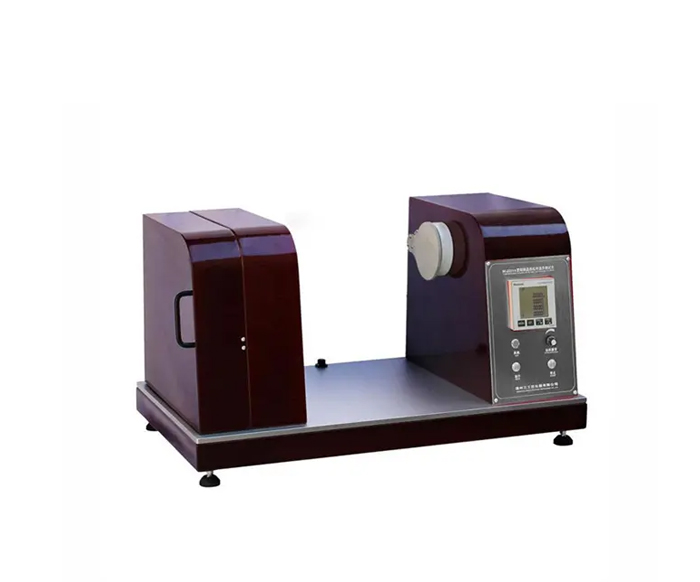
Detailed Operating Procedures
The tester measures the far-infrared emissivity performance of textiles within the typical wavelength range of 5–14 μm. Its core measurement principle is based on blackbody radiation law. The sample is compared with a reference high-emissivity blackbody plate at the same set temperature to accurately calculate the normal emissivity of the sample.Step-by-step Operation:
Sample Preparation:
Cut textile samples to the required size (e.g., 20 × 20 cm) according to relevant standards. Ensure samples are clean, free of stains and wrinkles to avoid interference with infrared emission and measurement results.
Device Preheating and Calibration:
Connect to a 220V/50Hz power supply and turn on the main switch. Place a standard blackbody plate (emissivity ≥0.95) on the heating platform and set the plate temperature precisely (typically 34 ± 0.1℃). Allow the system to reach thermal equilibrium (approximately 15–20 minutes). Measure and record the radiation intensity of the blackbody as a reference for subsequent calculations.
Sample Testing:
Place the prepared sample flat on the same heating platform, ensuring full contact. After the sample reaches thermal equilibrium with the heat plate (typically 3–5 minutes), measure the far-infrared radiation intensity using the same detection system.
Emissivity Calculation:
According to Kirchhoff’s law of thermal radiation, emissivity ε is defined as the ratio of sample radiation intensity to blackbody radiation at the same temperature: ε = I_sample / I_blackbody. Modern instruments feature built-in calculation modules that automatically compute and display emissivity values on the touchscreen (typically 0.10–0.99. with basic error ≤ ±0.02).
Data Recording and Output:
Test results can be printed via a wireless thermal printer, exported to Excel or PDF files, or transferred to a computer via wired connection. The device supports bilingual operation (Chinese/English) and can locally store at least 1.000 test records, including sample ID, date, time, temperature, and emissivity values. High-end models support integration with laboratory management systems for automatic data upload and centralized management, reducing errors and improving workflow efficiency.
Precautions
Environment: Conduct testing in a stable environment without strong air currents or direct sunlight, with ambient temperature maintained around 23 ± 2℃ to ensure thermal equilibrium.
Blackbody Maintenance: Regularly inspect and clean the blackbody surface to maintain emissivity ≥0.95.
Sample Representativeness: Measure multiple points (3–5) on the same sample and take the average to minimize local variation effects.
Safety: Use dedicated clamps or heat-resistant gloves when handling samples on the heated platform to prevent burns.
Factors Affecting Equipment Selection2
Core performance: temperature range, measurement accuracy (≤ ±0.02 for ε > 0.50. precision ≤0.1%), response time, and wavelength coverage (5–14 μm).
Optical and geometric parameters: optical resolution (D:S ratio), focusing and alignment features.
Emissivity calibration and compatibility with blackbody reference sources.
Environmental adaptability: interference resistance, stable operation across typical lab/industrial temperatures (10–40℃), protection level, and accessory support.
Intelligent operation and data management: output interfaces (RS232/RS485. analog 0–10V/4–20mA, WiFi), touchscreen control, bilingual interface, editable data, printing, alarms, and closed-loop temperature control.
Core Advantages
Accurate Quantification of Functional Performance:
Measures the actual surface temperature rise (“radiation temperature rise”) to reflect the efficiency of textiles in converting absorbed energy into far-infrared thermal radiation. This is a key indicator for validating the effectiveness of functional textiles, such as those containing ceramic powders or minerals, and supports scientific verification of claims such as “warming” or “promoting blood circulation.”
High Precision and Stability:
Measurement wavelength: 5–14 μm (covering the optimal far-infrared range for human absorption)
Emissivity range: 0.1–0.99. error ≤ ±0.02 (ε>0.50)
Heat plate control: 34 ± 0.1℃, plate and sample diameters ≥60 mm for consistent conditions
Equipped with PLC + Windows system, touchscreen, and wireless data transfer for ease of use and efficient data management
Industry Compliance and Consumer Protection:
Provides objective and repeatable testing, helping prevent exaggerated claims in the functional textile market. Brands, quality inspection institutions, and consumers can verify product performance using third-party testing. Data from this instrument supports R&D, production quality control, and compliance with industry standards (e.g., FZ/T 73036-2010 for knitted thermal underwear), ensuring reliable product claims and enhancing brand credibility.
In summary,the Textile Far Infrared Radiation Temperature Rise Tester is an essential tool for evaluating the temperature rise of functional textiles under far-infrared radiation, a critical indicator of thermal and therapeutic performance. It features intelligent operation, touchscreen and PLC systems, wireless data management, bilingual interface, and report printing capabilities. It is suitable for material development, production line quality control, and market compliance testing, providing authoritative, objective data to validate functional claims, making it a key instrument for R&D and testing of far-infrared functional textiles.