

Absolute Method Retro-Reflective Coefficient Tester,ASTM E810
The Absolute Method Retro-Reflective Coefficient Tester is an instrument designed for the precise measurement of the photometric properties of retroreflective materials. Its primary objective is to determine the coefficient of retroreflection—a value that indicates a material’s ability to return incident light back toward its original direction. Its core function is to provide critical data support for traffic safety and industrial quality control.
The instrument delivers objective, reliable, and traceable testing data for material research and development, product certification, engineering acceptance, and regulatory formulation. It is an indispensable tool for safeguarding public safety and improving product quality.
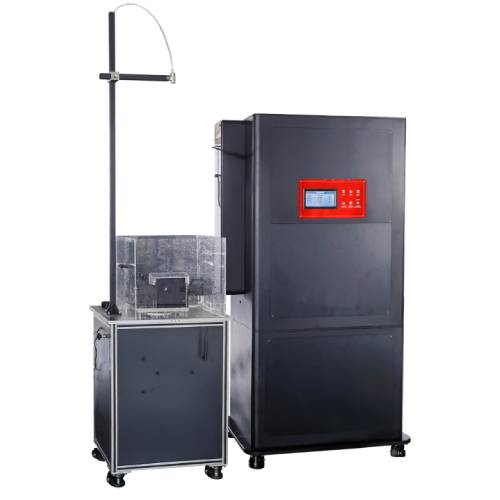
Working Principle
This type of tester is based on the absolute measurement method, meaning it does not rely on calibration using a standard reference panel. Instead, it directly calculates the retroreflective characteristics of the tested surface through built-in light sources and detectors with known photometric parameters. The operational process is as follows:
Light Emission
A built-in standard light source (typically a halogen lamp with a color temperature of 2856 ± 50 K, simulating vehicle headlights) illuminates the tested surface at a specified incidence angle (such as 88.76° or 4°).
Reflected Light Reception
A photoelectric detector receives the light returned from the tested surface at a standard observation angle (such as 1.05° or 0.2°), ensuring compliance with the geometric conditions specified in international standards such as those issued by the International Commission on Illumination (CIE), ASTM International (ASTM), and the Standardization Administration of China (GB/T 18833).
Photoelectric Conversion and Signal Processing
The received optical signal is converted into an electrical signal by a high-sensitivity photoelectric sensor and then digitized through a high-precision A/D conversion circuit.
Calculation of the Retroreflective Coefficient
Based on the known luminance of the light source, the detector response function, and geometric parameters, the instrument directly calculates the retroreflective coefficient (RR) without the need for an external calibration panel.
Output and Storage
Results are displayed in real time (unit: mcd·m⁻²·lx⁻¹). Data can be stored in built-in memory (such as an 8GB or 16GB SD card) and exported to a computer or printed via Bluetooth.
Operating Procedure
1. Preparation Stage
Instrument Preparation
Ensure the tester is in normal working condition.
Check that the battery level or power supply connection is adequate.
Confirm that the retroreflection test head (typically spherical or conical) is clean and undamaged; clean or replace it if necessary.
Test Sample Preparation
Select representative test samples, typically reflective sheeting used on road signs.
Ensure the sample surface is clean, undamaged, and compliant with relevant standards.
2. Setting Test Parameters
Select Test Mode: Choose the appropriate testing mode according to requirements (e.g., standard mode, high-precision mode).
Set Test Conditions:
Set the test angle (commonly 0°, 20°, or 45°, depending on relevant standards and requirements).
Configure illumination conditions, including light intensity and illumination duration.
3. Conducting the Test
Install Sample: Properly mount the test sample on the fixture, ensuring close contact between the sample and the test head without noticeable gaps.
Start Test: Activate the instrument and begin testing according to the preset parameters. Monitor for abnormal conditions (such as instrument alarms or sample displacement).
Data Recording: During testing, the instrument automatically records measurement data (including retroreflective coefficient values). Ensure accurate documentation of test time and environmental conditions (such as temperature and humidity).
4. Result Analysis and Reporting
Data Processing: After completion, the instrument displays or prints the retroreflective coefficient values. Data processing software may be used to calculate statistical indicators such as mean value and standard deviation to evaluate sample consistency and performance.
Test Report: Prepare a test report including the test date, sample information, test conditions, results, and necessary charts or data analysis. Submit the report to relevant authorities or clients as required.
5. Cleaning and Maintenance
Instrument Cleaning: After each use, clean the test head and instrument surface to prevent residue from affecting subsequent measurements. Use dedicated cleaning agents and tools; avoid materials that may damage the instrument surface.
Maintenance Inspection: Regularly inspect mechanical components and electronic parts to ensure proper operation. Perform periodic maintenance and calibration according to the manufacturer’s recommendations.
By following the above procedures, the Absolute Method Retro-Reflective Coefficient Tester can be effectively used for accurate performance evaluation and quality control.
Main Application Areas
1. Road Traffic Signs and Markings
Used to evaluate the retroreflective performance of traffic signs, delineators, anti-collision barrels, guardrails, and other traffic safety facilities under vehicle headlight illumination.
2. Quality Control of Reflective Materials
Applicable to manufacturers of reflective sheeting, reflective fabrics, and reflective coatings for factory inspection and R&D testing.
3. On-Site Acceptance by Road Construction and Maintenance Units
Used to verify the retroreflective performance of newly installed or repaired road markings and traffic signs.
4. Safety Protective Equipment Testing
Evaluation of retroreflective performance for personal protective equipment such as reflective vests and garments, playing a significant role in pedestrian safety research.
5. Scientific Research and Standard Development Support
Used to study the influence of surface texture (such as the macro- and micro-texture of asphalt pavement) on retroreflective characteristics and to establish related mathematical models.
Differences Between the “Absolute Method” and the “Relative Method”2
In the specialized field of retroreflective coefficient measurement, the essential differences between the absolute method and the relative method are mainly reflected in three key dimensions: the fundamental difference in calibration approach, the selection of measurement reference, and the distinction in applicable scenarios.
Absolute Method
As a reference measurement method, the most significant characteristic of the absolute method is that it is entirely based on the fundamental principles of the International System of Units (SI) for direct measurement. The entire process does not rely on any known standard sample.
This method directly calculates the retroreflective coefficient of the tested sample under strictly controlled photometric or radiometric measurement principles and precisely defined geometric conditions (including specified incidence angles, observation angles, and standard light source color temperature). The standard unit of measurement is cd·lx⁻¹·m⁻².
The absolute method is primarily used for establishing national or industry standards, calibrating other measuring instruments, and high-precision certification applications.
Relative Method
The relative method adopts a completely different measurement concept. It must rely on a rigorously calibrated standard reference panel with a known retroreflective coefficient as the comparison baseline.
The measurement result is obtained by comparing the optical signal intensity of the tested sample with that of the reference panel to calculate a relative retroreflective coefficient value.
The advantages of this method include simple operation and good repeatability. However, its final measurement accuracy largely depends on the accuracy and stability of the standard reference panel itself. Therefore, the relative method is widely used for rapid field testing, product quality control, and large-scale sample screening.
Future Development Trends
In summary, the development of retroreflective coefficient measurement instruments will trend toward intelligence, multifunctionality, and standard harmonization.
Intelligent Development:
Deep integration of artificial intelligence and Internet of Things technologies will enable automated measurement, real-time data analysis, and cloud-based report generation, significantly improving testing efficiency and accuracy.
Multifunctional Expansion:
Application scenarios will expand from traditional traffic safety signs and textiles to emerging fields such as energy-efficient buildings. This requires enhanced environmental simulation capabilities and multi-parameter testing functions.
Standard Harmonization:
As retroreflective materials become increasingly prevalent in personal protective equipment, smart wearables, and energy-saving construction, global coordination and harmonization of testing standards will become critically important. This will drive instruments toward higher consistency, comparability, and portability to meet growing and diversified high-standard testing demands.
Overall, retroreflective coefficient testers are evolving toward higher precision, greater intelligence, broader functionality, and stronger global standard compatibility.