
Tel:+86-21-6780 0179
Fax:+44(0) 207 398 0999
Email:market@qinsun-lab.com

Absolute Method Retro-Reflective Coefficient Tester
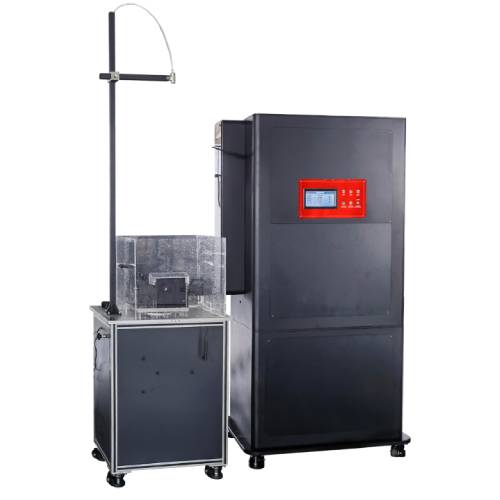
The Absolute Method Retro-Reflective Coefficient Tester is a precision instrument designed to evaluate the retro-reflective performance of high-visibility safety materials under both dry and simulated rain conditions. It accurately measures the retro-reflection coefficient of sample surfaces, making it suitable for occupational high-visibility warning garments and other visibility safety apparel to ensure personnel safety and compliance with national standards.

Application
The tester is suitable for a wide range of applications:
Traffic Safety Materials: Assessing retro-reflective performance of road and railway signs, traffic safety uniforms, and school uniforms for visibility compliance.
Occupational Safety Garments: Evaluating high-visibility protective clothing worn by various professionals for safe warning and visibility.
Vehicle Inspection: Measuring reflective markings on trucks and commercial vehicles.
Quality Control: Testing reflective vests, license plates, and other materials for retro-reflective compliance.
Standards
The system supports compliance with the following standards:
GB 20653-2020 – Occupational High-Visibility Warning Clothing, Appendices C.4.1 (Absolute Method) and D
GB/T 28468-2012 – School Traffic Safety Reflective Uniforms
ASTM E808 – Standard Guide for Description of Retro-Reflective Materials (Reference)
ASTM E810 – Standard Test Method for Retro-Reflective Coefficient of Sheeting Materials (Reference)
DIN 67520 – Minimum Luminance Requirements for Traffic Safety Reflective Materials (Reference)
Parameters
| Parameter | Specification |
|---|---|
| Retro-Reflective Coefficient Range | 0.01–500 cd/(lx·m²) |
| Observation Angle | 12′–120′ (2°) adjustable, precision 3′, minimum division 1′ |
| Incidence Angle | 0.1°–40.0° adjustable, precision 0.5°, minimum division 0.1° |
| Sample Size | 150 × 150 mm |
| Light Source | Standard illuminant A as per GB/T 3978 |
| Sample Reference Center to Light Aperture | ≤12′, vertical illuminance uniformity ≤5% |
| Sample Reference Center to Detector Aperture | ≤12′, vertically adjustable for 12′–120′ observation |
| Detector Distance to Sample | ≥15 m |
| Wet Test Parameters | Spray nozzle 1000 mm from sample, 10°±1° vertical angle, uniform water flow, enclosed spray chamber, water flow equivalent to 284 mm/h |
| Spray Chamber | Rigid transparent material with movable panel, 150 × 150 mm light channel, black-painted edges to reduce scatter |
| Spray Nozzle | Diameter 1.19 mm, connected to supply tube for stable conical water column |
| Power Supply | AC 220 V, 50 Hz, 1 kW |
| Main Console Dimensions | 900 × 780 × 1700 mm |
| Sample Table Dimensions | 630 × 430 × 1900 mm |
| Sample Table Weight | 80 kg |
| Main Console Weight | 115 kg |
| Test Environment | Dark room, temperature 20°C ±2°C, humidity 65% ±5% |
Features
High-resolution microphotometric acquisition system for precise measurements
Infrared distance measurement for accurate positioning between main console and sample table
Wireless communication module for cable-free control and data transfer
Two measurement modes: fixed-point and scan, for flexible data acquisition
Precision motor-driven positioning with low noise
Automatic adjustment of incidence and observation angles for simplified testing
Stable light source with uniform vertical illuminance
Steady water spray system with collection trays and overflow control for wet testing
Quick-change sample fixture for efficient sample mounting
Core 32-bit multifunction mainboard for reliable control
Color touchscreen with menu-driven interface and metal keys
Automatic data output and report generation
Compatible with connected software for real-time data analysis
Enclosed dark test channel to minimize ambient light interference
Accessories
Main unit
Product certificate
User manual
Delivery note
Acceptance form
Product brochure
Test Procedures
Sample Preparation
Randomly cut four samples of 150 × 150 mm.
Pre-treat samples according to standard or customer requirements.
Parameter Setup
Configure general test parameters, file names, and number of test repetitions.
Testing
Install sensors on the sample table and secure connections.
Turn on the light source and select dry condition test to start measurement.
For wet testing, adjust spray nozzle and water flow to cover the sample, maintain stable spray for at least 2 minutes before measurement.
Data Recording
Acquire data in real-time via the software interface.
Generate reports comparing dry and wet retro-reflective performance.
Maintenance Information
Regularly clean light source, sensors, and spray nozzle to maintain accuracy
Inspect sample fixtures and motor-driven mechanisms for smooth operation
Calibrate system periodically in both dry and wet conditions
Verify touchscreen and software data acquisition function before each test
Store system in a dark, dust-free environment to prevent light or sensor degradation
FAQs
1. What is the purpose of the Absolute Method Retro-Reflective Coefficient Tester?
The Absolute Method Retro-Reflective Coefficient Tester is designed to accurately evaluate the retro-reflective performance of high-visibility safety materials, including occupational warning garments, school uniforms, reflective vests, and vehicle markings. By measuring the retro-reflection coefficient under both dry and simulated rain conditions, it provides objective, reproducible data. This ensures that reflective materials comply with national safety standards, enhancing visibility for workers, students, and road users, and reducing the risk of accidents in low-light or adverse weather conditions.
2. How does the system perform dry and wet measurements?
For dry testing, the sample is mounted on the sample table, illuminated by a stable standard light source (illuminant A), and measured using a high-resolution microphotometric acquisition system. Observation and incidence angles are automatically adjusted, and the detector records retro-reflective data. For wet testing, a water spray nozzle directs a controlled, uniform water flow onto the sample surface within an enclosed transparent spray chamber. The system maintains a steady spray for at least two minutes before measurement. Data is acquired in real time via the software interface, allowing comparison of dry and wet retro-reflective performance.
3. Which materials and applications are suitable for testing?
The tester is suitable for evaluating traffic safety materials, occupational high-visibility garments, reflective school uniforms, vehicle markings, license plates, and reflective vests. It is ideal for R&D, quality control, and compliance verification in textiles, transportation, construction, and industrial safety industries. By measuring both dry and wet retro-reflection coefficients, manufacturers can ensure consistent visibility performance under varied conditions, and meet standards such as GB 20653-2020. GB/T 28468-2012. ASTM E808. and DIN 67520. ensuring personnel safety and regulatory compliance.
4. What are the main features of this tester?
The system features a high-resolution microphotometric acquisition system, infrared distance measurement for precise positioning, wireless control and data transfer, and two measurement modes (fixed-point and scan). Motor-driven precision positioning ensures low-noise operation. The system includes automatic adjustment of incidence and observation angles, a stable light source, a steady water spray system for wet tests, and a quick-change sample fixture. A 32-bit multifunction mainboard controls operations, while the color touchscreen provides menu-driven interface. Real-time data analysis and automatic report generation are supported, and an enclosed dark channel minimizes ambient light interference.
5. How should the tester be maintained to ensure accurate results?
Regular maintenance is essential for consistent, precise measurements. The light source, sensors, and spray nozzle should be cleaned routinely to avoid dust or residue affecting readings. Inspect sample fixtures and motor-driven mechanisms monthly to ensure smooth operation. Calibration should be performed periodically under both dry and wet conditions to maintain accuracy. Verify the touchscreen and software interface before each test to ensure proper data acquisition. Finally, store the system in a dark, dust-free environment to prevent sensor or light source degradation and extend equipment lifespan.