
Tel:+86-21-6780 0179
Fax:+44(0) 207 398 0999
Email:market@qinsun-lab.com
Leather softness tester
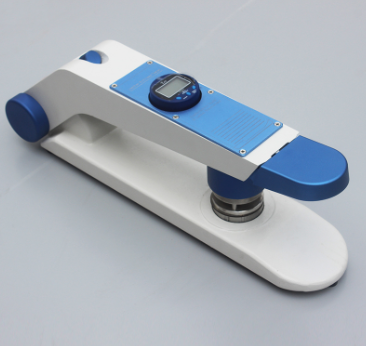
Measure the softness of leather and hide to know whether the softness of the same batch of leather is uniform, or the softness of each part of a single piece of leather is different.
Application
The leather softness tester is specifically designed to measure the softness of leather and animal hides, allowing for the assessment of the uniformity of softness within a batch or package of leather. It can also be used to examine the variations in softness across different parts of a single piece of leather.
Standard
ISO 17235:2002: Leather — Physical and mechanical tests — Determination of softness
Features
Non-destructive testing: Measures the deformation of leather by applying a certain load without damaging the leather.
Standardized testing: Complies with international standards (such as ISO 17235:2002) to ensure the accuracy and consistency of test results.
Multiple testing modes: Offers both analog and digital display modes for user convenience.
Wireless transmission: The latest models support wireless transmission, facilitating data collection and analysis at different locations.
Multiple structural types: Available in both mechanical and electronic versions to meet different testing needs.
High-precision measurement: Utilizes high-precision force sensors to ensure the accuracy of test results.
Parameters
| Description | Details |
|---|---|
| Load | 530±10g |
| Scale | 0.1——10mm |
| Volume | 13.6×48.5×16.8 cm |
| Weight | 5.3kg |
Accessoriess
Test rings (such as Φ20mm, Φ25mm standard test rings)
Pressure ring
Metal circular plate (zeroing plate)
Calibration leather (standard softness rubber)
Pressure handle
Upper arm
Upper clamp assembly, etc.
Test Procedures
1. Instrument Preparation: Place the equipment in the laboratory (recommended temperature 23±2℃, humidity 50±5% RH), ensure the workbench can bear a weight of ≥50kg, connect the power supply, and wait for the instrument to complete initialization.
2. Sample Preparation: Prepare the test samples according to the testing requirements; ensure the size and shape of the test samples meet the testing requirements.
3. Parameter Setting: Set various parameters according to the user manual of the ZY-RRD3000 leather softness tester, such as test clamp width, test speed, and deformation value.
4. Start Testing: Place the prepared sample on the test platform, start the test, the test blade will move downwards, and the test interface will display the test data in real time.
5. Test Completion: After the test is completed, the test blade will automatically reset, and the ZY-RRD3000 leather softness tester will automatically display the test results.
6. Test Results: Click the view button to view the test data; the ZY-RRD3000 leather softness tester has a built-in thermal printer to print the test results.
7. Cleaning and Maintenance: After use, clean and maintain the ZY-RRD3000 leather softness tester promptly.