
Tel:+86-21-6780 0179
Fax:+44(0) 207 398 0999
Email:market@qinsun-lab.com

Slip Resistance Tester
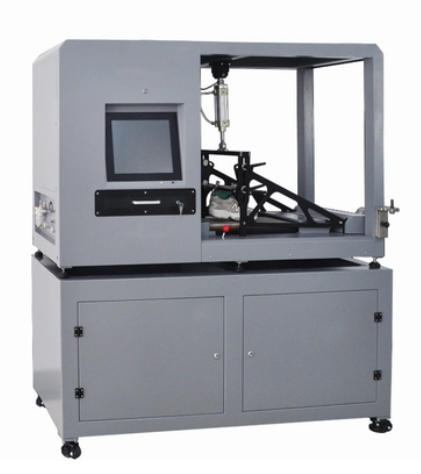
The Slip Resistance Tester is designed to evaluate the anti-slip performance of footwear and flooring materials. It simulates real-world slip scenarios by measuring the static and dynamic coefficient of friction between shoe soles and floor surfaces. The tester provides fast, accurate, and reproducible results, making it essential for quality control, research and development, and compliance verification of slip-resistant footwear and floor materials.
Applications
(1)Measurement of slip resistance of safety, work, and casual footwear.
(2)Evaluation of non-slip performance of flooring materials, tiles, carpets, and sports surfaces.
(3)Quality control of slip-resistant shoes for children, the elderly, and vulnerable groups.
(4)Compliance testing for footwear in occupational health and safety assessments.
(5)Laboratory testing for footwear R&D and new material development.
(6)Testing public environment surfaces such as hospitals, schools, and industrial facilities.
(7)Evaluation of slip resistance for sports and recreational footwear.
(8)Comparison of different sole materials and flooring combinations for ergonomic and safety design.
Standards
(1)ASTM F2913 — Standard Test Method for Measuring the Coefficient of Friction for Evaluation of Slip Performance of Footwear and Test Surfaces/Flooring Using a Whole Shoe Tester
(2)BS EN 13287 — Personal Protective Equipment. Footwear. Test Method for Slip Resistance
(3)GB/T 28287 — Foot Protection — Test Method for Footwear Slip Resistance
(4)EN ISO 20344 — Personal Protective Equipment — Test Methods for Footwear
(5)SATRA TM144A — New Method of Non-slip Test for Footwear
(6)CEN/TC 161 WG3 — European Committee for Standardization Working Group on Slip Resistance
Product Features
(1)Fasten device enables quick and secure sample installation, minimizing test variability.
(2)Real-time load acquisition system ensures accurate force measurement during testing.
(3)Support component and regulator indicator display test status dynamically.
(4)Pneumatic lifting control accommodates different specimen thicknesses.
(5)Irregular surface support tools provide uniform load and pilot force for non-flat surfaces.
(6)Adjustable test inclination to simulate various floor angles and slip conditions.
(7)Dial-type adjustment allows precise observation and modification of tilt angle during testing.
(8)Real-time analysis software visually displays maximum, minimum, and average friction.
(9)Automatic calculation of friction coefficient for accurate evaluation.
(10)Multi-path data output and high compatibility with Windows-based systems.
Technical Parameters
| Item | Parameters |
|---|---|
| Angle of Inclination | -40° to 40° (adjustable) |
| Load | Up to 600 N |
| Torque Speed | Up to 50 N within 0.2 s |
| Testing Speed | 0.3 m/s (other speeds configurable) |
| Time Accuracy | 0.1 s |
| Time Display Accuracy | 0.01 s |
| Measurement Parameters | Maximum friction, minimum friction, average friction, coefficient of friction |
| Power Supply | AC 220V, 50Hz |
| Dimensions | 1200 × 700 × 1050 mm (W × L × H) |
| Weight | 75 kg |
Accessories
(1)Clamping and sample mounting fixtures
(2)Support tools for irregular surfaces
(3)Tilt angle adjustment dial
Test Procedures
(1)Install the footwear or floor specimen on the test fixture using the fasten device.
(2)Adjust the tilt angle according to the test requirement.
(3)Set the load and testing speed parameters.
(4)Initiate the test; the rotating or tilting mechanism applies horizontal force to the sample.
(5)Monitor real-time friction values displayed by the analysis software.
(6)Record maximum, minimum, and average friction, along with the calculated coefficient of friction.
(7)Repeat for additional samples or floor/sole combinations as needed.
Maintenance Information
(1)Clean test surfaces and fixtures regularly to prevent contamination affecting friction results.
(2)Inspect pneumatic and load systems periodically for leaks or wear.
(3)Check and calibrate the tilt mechanism and load sensors to maintain accuracy.
(4)Update software and backup test data frequently.
(5)Store the tester in a dry and stable environment to prevent corrosion and mechanical degradation.