
Tel:+86-21-6780 0179
Fax:+44(0) 207 398 0999
Email:market@qinsun-lab.com
Textile Flatness Tester
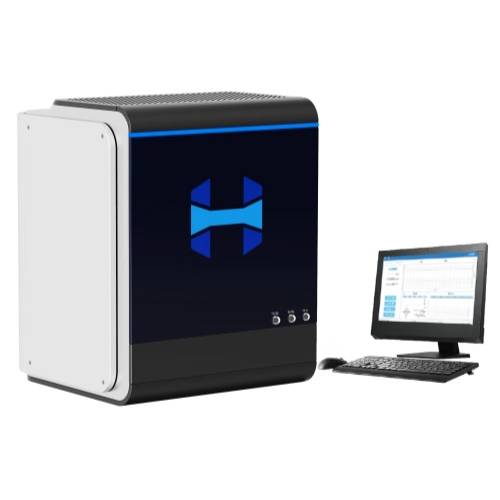
The Textile Flatness Tester is a precision instrument designed to evaluate fabric surface evenness by quantifying thickness variations, weave irregularities, and fiber distribution. It provides reliable, repeatable measurements to ensure compliance with quality standards in garment manufacturing, upholstery, and industrial textiles. The system uses a non-contact optical scanning method to capture full-area surface data with high precision.
Applications
The Textile Flatness Tester is ideal for industries and scenarios including:
Apparel and Garment Manufacturing – Ensures fabric evenness and surface quality for high-end clothing, uniforms, and fashion textiles.
Home Textiles & Upholstery – Evaluates the flatness of bed linen, curtains, carpets, sofas, and cushions to ensure uniform appearance.
Technical and Industrial Textiles – Monitors the evenness of geotextiles, filtration fabrics, conveyor belts, and composites for consistent performance.
Knitted and Woven Fabric Production – Detects weave irregularities, yarn density variations, and surface defects in real-time to optimize production processes.
Nonwoven Fabrics – Assesses surface uniformity and thickness variation in wipes, diapers, hygiene products, and medical textiles.
Textile R&D & Innovation – Supports research on wrinkle-resistant fabrics, high-density weaves, and advanced functional textiles.
Third-Party Testing & Certification – For inspection agencies verifying fabric compliance with domestic and international standards.
Forensic and Failure Analysis – Identifies fabric defects, wear patterns, and damage causes in quality disputes or product failure investigations.
Educational & Training Institutions – Demonstrates fabric defect detection, surface measurement techniques, and quality assessment procedures to students.
Composite & Specialty Fabrics – Monitors surface flatness for laminates, carbon fiber fabrics, and other multi-layered textiles used in aerospace, automotive, or sports applications.
Standards
ISO 9073-4: Textile flatness measurement
ASTM D3884: Abrasion resistance correlation
AATCC 124: Appearance after repeated home laundering
GB/T 3917.2: Chinese fabric evenness standard
Features
1. An AI- and machine vision-based device that highly integrates objective fabric performance evaluation.
2. Replaces manual grading (ISO 07768:2009. GB13769:2009. AATCC124:2014) with advantages including objectivity, speed, and reproducibility; CNAS-accredited.
3. Features simplified operation and high automation.
4. Clean software interface with intuitive controls; one-click grading after region selection.
5. Comprehensive metric system captures detailed visual characteristics for enhanced analysis.
Translated with DeepL.com (free version)
Parameters
| Parameter | Specification |
|---|---|
| Scanning Resolution | 0.1 mm × 0.1 mm grid mapping |
| Thickness Measurement Range | 0.05–10 mm (±0.5% accuracy) |
| Surface Roughness Detection | 0.1–100 μm Ra (ISO 4287) |
| Weave Flatness Index | Calculated automatically |
| Sample Size | Up to 1000 × 1000 mm (adjustable) |
| Light Source | 400–700 nm RGB LED array |
| Data Output | 3D topography map + statistical CSV |
| Dimensions (L×W×H) | 1500 × 800 × 1200 mm |
| Weight | ~180 kg |
| Power Supply | AC 220V ±10%, 50/60 Hz |
Accessories
Vacuum clamping table for sample mounting
Reference calibration plates
Protective anti-static mat
Software package for analysis and reporting
Power cable and operation manual
Test Procedures
Clamp the fabric sample on the vacuum table, ensuring no folds or wrinkles.
Select the scanning mode (static or dynamic) via the control panel.
Initiate full-area 3D scanning; system captures thickness, roughness, and weave irregularities.
Review real-time heatmaps and defect detection alerts.
Export analysis data for reports or historical comparison.
After testing, clean scanning surface and sample holder; avoid dust accumulation.
Periodically recalibrate using NIST-traceable reference plates to maintain accuracy.
FAQ
1. How does the vacuum table improve the accuracy of the flatness test? In textile testing, even a minor wrinkle can be misidentified as a weave defect. The vacuum table ensures the fabric is perfectly tensioned against the reference surface, allowing the tester to measure true material thickness and roughness rather than accidental folds.
2. Can this system replace the manual "gray scale" or visual smoothness grading? Yes. It is specifically designed to replace manual grading standards like AATCC 124 and ISO 7768. It uses AI to apply the same grading logic but does so with 100% objectivity and much higher speed.
3. Is it possible to test very thin or translucent fabrics? The system uses an adjustable RGB LED array and high-resolution sensors. While very thin fabrics (down to 0.05mm) can be measured, translucent materials may require a specific calibration or a non-reflective backing plate to ensure the optical sensors capture the surface correctly.
4. What is the "Weave Flatness Index"? This is a proprietary calculation that combines thickness variation and surface roughness to give you a single numerical value representing the fabric's overall evenness. It makes it easier for you to compare different production batches at a glance.
5. How does the tester handle patterned or multi-colored fabrics? The machine vision system is trained to distinguish between color patterns and physical surface irregularities. Because it uses 3D mapping (depth sensing) rather than just 2D imaging, the color of the yarn does not interfere with the flatness data.