
Tel:+86-21-6780 0179
Fax:+44(0) 207 398 0999
Email:market@qinsun-lab.com
Hot Plate Method Fabric Drying Rate Tester
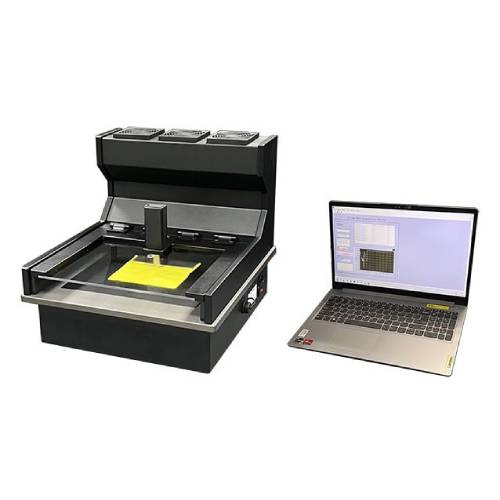
The Hot Plate Method Fabric Drying Rate Tester is an advanced, automated instrument specifically engineered to determine the drying kinetics of textiles. Designed in strict accordance with the AATCC 201 standard, this device simulates the evaporation of moisture from a fabric surface as it contact-heats against a controlled thermal plate. By integrating high-precision infrared sensors and calibrated airflow systems, you can accurately quantify the drying time and drying rate of high-performance fabrics. This tester provides a critical benchmark for evaluating "moisture-wicking" and "quick-dry" claims, ensuring that functional garments meet the physiological comfort requirements of the end-user.

Applications
The Hot Plate Method Fabric Drying Rate Tester is an automated testing instrument designed to measure the drying rate of textiles in accordance with the requirements of the American Association of Textile Chemists and Colorists (AATCC) Test Method 201.
Standards
AATCC 201-2013 Fabric Drying Rate: Hot Plate Method
FZ/T 01176-2024 Textiles - Determination of Fabric Drying Rate - Hot Plate Method
Features
1. Incorporates high-precision wind speed sensors, infrared temperature sensors, temperature sensors, precision dripping devices, high-accuracy wind speed control units, and fluid dynamics-optimized air ducts.
2. Integrates with computer software to automatically perform fabric drying time and drying rate tests along with comprehensive data analysis, significantly enhancing operational efficiency and measurement accuracy while minimizing human-induced errors.
3. Test software communicates with the main unit via USB port, displaying and saving data as curves and charts for easy analysis and printing. Wide adjustable ranges for wind speed (0.2–4.5 m/sec) and drip volume (0.05–4.5 ml).
4. The hot plate method not only complies with the AATCC 201 testing standard but is also suitable for knitted fabrics or any quick-drying fabrics (excluding fabrics used in socks).
Parameters
| Item | Specifications |
|---|---|
| Air Chamber | Capable of generating 0.2–3 m/sec airflow |
| Heating Plate | 300mm×300mm±1mm |
| Flexible Heating Sheet | 300mm×300mm±1mm |
| Insulation Soft Board | 300mm×300mm±1mm |
| Heating Plate Temperature | 37±0.5°C (with overheat protection) |
| Air Velocity | 0–2.5 m/s±0.1 m/s |
| Infrared Temperature Sensor | 15–50°C±0.1°C |
| Data Transmission | USB data transmission |
| Test Interface | Curves and charts displayed simultaneously |
| Test Report | Automatically saved, easy to print |
| Power Supply | AC 230V, 50Hz/60Hz |
| Overall Dimensions (L×W×H) | 450×320×170 mm |
| Weight | Approximately 45 kg |
Accessories
Standard Configuration:
Temperature recorder, infrared thermocouple probe, fan box, metal plate, cork insulation, micropipette, anemometer, magnetic, plastic or metal strip
Configuration Options:
1. Drying rate tester main unit + software
2. Drying rate tester software
3. Dedicated computer
4. Sample clamping rod
5. USB data cable
Test Procedures
Preparation: Connect the instrument to the power supply. Ensure airflow, heating plate, and infrared sensors are calibrated.
Sample Placement: Position the fabric sample on the heating plate. Ensure consistent contact and sample alignment.
Parameter Configuration: Set target temperature, airflow velocity, and drip volume via the software interface.
Test Initiation: Start the automated test sequence. The system will apply controlled heat and airflow, recording moisture evaporation and drying rate in real-time.
Data Collection: Curves and charts are generated automatically. Save or export results for analysis or reporting.
Completion: Remove the sample after test completion. Power off the device or prepare for the next measurement.
FAQ
1.What is the purpose of the Hot Plate Method Fabric Drying Rate Tester?
It measures the drying kinetics of textiles and quantifies drying rate and time under controlled thermal and airflow conditions.
2.Which types of textiles can be tested?
Sportswear, quick-dry fabrics, knitted fabrics, bedding, towels, and functional garments. Socks and similar small fabrics are excluded.
3.How is airflow controlled during testing?
The device includes high-precision wind speed sensors and adjustable fans capable of 0.2–4.5 m/s airflow, ensuring consistent drying conditions.
4.How does the instrument simulate wetting of the fabric?
A precision drip device applies a controlled volume of water (0.05–4.5 ml) to standardize initial moisture content.
5.How is temperature measured and maintained?
Infrared and contact sensors continuously monitor the heating plate and fabric surface, maintaining 37 ± 0.5°C with overheat protection.
6.Can test results be exported for analysis?
Yes, the system supports USB data transmission and automatically generates curves, charts, and printable reports.