Tel:+86-21-6780 0179
Fax:+44(0) 207 398 0999
Email:market@qinsun-lab.com
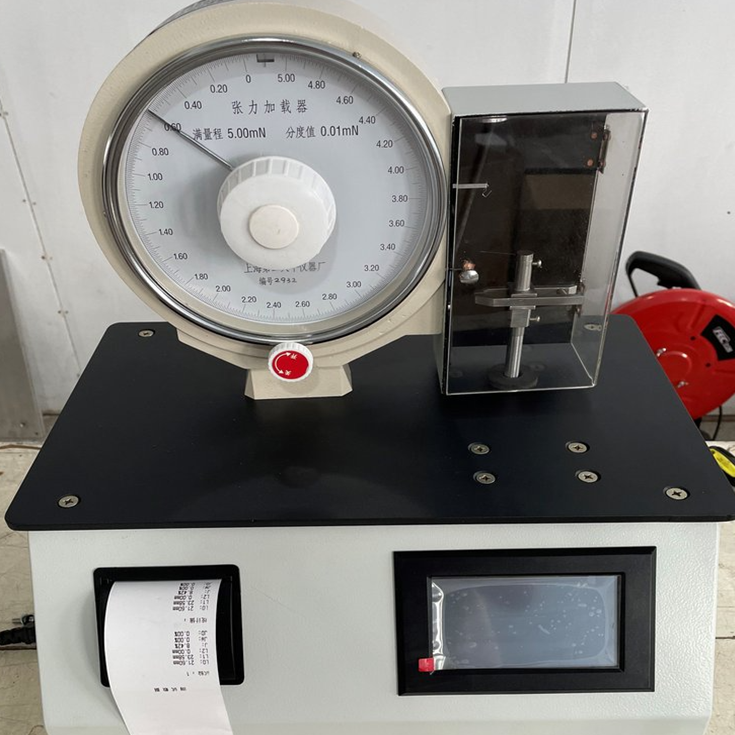
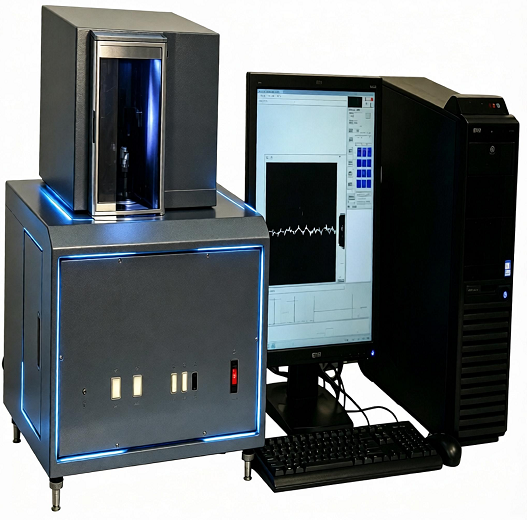
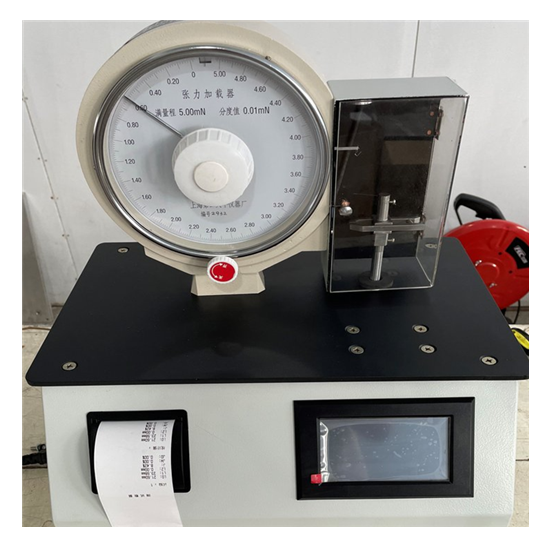
Fiber Crimp Elasticity Tester
Introduction
Fiber Crimp Tester is the latest developed high precision testing apparatus. It is used to automatically measure the crimp ratio, crimp elastic recovery percentage, and number of crimps of the fiber. It adopts the image processing technology to automatically count the number of crimps within the length of 25mm on the fiber sample when the fiber bears the light load, thus it eliminates the uncertainty of manually counted results. With the force sensor the apparatus measures the values of the light load and heavy load that stretch the fiber sample, and measures the fiber lengths when the fiber is under the light load and heavy load respectively, then it calculates the crimp ratio automatically. It also measures the fiber length after the fiber have burdened the heavy load and got relaxed, and then calculates the crimp elastic recovery percentage of the fiber.
Application
It can be used to test the crimp properties of single natural and man-made fiber. Therefore, it is widely used in chemical fiber and textiles manufactories, fiber-testing inspection bureaus, and scientific research institutions, etc.
Standards
GB/T 14338Testing method for crimping performance of man-made staple fibers
Technical Parameters
| Test range | 0~2000(10-3cN) |
| Force precision | 0.1(10-3cN) |
| Force error | ≤±1% |
| Gauge between the upper and the lower clamp | 20mm |
| Lower clamp moving range | 40mm |
| Length precision | 0.01mm |
| Time set | Auto |
| Count the number of crimps | Auto |
| Count the length of crimps | 25mm |
| Power | 220V~±10% |
| Dimensions | 510×340×420mm |
| Weight | 20KG |
FAQ
1. What is the primary purpose of this tester?
It measures the crimp elasticity of fibers to assess their resilience, recovery, and elongation properties after deformation.
2. Which types of fibers can be tested using this device?
The tester is suitable for wool, cotton, synthetic fibers, and other textile fibers where crimp or texture affects performance.
3. How does the tester operate?
It stretches or compresses fibers with controlled force, measures their elongation and recovery, and evaluates crimp stability and elasticity.
4. Which standards does this tester comply with?
It supports international fiber testing standards, including ISO 7211. ASTM D2256. and relevant textile industry protocols.
5. Who typically uses this equipment?
Textile manufacturers, fiber producers, quality control laboratories, and R&D teams use it to evaluate fiber performance, optimize material selection, and ensure consistent product quality.