
Tel:+86-21-6780 0179
Fax:+44(0) 207 398 0999
Email:market@qinsun-lab.com
MMT Liquid Water Separation Tester
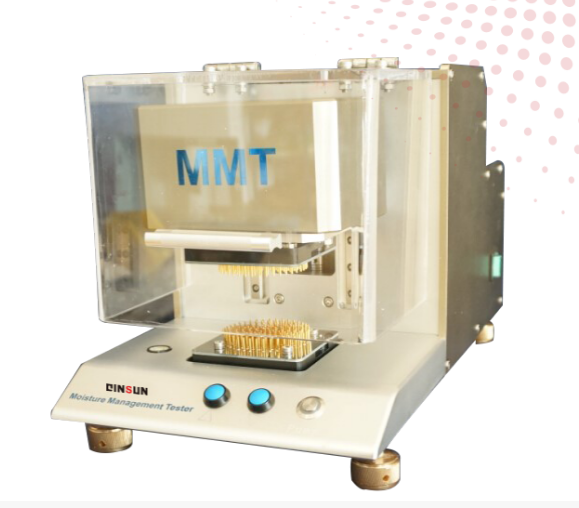
The MMT Liquid Water Separation Tester is a precision instrument designed to evaluate the water repellency and separation efficiency of textile materials, coatings, and membranes. It quantifies liquid absorption resistance and hydrophobic performance using standardized spray and drainage methods, critical for waterproof fabric development and quality assurance.
Applications
Textile Manufacturing: Testing waterproof fabrics for outdoor gear
R&D: Developing hydrophobic coatings for medical textiles
Quality Control: Batch inspection of rainwear
Forensic Analysis: Evaluating fabric degradation from water exposure
Standards
AATCC 22 (Spray Rating), ISO 4920 (Water resistance)
Key Metrics:
Water Repellency Rating (0–5 scale)
Separation Efficiency (%)
Absorption Time (seconds)
Sample Size: 150×150mm (adjustable clamping)
Compliance Standards
AATCC 22 (Water repellency spray test)
ISO 4920 (Textile water resistance)
EN 343 (European waterproof standard)
GB/T 4744 (Chinese hydrostatic pressure test)
Features
Dual Test Modes:
Spray Test: AATCC 22 vertical hydrophobicity evaluation
Drainage Test: ISO 4920 dynamic water separation
Advanced Detection:
High-speed camera (120fps) with image analysis
AI-based droplet tracking (5 severity levels)
Real-time absorption rate calculation
Automation:
Auto-fill/empty water reservoir
Programmable nozzle angle adjustment
Self-cleaning drainage system
Technical Parameters
| Parameter | Specifications |
|---|---|
| Spray System | 12-nozzle array (0.5mm droplet size) |
| Water Pressure | 50±5 kPa (programmable) |
| Test Duration | 1–30 minutes (auto-stop) |
| Drainage Rate | 1.5L/min (recirculating system) |
| Measurement Accuracy | ±1% FS (ISO 376 standard) |
| Dimensions | 800×600×1200mm (L×W×H) |
Accessoriess
1. Main unit;
2. Analysis software;
3. Conductivity tester
Test Procedures
1. Sample Preparation
Select the knitted/woven fabric sample to be tested, ensuring the sample is flat and undamaged.
2. Sample Installation
Install the sample into the testing area between the upper and lower concentric liquid sensors of the testing instrument, ensuring the sample is in close contact with the test area.
3. Instrument Adjustment
Check the condition of the instrument's infusion tubing, probes, and other components, and adjust the instrument to a ready state.
4. Simulated Droplet Application
Through the infusion tubing of the upper sensor, evenly drip simulated human sweat onto the fabric surface according to the set fixed concentration and amount.
5. Test Startup
Start the instrument and use the sensor probes to monitor the resistance changes at different stages (to reflect the absorption/diffusion of the liquid in the fabric).
6. Parameter Acquisition
After the test, read the parameters output by the instrument (upper/lower layer wetting time, sweat absorption rate, maximum diffusion radius, etc.) to complete the evaluation of the fabric's liquid moisture management capability.