
Tel:+86-21-6780 0179
Fax:+44(0) 207 398 0999
Email:market@qinsun-lab.com

Rain Tester
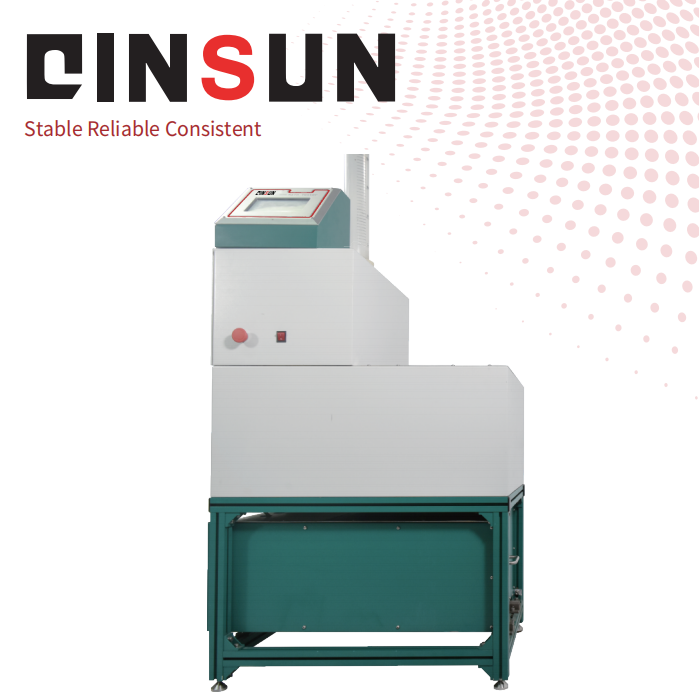
This instrument simulates rain sprayed horizontally onto a fabric sample vertically fixed in a stainless steel tank. A standard absorbent paper is placed against the back of the sample (weighed before and after testing). Water in the jet is sprayed through a standard nozzle to form rain, and the water jet volume can be adjusted from 600 mm (24 inches) to 2400 mm (96 inches) in 300 mm (12-inch) increments.The Rain Tester features an interactive LCD color touchscreen with preset ISO and AATCC test standards, water temperature, water jet height, and test time. A built-in water tank recovers water sprayed onto the sample and includes a heater to control the water temperature. A precision water pump automatically maintains the water jet at the set height.It cannot be modified and can be ordered with a new rain tester. We can provide a temperature-controlled water supply system, including an electronic temperature controller, mixing tank, and solenoid control valve.
Applications
The rainproof tester can test the water repellency of fabrics or composite materials under different rainwater pressures.
Standards
AATCC 35: Water Resistance: Rain Test for Fabrics
BS EN ISO 22958: Textiles – Determination of Resistance to Water Penetration – Rain Test
GB/T 23321: Textiles – Testing and Evaluation for Water Repellency
Features
Horizontal Spray System: 13 nozzles (φ0.99mm) simulate directional rainfall at 305mm from the sample.
Adjustable Water Column: 60–150 cm (standard) or 60–240 cm (extended) pressure range.
Stainless Steel Construction: Corrosion-resistant inner groove for vertical sample fixation.
Automated Replenishment: Algorithm maintains constant water level for consistent pressure.
Sample Compatibility: Fits 40mm × 285mm × 190mm material sizes (e.g., fabrics, laminates).
Safety & Compliance: Overheat protection, emergency stop, and CE certification.
Technical Parameters
| Parameter | Specification |
|---|---|
| Test Water Column | 60–150 cm (±1.5 cm) / 60–240 cm (Extended) |
| Water Temperature | 20°C ±1°C (Adjustable) |
| Control Mode | PLC + 7-inch Touchscreen |
| Nozzle Quantity/Size | 13 pcs, φ0.99 mm |
| Nozzle-to-Sample Distance | 305 mm |
| Sample Holder Size | 40 mm × 285 mm × 190 mm |
| Reservoir Capacity | 40 L (Tap/Distilled Water) |
| Heating Power | 1000 W |
| Power Supply | AC 220V ±10%, 50Hz |
| Dimensions (L×W×H) | 810 mm × 610 mm × 1450 mm |
| Net Weight | 125 kg |
Accessoriess
Simulated rainfall nozzle assembly, sample fixing fixture, absorbent paper, 40L large-capacity water tank, 1000W water temperature control assembly, PLC + touch screen control unit.
Test Procedures
1. Sample Preparation
Cut samples to the required dimensions according to the corresponding testing standards (e.g., AATCC 35. BS EN ISO 22958. GB/T 23321. etc.) (applicable to materials such as umbrellas, raincoats, and protective clothing).
2. Instrument Preparation
Add tap water/distilled water to the 40L water tank, start the 1000W heating system, and adjust the water temperature to the required test temperature (maintaining a uniform temperature of ±1℃).
3. Parameter Setting
Set parameters such as rainwater column height (60-240cm range) and test duration via the PLC touchscreen, ensuring water pressure accuracy is controlled within ±1.5cm.
4. Sample Clamping
Secure the prepared sample flat on the instrument's sample clamp, ensuring the sample is wrinkle-free and securely clamped.
5. Absorbent Paper Placement: Place dry absorbent paper under the sample, weigh it beforehand, and record its initial weight.
6. Test Start
Run the instrument to simulate horizontal rainfall on the sample, maintaining stable water pressure and level throughout the process.
7. Post-Test Processing
After the test, remove the absorbent paper from under the sample, weigh it again, and record the weight gain.
8. Performance Evaluation
Based on the weight gain of the absorbent paper, quantitatively analyze the sample's waterproof performance according to the corresponding standard; the visual wetting condition of the sample can also be used as a supplementary indicator.