

How is the Geotextile Effective Aperture Tester used?
The Geotextile Effective Aperture Tester is a specialized piece of testing equipment designed to determine the pore size and filtration performance of geotextiles. It functions by placing standard particles of a specified size range onto a geotextile specimen and subjecting them to vibration or water flow, allowing the particles to pass through the fabric's pores. By analyzing the size distribution of the particles that pass through, the effective aperture of the geotextile can be determined.
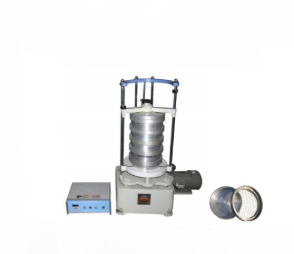
Test Procedure
First, inspect the overall structure and operational status of the tester. Ensure that the power supply, vibration mechanism, specimen-clamping fixture, and sieving components are correctly installed and free from any looseness or damage. Prepare the geotextile specimen to be tested, along with standard glass beads of various specified sizes, an electronic balance, and containers for collecting the particles. Next, cut the geotextile specimen to the dimensions required by the relevant testing standards, ensuring the surface is flat, free of wrinkles, undamaged, and clear of any visible contamination. Open the specimen-clamping fixture, place the geotextile flat in the designated testing position, and secure it firmly with the clamps. Ensure that the edges of the specimen are well-sealed to prevent glass beads from escaping through the gaps along the edges, which could compromise the test results. Then, select the appropriate standard glass beads based on the required size range and use an electronic balance to weigh out the specified mass. Distribute the glass beads evenly across the surface of the geotextile specimen, ensuring a uniform spread and avoiding localized clustering. Install the equipment's protective cover and the necessary sieving components, verifying that all parts are correctly positioned. Once preparation is complete, power on the device and configure the vibration frequency, duration, and other test parameters in accordance with the applicable testing standards and the equipment's instruction manual. After confirming that the settings are correct, start the device. The vibration mechanism generates a stable vibration, causing the standard glass beads to continuously shift and rearrange themselves on the surface of the geotextile. During this process, glass beads small enough to fit through the pores pass through the specimen, while larger beads that cannot fit are retained on the surface. The device operates for the pre-set duration, allowing the particles to make sufficient contact with the specimen to complete the sieving process. After the test is complete, turn off the device and wait for the vibration mechanism to come to a full stop. Carefully disassemble the test assembly, collecting the glass beads that passed through the geotextile separately from those that were retained. Use an electronic balance to weigh the particles from each portion, and record the initial mass, the mass that passed through, and the mass retained for each particle size category. During the process, take care to prevent the loss of particles or the mixing of glass beads of different sizes, ensuring the accuracy of the measured data. Next, calculate the percentage of particles passing through for each size category and establish the relationship between particle size and the percentage passing. By analyzing the passing proportions of different particle sizes, determine the apparent opening size (AOS) of the geotextile. In accordance with the ASTM D4751 standard, the $O_{95}$ value—defined as the characteristic particle size corresponding to a specified percentage passing—is typically used as the indicator for the apparent opening size. Test results are generally expressed in millimeters or micrometers and are used to evaluate the pore size and filtration performance of the geotextile. Finally, power down the equipment, remove the tested geotextile specimen, and clean any remaining glass beads from the specimen-holding fixture, the sieving assembly, and the interior of the device. Use a soft-bristled brush to remove particles and dust from the equipment surfaces, and store the standard glass beads by size category to prevent them from becoming mixed or contaminated. Inspect the vibration mechanism and mounting components for any irregularities, and ensure the equipment is kept clean and dry for future use. Throughout the testing process, strictly adhere to the relevant test standards and the equipment manufacturer’s instructions; ensure that the specimen is securely mounted, the standard glass beads are of the correct size, the vibration parameters are set appropriately, and that replicate tests are conducted as required. This equipment enables the effective determination of a geotextile's apparent opening size, providing a reliable basis for the selection, quality inspection, and filtration performance evaluation of geotextiles used in road construction, hydraulic engineering, embankment protection, and drainage systems.
Significance
In civil engineering, geotextiles are commonly used in roads, railways, embankments, riverbank protection, and subsurface drainage systems, primarily serving functions such as filtration, drainage, separation, and protection. If the pore size of a geotextile is too large, fine soil particles may pass through the fabric, compromising the soil structure and potentially leading to foundation settlement, piping, or the instability of engineering structures. Conversely, if the pore size is too small, the flow of water may be impeded, resulting in poor drainage and an increase in pore water pressure, which can negatively affect the long-term stability of the project. Therefore, the precise control of a geotextile’s effective pore size is crucial for ensuring engineering safety. This testing instrument allows for an accurate assessment of a geotextile’s pore characteristics, determining whether it can effectively retain larger soil particles while permitting the passage of water and a controlled amount of fine particles—thereby ensuring optimal filtration and drainage performance. Furthermore, the equipment plays a vital role in quality control during the manufacturing of geotextiles. By periodically testing the apparent pore size across different production batches, manufacturers can verify product consistency and promptly identify issues such as pore size deviations or material non-uniformity, ensuring that products meet relevant technical standards and quality requirements. During the acceptance process for engineering materials, test results serve as a key basis for evaluating quality, assisting engineers in selecting materials suited to specific geological conditions and project environments, and mitigating risks associated with substandard material performance. Additionally, regular effective pore size testing enhances the scientific rigor of engineering design and the quality of construction; it helps prevent problems such as the loss of soil particles, clogging of drainage systems, and structural damage—ultimately extending the service life of engineering infrastructure.
Conclusion
The Geotextile Effective Aperture Tester is an essential piece of testing equipment for ensuring the filtration performance and quality of geotextiles. By accurately measuring the apparent pore size, it provides reliable data to support material research and development, production quality control, material acceptance, and engineering design—contributing significantly to the safety, stability, and durability of civil engineering projects.