

What is the contact heating and cooling tester STD-F7?
The Contact Heating and Cooling Tester STD-F7 is a testing instrument designed to evaluate the stability and structural integrity of materials, components, or electronic products when subjected to repeated contact with high- and low-temperature environments. By controlling heating and cooling systems, the device cycles test samples between specified high and low temperatures, simulating the thermal fluctuations a product might encounter during actual use. It is primarily used to assess a product’s heat resistance, cold resistance, and adaptability to temperature changes, as well as to detect issues such as deformation, cracking, poor electrical contact, or performance degradation.
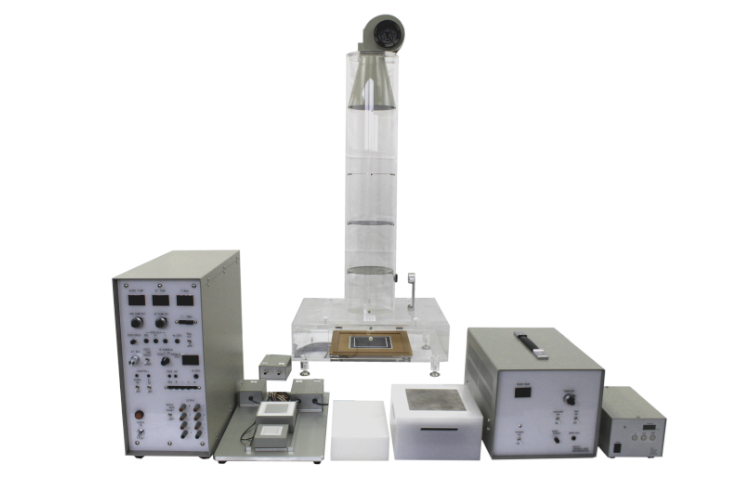
Instrument Structure
Main Frame: Serves as the structural foundation, housing the heating and cooling units, temperature-sensing components, and control system. It ensures overall structural stability and minimizes the impact of external vibrations on test results during operation. Temperature-Sensing Unit: Comprising a metal test plate, temperature sensors, and heat-flux sensing elements, this is the core component for measuring contact-based thermal performance. During testing, the plate makes contact with the sample surface; by monitoring heat transfer dynamics at the point of contact, the system captures heat-flux data used to evaluate the "cool" or "warm" tactile sensation of materials. Heating Unit: Consists of a metal heating plate, heating elements, temperature sensors, and associated wiring. It provides a stable heat source, with a temperature control system regulating the plate to meet specific test conditions, thereby creating a consistent thermal environment for assessing material heat-conduction properties. Constant-Temperature Cooling Unit: Comprises a cooling plate, refrigeration components, temperature sensors, and control elements. This unit provides stable low-temperature test conditions, with the refrigeration system maintaining the cooling plate within a set temperature range to accommodate the thermal contact and performance testing requirements of various materials. Temperature Control System: Includes a temperature controller, sensors, control circuitry, and adjustment modules. It monitors the temperatures of the heating and cooling plates in real time, automatically adjusting the heating or cooling status based on preset parameters to ensure stability and accuracy throughout the test. Signal Amplification System: Consists of signal amplification circuitry, electronic components, and signal transmission lines. This system is designed to receive, amplify, and process weak electrical signals generated by heat-flux sensing elements, subsequently transmitting the processed signals to a data acquisition system to enhance the readability and stability of the test data. Specimen Placement Mechanism: Comprising a specimen platform, support structure, and test contact components, this mechanism is used to position and secure the material under test. It ensures the specimen remains flat during testing and maintains optimal contact with the test plate, thereby minimizing measurement errors caused by wrinkles or uneven contact. Thermal Insulation Performance Testing Unit: Consisting of a heated test platform, a wind tunnel, temperature sensors, and airflow regulation components, this unit is used to evaluate the thermal insulation properties of textile materials. During testing, the heated platform provides thermal energy, while the wind tunnel generates a stable airflow; the system then measures heat loss from the specimen under these airflow conditions to assess its thermal insulation capacity. (The inclusion of this unit depends on the specific equipment configuration.) Data Acquisition and Processing System: Comprising data acquisition modules, transmission interfaces, display instruments, and computer software, this system collects data from temperature sensors and heat-flux sensing elements. It records, displays, analyzes, and stores the data, providing a basis for evaluating the thermal properties of materials. Electrical Control System: Comprising power supply modules, control circuitry, switches, relays, and other electronic components, this system provides power to the instrument’s functional units and coordinates the operation of heating, cooling, temperature sensing, and data acquisition systems. Safety Protection System: Comprising electrical protection components, over-temperature safeguards, and other safety control elements, this system monitors the operational status of the equipment. It provides necessary protection in the event of temperature anomalies, electrical faults, or other irregularities, ensuring the safe and stable operation of the instrument.
Importance
Ensuring Product Quality: By testing the thermal contact sensation and thermal conductivity of materials, the system determines whether products meet relevant technical specifications, enabling the early detection of performance anomalies and preventing substandard products from reaching the market. Enhancing Product Comfort: By measuring heat transfer between fabrics and the human body, the system evaluates the "cool" or "warm" sensations provided by materials, offering a basis for improving the comfort of apparel and home textile products. Supporting the R&D of New Materials: Provides test data for the development of novel cooling fabrics, thermal-insulation fabrics, functional fibers, and composite materials, enabling researchers to compare the thermal properties of different materials and optimize material formulations and production processes. Enhancing Production Process Control: Facilitates performance testing of raw materials, semi-finished goods, and finished products; allows for the timely monitoring of thermal property variations across different production batches, providing a basis for adjusting manufacturing processes and managing quality.
Summary
This instrument is primarily used in industries such as textiles, apparel, home textiles, and functional materials. It is suitable for testing the contact-cooling sensation, thermal conductivity, and thermal insulation properties of various fabrics, garment materials, bedding, and certain flexible sheet-like materials. By measuring heat transfer dynamics when a material comes into contact with a temperature-controlled test plate, the instrument evaluates the material’s instantaneous thermal sensation (cool or warm to the touch) and overall thermal performance, offering reliable data for textile R&D, product design, quality inspection, and performance assessment.