

What are the advantages of the Liquid Sliding Penetration Comprehensive Performance Tester?
The Liquid Sliding Penetration Comprehensive Performance Tester is primarily designed to evaluate the liquid penetration and absorption characteristics of sanitary products and non-woven materials. By simulating the interaction between a liquid and the surface of a material, it measures parameters such as the time required for liquid to penetrate the material, the extent of liquid penetration, the amount of liquid rewet , and the material's overall liquid-handling performance.
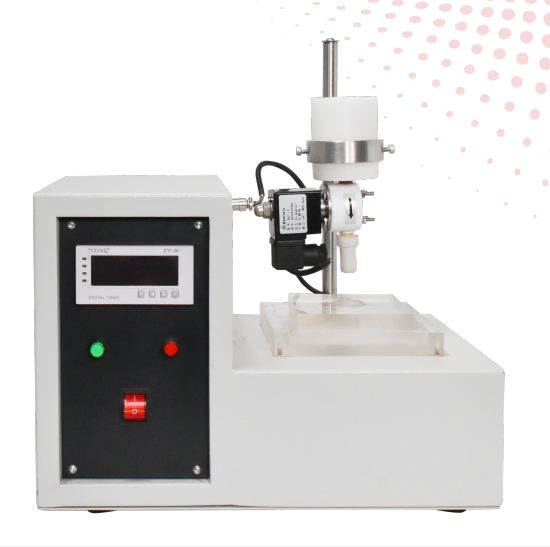
Structural Components
The main frame serves as the foundational support structure for the equipment, consisting of a chassis, base, mounting brackets, and various fasteners used to secure the different functional test modules. The frame must possess sufficient mechanical strength and structural stability to remain steady during liquid application, specimen loading, and sliding tests, thereby minimizing the impact of mechanical vibration or structural deformation on test results. The equipment enclosure typically provides a protective function, preventing test liquids from splashing onto and potentially damaging internal electrical components. The liquid supply system—comprising a reservoir, supply tubing, a delivery mechanism, and flow control components—is responsible for storing and transporting the test liquid. During testing, the system delivers a precise volume of liquid to the specimen surface at a controlled flow rate. The specimen clamping system, which includes fixtures, pressure plates, mounting brackets, and positioning components, is used to secure the material under test. During the procedure, the specimen is placed in the test area according to specified dimensions and orientation; the clamping mechanism then holds it firmly in place, preventing any shifting, wrinkling, or loosening caused by liquid impact, applied pressure, or sliding motion. The liquid application and penetration testing system is the core component for evaluating penetration performance; it consists of a liquid application head, contact elements, penetration detection components, and the necessary mounting hardware. During testing, the liquid supply system delivers the fluid to the specimen surface, replicating the conditions under which the material would encounter liquid during actual use. The pressure-loading system applies a specified test pressure to the specimen and typically includes a loading mechanism, pressure-application components, weights or mechanical loading assemblies, and pressure-adjustment controls. The liquid sliding test system is designed to simulate the movement, flow, or sliding of liquid across the material's surface; it generally comprises motion actuators, sliding test components, guidance mechanisms, and drive assemblies. By controlling the movement direction, speed, travel distance, and contact state of test components, the system investigates how liquids move across a material's surface, as well as the material's ability to channel, impede, or absorb liquids—thereby evaluating the material's performance regarding liquid transport and slippage. The specific modes of motion and testing methods depend on the actual design of the equipment. The liquid collection and rewet (back-flow) detection system—comprising collection containers, absorbent media, detection components, and supporting hardware—is designed to capture liquid that penetrates the specimen during testing or to measure the amount of liquid that returns to the surface under external pressure. The motion control system, which includes drive motors, transmission mechanisms, guide rails, limit devices, and control modules, manages the reciprocating, sliding, or vertical movements of the test components. The data acquisition and detection system—consisting of sensors, signal acquisition modules, and data processing units—records relevant data during testing, such as the volume of liquid supplied, penetration time, pressure fluctuations, motion parameters, and the amount of liquid collected. The system processes and analyzes this data to calculate performance metrics, providing an objective basis for evaluating material properties.
Advantages
Comprehensive Functionality: The system enables integrated testing of a material’s liquid penetration, transport (slippage), absorption, and rewet characteristics. It allows for a multi-faceted evaluation of a material's liquid-handling capabilities, meeting the testing requirements for various types of absorbent materials. High Testing Precision: Through precise control of liquid supply, applied pressure, and other test parameters, the system regulates critical experimental conditions. This minimizes variability caused by manual operation, thereby enhancing the accuracy and repeatability of the test data. Automated Testing Process: Utilizing electrical control systems and automated mechanisms, the equipment can execute liquid application, pressure loading, and other test procedures according to preset programs. This reduces the need for manual intervention and lowers the physical workload for operators. Controllable Test Conditions: Parameters such as liquid volume, applied pressure, motion speed, and test duration can be configured to meet specific requirements. This ensures that different materials are tested under consistent experimental conditions, facilitating direct performance comparisons between various specimens. Convenient Data Recording: Equipped with a dedicated data acquisition and processing system, the device can record, analyze, and display relevant parameters and test results throughout the testing process. This facilitates the organization of experimental data, the retrieval of historical results, and quality traceability.
Conclusion
The Liquid Sliding Penetration Comprehensive Performance Tester features a high degree of functional integration, controllable test conditions, a high level of automation, user-friendly operation, and efficient data management. It provides a comprehensive performance testing solution for the R&D, production, and quality inspection of hygiene products and absorbent materials, helping to enhance both product quality control and laboratory testing efficiency.