

What is a geotextile wear tester?
A Geotextile Wear Tester is a specialized piece of testing equipment designed to evaluate the abrasion resistance of geotextiles. By simulating the friction and wear that geotextiles experience during actual use, the device assesses a material's durability and performance changes when subjected to repeated friction. It is primarily used for quality inspection, performance evaluation, and product development of geotextiles and geosynthetics. The equipment is widely utilized by manufacturers of geosynthetic materials, third-party testing laboratories, and organizations involved in highway, railway, hydraulic, and civil engineering projects.
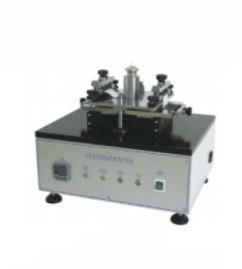
Working Principle
The Geotextile Wear Tester operates primarily through a mechanical reciprocating friction mechanism. In this process, a geotextile specimen is secured onto the device’s testing platform, where it comes into contact with a friction medium possessing specific surface characteristics. Under a predetermined pressure, a motor and a mechanical transmission system drive the friction component in a linear, reciprocating horizontal motion, causing the friction medium to continuously rub against the surface of the specimen. During this process, the fibers and structural composition of the specimen are subjected to repeated mechanical action, leading to fiber wear, breakage, shedding, or localized structural damage. By controlling parameters such as friction pressure, movement speed, stroke length, and the number of friction cycles, the device can simulate varying degrees of wear. Once the specified number of cycles is reached, the test is stopped, and the specimen is removed for visual inspection and mechanical performance testing. By comparing performance indicators—such as breaking strength—before and after the abrasion process, one can calculate the material's strength retention or strength loss, thereby evaluating its abrasion resistance.
Components
Frame and Support Structure: This serves to support the various working components of the device, ensuring overall stability during operation and minimizing the impact of mechanical vibration on test results. Drive Motor: Acting as the power source, the motor provides the energy required for the friction movement, enabling the friction component to operate at the set speed and in the specified motion pattern. Mechanical Transmission System: Typically consisting of drive shafts, connecting rods, eccentric wheels, or other transmission mechanisms, this system converts the rotational motion of the motor into linear, reciprocating motion, facilitating the required friction path. Specimen Fixture: Designed to secure the geotextile specimen, preventing it from sliding, shifting, or wrinkling during the friction process, thereby ensuring stable frictional interaction. Friction Head and Friction Medium: These are the core components for conducting wear tests. The friction head applies frictional force to the specimen, while the friction medium—typically specified sandpaper or another material with defined surface characteristics—is selected in accordance with relevant testing standards. Pressure Loading System: Used to apply a specified load between the friction head and the specimen, maintaining the contact pressure within a set range to ensure consistent testing conditions. Control System: Used to configure and regulate test parameters—such as friction speed, stroke length, number of cycles, and duration—as well as to manage the start, stop, and automated operation of the equipment. Counting and Display System: Tracks the number of reciprocating friction cycles and displays operational parameters, enabling operators to precisely monitor and control the testing process.
Application areas include
Geotextile Manufacturing: Used to assess the abrasion resistance of woven and non-woven geotextiles, as well as other geosynthetics. This includes evaluating surface damage, fiber shedding, and changes in strength under frictional stress, providing data to optimize production processes and ensure product quality. Highway and Railway Engineering: Used to evaluate how the performance of geotextiles—when used in roadbeds, railway subgrades, or track structures—is affected by friction from soil particles, gravel, and other materials, thereby analyzing the wear resistance of these materials during actual engineering use. Water Conservancy and Hydraulic Engineering: Used to test geotextiles employed in river channels, embankments, bank protection, and reservoirs, evaluating their wear resistance against water erosion, friction from sand and gravel, and other mechanical forces. Environmental Protection Engineering: Used to test geosynthetics utilized in landfills, artificial lakes, and seepage-control projects, assessing their wear resistance when in contact with surrounding soil, crushed stone, or other media. Civil Engineering and Construction: Used to test geotextiles applied in building foundations, underground structures, tunnels, and slope protection, evaluating performance changes resulting from friction during construction, installation, and long-term service. Quality Inspection and Research Institutions: Used for the quality inspection, performance evaluation, and research and development of new geosynthetic materials. By comparing the performance of various materials before and after abrasion, researchers can investigate how factors such as fiber raw materials, fabric structure, and production processes influence wear resistance.
Significance
The primary significance of the Geotextile Wear Tester lies in its ability to assess performance changes in geotextiles and geosynthetic materials subjected to long-term friction and abrasion. It helps determine a material's wear resistance and operational durability for use in actual engineering projects. By simulating the friction that occurs when materials come into contact with soil, sand, gravel, or other media—and by examining changes in the appearance and mechanical properties of specimens before and after abrasion—it becomes possible to scientifically evaluate the quality and functional performance of these materials.