

What is the purpose of a geomembrane environmental stress cracking resistance tester?
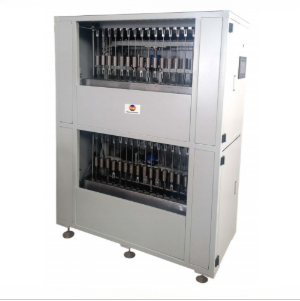
The Geomembrane Environmental Stress Cracking Resistance Tester is a specialized laboratory instrument designed to evaluate the ability of geomembranes to resist stress cracking when subjected to the combined effects of specific chemical environments and sustained mechanical stress. This equipment is primarily used to assess the susceptibility of geomembrane materials—particularly polyethylene-based impermeable materials, such as high-density polyethylene geomembranes—to cracking, fissures, or brittle failure during long-term service.
Operating Principle
The Geomembrane Environmental Stress Cracking Resistance Tester functions by simulating the sustained mechanical stress and specific chemical environmental conditions that a geomembrane might encounter in actual engineering applications. It monitors the process by which cracks initiate, propagate, and eventually lead to material failure under these combined factors, thereby quantifying the geomembrane's resistance to environmental stress cracking. Before testing begins, specimens of specified dimensions and shapes are cut from the geomembrane material in accordance with relevant testing standards and subjected to necessary preparatory processing. Depending on the specific test method, some specimens may require the introduction of a notch to create a stress concentration zone, allowing for a more effective evaluation of the material's resistance to crack initiation and propagation. The prepared specimens are then mounted into specialized fixtures or holding devices to ensure they are subjected to the required stress state. The equipment applies a constant tensile load—or induces sustained stress through a prescribed bending configuration—to the specimens. By precisely controlling the clamping positions, loading conditions, and specimen configuration, the system ensures that the required mechanical stress is maintained throughout the duration of the test. Once mounted, the specimens are placed into a test container filled with a designated test medium, ensuring they remain in full contact with the specific chemical environment while under sustained stress. The test medium is selected based on the applicable testing standards—for example, a surfactant solution of a specified concentration. Throughout the test, parameters such as temperature and other environmental conditions are strictly controlled in accordance with the standards to ensure the comparability of results across different specimens. During the course of a sustained test, environmental media can influence the molecular chain movement and local stress state of polyethylene materials, leading to the gradual formation of micro-cracks in areas of stress concentration. As the test duration increases, these cracks may propagate, eventually resulting in the cracking or fracture of the specimen. By maintaining specified test conditions, the equipment enables this long-term degradation process to be effectively evaluated within a laboratory environment. Test personnel must periodically inspect the condition of the specimens—or utilize monitoring devices to track changes—and record the time at which cracks appear, a specified failure state is reached, or complete fracture occurs. When multiple specimens are tested, the results can be analyzed and compared to assess the material's resistance to environmental stress cracking under the defined test conditions. Upon completion of the test, the material's environmental stress cracking resistance is evaluated based on the time to cracking, the nature of the failure, and other relevant test data. Generally, under identical test conditions, a longer time to reach a specified degree of cracking or failure indicates superior resistance to environmental stress cracking.
Application Value
The quality of a geomembrane depends not only on its thickness, tensile strength, and elongation at break, but also, crucially, on its long-term resistance to environmental stress cracking. By using this equipment, manufacturers can gain timely insight into a product's cracking resistance under specified test conditions and identify potential material deficiencies. This allows them to move beyond relying solely on conventional mechanical property metrics, facilitating the establishment of a more comprehensive product quality control system. Geomembranes are widely used in impermeable lining applications, such as landfills, tailings ponds, wastewater treatment basins, and reservoirs. Throughout their long-term service life, these materials may be subjected to both mechanical stress and the influence of surrounding environmental media. If a material lacks sufficient resistance to environmental stress cracking, cracks may gradually develop, compromising the integrity of the impermeable system. Performance evaluation using this equipment assists project developers and engineers in selecting materials with appropriate cracking resistance, thereby reducing the risk of leakage caused by inadequate material performance. While traditional tensile tests primarily assess a material's mechanical properties under short-term loading, environmental stress cracking (ESC) tests focus on a material's susceptibility to cracking when subjected to sustained stress in the presence of specific environmental media. By recording the time it takes for a specimen to crack or reach a defined failure state, one can gain insight into the material's resistance to environmental stress cracking—a critical factor in evaluating the long-term performance of geomembranes. Factors such as the type of polyethylene raw material, molecular structure, molecular weight distribution, additives, and processing techniques can all influence a geomembrane's ESC resistance. Manufacturers can use this equipment to conduct comparative tests on products made with different formulations and production processes, analyzing how various factors affect material performance. This enables the optimization of raw material ratios and production parameters, ultimately enhancing overall product performance and quality consistency.
Conclude
The Geomembrane Environmental Stress Cracking Resistance Tester is primarily designed for use by geomembrane manufacturers, as well as entities involved in landfill operations, wastewater treatment, mining tailings storage, water conservancy projects, chemical containment facilities, research institutions, and third-party testing laboratories. Its core value lies in its ability to simulate the long-term service conditions—characterized by the combined influence of mechanical stress and environmental media—under which a geomembrane must perform. By evaluating ESC resistance, the equipment helps users improve material quality, optimize product performance, and obtain reliable experimental data to ensure the long-term, safe operation of various impermeable lining systems.