

How to Use the Sole Sand Bath Thermal Insulation Tester?
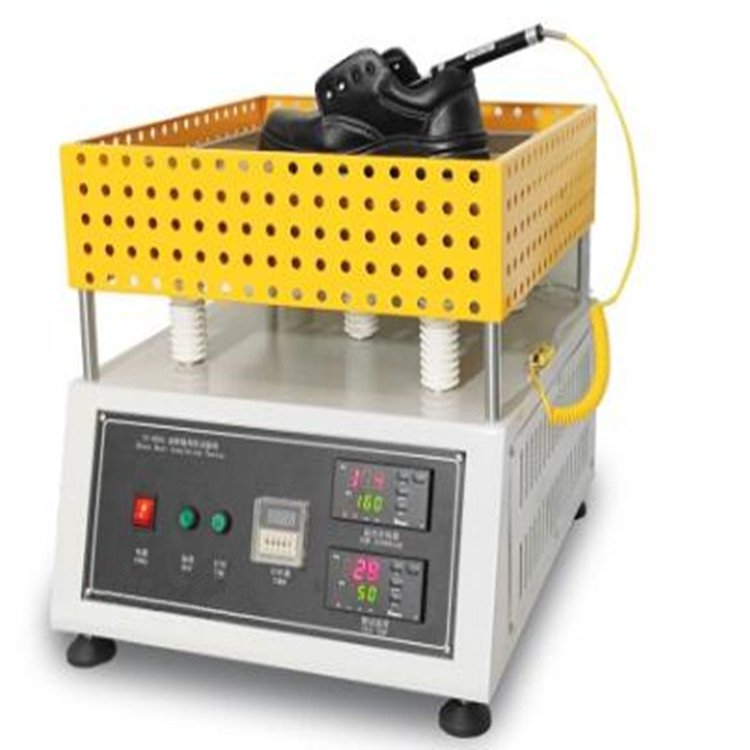
The Sole Sand Bath Heat Insulation Tester is a specialized piece of testing equipment designed to evaluate the thermal insulation properties of footwear sole materials. By simulating conditions where a sole comes into contact with high-temperature sand, the device measures the transfer of heat through the sole, thereby assessing the material's thermal insulation effectiveness and heat resistance. During the test, the sole can also be observed for signs of softening, deformation, or cracking when exposed to high temperatures.
Working Principle
The Sole Sand Bath Heat Insulation Tester operates by simulating the real-world environment in which a sole might encounter hot sand. Utilizing the principles of heat conduction, it measures how heat travels from the exterior of the sole toward the interior, allowing for an assessment of the material's thermal insulation and protective capabilities. In a typical test, the sand bath medium is heated to a specified temperature and maintained at a stable level. The sole—or a footwear specimen prepared according to relevant standards—is then placed in a designated position, ensuring full contact between the sole and the hot sand. As heat is transferred from the sand to the outer surface of the sole, it gradually conducts through the material toward the interior. Temperature sensors monitor the inner side of the specimen (or other specified measurement points) in real time, recording how the temperature changes over the course of the test. Based on this data, analysts can evaluate the rate of heat transfer, the temperature rise on the inner side of the sole, and the overall insulation performance of the material. A slower temperature rise on the inner side under identical test conditions generally indicates superior thermal insulation. Once the test is complete, the data can be analyzed and compared to evaluate different sole materials or footwear products, providing a scientific basis for material selection, product development, and quality control.
Importance
The Sole Sand Bath Heat Insulation Tester plays a critical role in the quality testing of safety footwear and professional protective gear, specifically by evaluating how well a sole insulates against high-temperature sand. In industries involving high-heat environments—such as metallurgy, foundry work, steel production, and construction—it is essential for footwear soles to provide effective thermal insulation, thereby reducing the risk of burns caused by external heat transferring through the sole to the wearer's feet. Testing with this equipment allows for an effective evaluation of the thermal insulation properties of various sole materials. It provides insight into temperature fluctuations and material stability under high-temperature conditions, enabling the timely identification of inadequate thermal insulation or any anomalies that may arise when materials are exposed to heat. Furthermore, the test results offer a scientific basis for selecting sole materials, designing product structures, and refining production processes. The equipment also assists enterprises in establishing robust quality control systems, ensuring that safety and protective footwear meet the necessary technical requirements for thermal insulation, thereby enhancing product safety, reliability, and service life. For testing institutions, it serves as a vital instrument for assessing the thermal protective performance of footwear, verifying product quality, and safeguarding the occupational safety of workers.
Application Areas
The sole thermal insulation tester (sand-bath method) is primarily used in the research and development, production, quality testing, and third-party inspection of footwear—particularly for safety and occupational protective footwear that requires thermal insulation capabilities. By simulating the contact between the sole and high-temperature sand, the equipment evaluates the thermal insulation capacity of sole materials, providing a reliable foundation for performance assessment and quality control. Safety Footwear Manufacturing: Used to test the thermal insulation of industrial safety shoe soles, ensuring they meet specific safety performance standards when exposed to high-temperature environments. Occupational Protective Footwear Production: Employed to test the thermal insulation of sole materials, assisting manufacturers in selecting appropriate materials to enhance protection in high-temperature work environments. Metallurgy and Steel Industry: Suitable for testing protective footwear used in high-temperature settings—such as blast furnaces, steelmaking, and metal processing—by evaluating the sole’s ability to provide insulation against hot sand and thermal environments. Foundry and Machinery Manufacturing: Used to test specialized protective footwear for these sectors, helping to evaluate the stability and thermal insulation of sole materials under high-temperature operating conditions. Sole Material R&D: Applicable to the development and performance comparison of materials such as rubber and polyurethane, providing experimental data for the screening of new materials, optimization of formulations, and improvement of product structures. Third-Party Testing and Certification Institutions: Utilized for assessing the thermal insulation performance of footwear, evaluating quality, and verifying compliance with relevant standards, thereby providing technical support for product inspection and certification. Research institutions and quality testing laboratories: Used for conducting research on the heat transfer, thermal insulation properties, and high-temperature adaptability of sole materials, providing an experimental basis for the development of protective footwear technology.
Significance
This equipment is primarily used to evaluate the thermal insulation properties of sole materials, providing a testing basis for the R&D, production, quality control, and performance verification of footwear products. Through scientific and standardized testing, it assists enterprises in making better selections of sole materials, optimizing product designs, and enhancing the quality and reliability of safety and protective footwear—all while reducing the risk of thermal injury to the feet in high-temperature work environments.