

How does an electrostatic decay tester work?
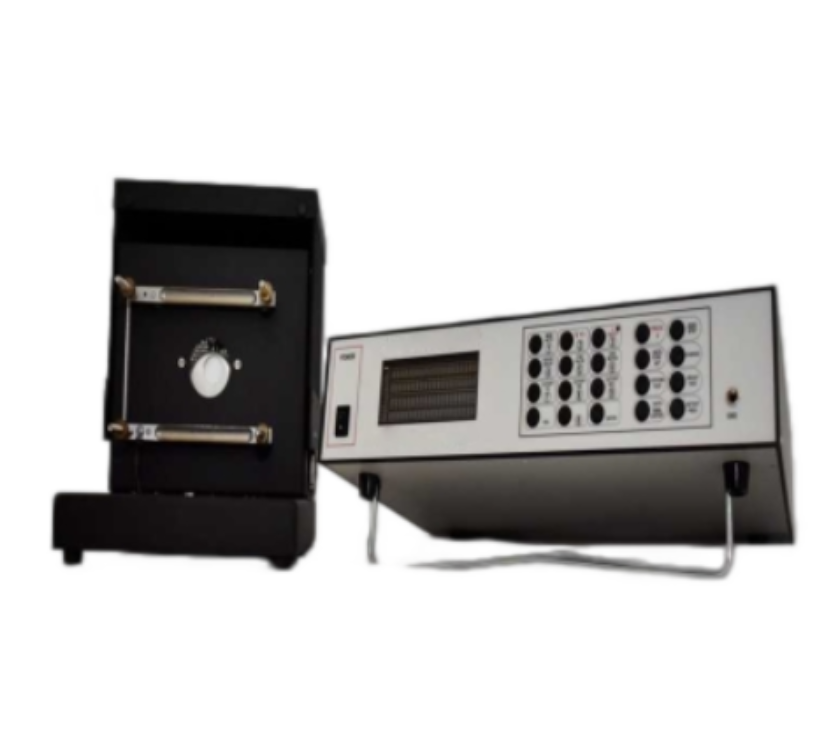
An Electrostatic Decay Tester is a specialized piece of testing equipment designed to measure the electrostatic charge decay performance of materials or products. It is primarily used to evaluate how quickly and effectively an electrostatic voltage—generated on a material following an electrostatic charge—decreases over time. The instrument applies a specific electrostatic charge to the test specimen, bringing it to a defined initial voltage. It then monitors the voltage in real-time as it decays, recording the time required for the electrostatic charge to drop from the initial voltage to a specified target voltage, thereby assessing the material's electrostatic dissipation capability.The Electrostatic Decay Tester evaluates a material's ability to dissipate electrostatic charges by measuring the decline of the surface electrostatic voltage over time, with Static Decay Timeserving as a key performance metric.
Operating Principle
Sample Preparation: The specimen to be tested is placed in the test area, secured, and preconditioned according to the instrument's requirements. Electrostatic Charging: The instrument’s charging mechanism brings the specimen to a pre-set initial electrostatic voltage. Discharge: Once charging ceases, the electrostatic charge on the specimen's surface begins to decay naturally or dissipate through a designated discharge path. Voltage Monitoring: The instrument uses an electrostatic voltage measurement system to monitor changes in the specimen's surface voltage in real-time. Time Recording: When the voltage drops to a pre-set final (termination) voltage, the instrument records the time elapsed from the initial voltage to this final voltage. Result Analysis: The measured static decay time is used to evaluate the material's electrostatic dissipation performance. A short decay time generally indicates that the material can dissipate electrostatic charges rapidly, while a long decay time suggests a slower dissipation rate. Consistent decay times indicate that the material exhibits stable electrostatic performance under identical testing conditions. Test results may be influenced by factors such as material type, ambient temperature and humidity, initial charging voltage, termination voltage, test distance, and the specific testing methodology employed. Consequently, comparisons between different materials or different instruments should only be made under identical or comparable testing conditions.
Product Advantages
The Electrostatic Decay Tester offers several advantages, including high measurement accuracy, rapid testing, ease of operation, and stable performance. This equipment accurately measures the decay time of electrostatic charges on material surfaces, enabling the assessment of a material's electrostatic dissipative properties. It provides reliable data to support the research, development, production, and quality control of anti-static materials. Utilizing advanced electrostatic measurement technology, the device effectively minimizes external interference during testing, thereby enhancing the accuracy and repeatability of the results. It is suitable for performance testing of various anti-static materials, including plastic films, anti-static packaging bags, textiles, anti-static garments, and foams. The equipment is easy to operate with a streamlined testing process, which improves inspection efficiency and reduces human error. Furthermore, the test data can be used for material performance analysis, product quality assessment, and batch consistency management, assisting enterprises in establishing a robust quality control system for anti-static products.
Key Application Industries
In the electronics manufacturing industry, it is used to test the electrostatic decay performance of anti-static garments, packaging materials, mats, and other ESD (electrostatic discharge) protection products, thereby reducing the risk of damage to sensitive electronic components caused by electrostatic discharge. In the textile industry, it is used to evaluate the electrostatic dissipation capabilities of anti-static fabrics, industrial protective clothing, cleanroom garments, and functional textiles, assessing how these fabrics dissipate static charge following friction or electrification. In the plastics and film manufacturing sector, it is used to test the electrostatic decay properties of anti-static plastic films, packaging bags, polymer materials, and other functional plastic products, helping companies optimize material formulations and production processes. In the packaging industry, it is used to assess the electrostatic dissipation performance of packaging bags for electronic components, anti-static films, containers, and other packaging materials, ensuring they meet the static protection requirements for the storage and transport of electronic products. In the cleanroom sector, it is used to test the electrostatic properties of cleanroom garments, gloves, footwear, and other protective gear, helping to control static accumulation and minimize the impact of static-induced dust attraction on cleanroom environments. In the medical device industry, it is used to evaluate the electrostatic dissipation performance of packaging materials, protective materials, and relevant polymers that require static control. In the aerospace industry, it is used to test static protection materials and industrial protective gear employed around aerospace electronic equipment, assessing their static control performance. In the chemical and industrial protection sectors, it is used to test the electrostatic decay performance of anti-static workwear, protective fabrics, and industrial packaging materials, assisting in the evaluation of their static protection capabilities.
Summary
The Electrostatic Decay Tester is widely used across fields such as anti-static materials, electronics manufacturing, textiles, cleanroom supplies, packaging, and industrial protective equipment. It serves as an essential instrument for testing the static protection performance of materials and for quality control. By measuring the time it takes for a material to dissipate static charge, it helps companies determine the material's electrostatic dissipation capacity, providing data-driven support for product quality assessment and static protection management.