

How to Use a Magnetic Snap Fastener Testing Machine for Bags and Accessories?
The Magnetic Snap Fastener Testing Machine for Bags and Accessories is a specialized testing instrument designed to evaluate the performance of magnetic snap fasteners used in luggage, handbags, wallets, apparel, and other accessories. The equipment is primarily used to assess the magnetic attraction force, opening force, closing performance, and attachment security of these fasteners, determining whether they are prone to issues such as a loss of magnetic strength, detachment, structural damage, or functional failure during repeated use and daily wear.
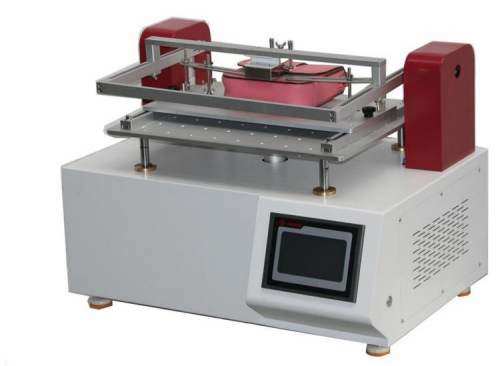
Key Testing Objectives
Magnetic Attraction Force Testing: Measures the force generated when a magnetic snap fastener closes, ensuring the attraction between the magnets meets product design specifications. Opening Force Testing: Measures the external force required to separate the magnetic snap fastener, ensuring it is neither too difficult nor too easy to open, thereby optimizing the user experience. Pull-off Strength Testing: Evaluates the load-bearing capacity of the magnetic snap fastener and its attachment point, determining whether it is likely to detach from the luggage or leather substrate. Closing Performance Testing: Assesses the effectiveness of the magnetic attraction, alignment, and stability during the closing process, ensuring the fastener functions reliably. Durability Testing: Involves repeated opening and closing cycles to check for any loss of magnetic strength, structural loosening, or functional failure over time. Attachment Security Testing: Measures the bond strength between the magnetic snap fastener and the leather, fabric, or other base materials, preventing the component from becoming loose or detaching during use. Quality Control: Facilitates performance testing across different batches of fasteners, allowing manufacturers to identify quality variations and ensure consistency in production. Product R&D and Improvement: Provides data on magnet specifications, fastener structure, installation methods, and material selection, assisting companies in optimizing product designs.The Magnetic Snap Fastener Testing Machine for Bags and Accessories typically consists of a main frame, a fixture system, a mechanical loading system, a drive system, a force measurement system, a control system, and a data acquisition system. The various components work together to secure the magnetic snap fastener sample, apply test loads, measure the applied force, and record test data.
Main Structural Components
The main frame consists of a base, vertical columns, and support structures, providing a stable mechanical foundation to ensure smooth operation of the equipment during testing. The fixture system is designed to secure the magnetic snap fastener and its mounting substrate, preventing movement or displacement during testing and ensuring the accuracy of the test position. The mechanical loading system applies tensile force, separation force, or other specified loads to the magnetic snap fastener, enabling tests such as magnetic attraction force, opening force, and connection strength. The drive system, typically comprising a motor, transmission mechanisms, and related mechanical components, controls the direction of motion, loading speed, and travel distance during the test. The force measurement system, primarily consisting of high-precision force sensors, measures the forces exerted on the magnetic snap fastener in real-time during opening, separation, or detachment. The displacement measurement system tracks the movement of the fixtures or loading mechanism, providing data for analyzing the separation process and mechanical properties of the magnetic snap fastener. The control system, which includes a controller, an operation panel, and control circuitry, is used to configure test parameters, manage equipment operation, adjust loading speeds, and monitor the status of the test. The data acquisition and processing system collects, records, displays, and analyzes force, displacement, and other relevant data, facilitating performance evaluation and quality inspection.
Operating Procedures
Equipment Inspection: Before beginning a test, verify that the power supply, control system, force sensors, fixtures, and mechanical transmission components are functioning correctly to ensure the equipment is in good working order. Sample Preparation: Prepare the magnetic snap fastener samples according to the test requirements. Inspect the surfaces for deformation, cracks, looseness, or other visible defects, and ensure the samples meet the specified testing criteria. Sample Installation: Mount the magnetic snap fastener and its corresponding connecting components into the designated fixtures. Adjust the position of the samples to ensure proper alignment and a secure hold. Parameter Configuration: Using the control system, set the test speed, loading direction, test travel distance, and other relevant parameters based on the specific test requirements. If the equipment supports automated testing, the number of test cycles can also be configured. Begin the test by activating the equipment. The drive system applies a tensile or separation force to the magnetic fastener according to pre-set parameters, simulating the opening, detachment, or pull-off scenarios encountered during actual use. During the test, a force sensor captures real-time changes in applied force, while the control system records the maximum force, separation force, and corresponding displacement data. Once the test is complete, analyze the recorded data to evaluate the magnetic fastener’s attraction strength, opening performance, and connection integrity, determining whether the sample meets the product design specifications. After testing, return the equipment to a safe position, remove the sample, clean the fixtures and the test platform, and power off the device. Ensure that the sample is securely clamped to prevent any slippage or shifting during the test. Select the appropriate fixtures and test methods based on the specific type of sample, and ensure that all test parameters are set in accordance with relevant standards or product technical requirements. Do not touch any moving parts or loading mechanisms while the equipment is in operation. Periodically inspect the force sensor and the overall operational status of the equipment, performing calibrations as necessary. Use the correct clamping method and loading direction for each specific test to avoid inaccurate results caused by improper testing procedures.
Summary
The primary purpose of this equipment is to evaluate the attraction strength, opening force, pull-off resistance, and durability of magnetic fasteners, ensuring that the magnetic closure mechanisms used in bags, luggage, and accessories offer optimal functionality, safety, and reliability.