

What is a fabric wet adhesion performance tester?
A Fabric Wet Adhesion Performance Tester is a testing instrument designed to evaluate the adhesion properties of fabrics, textile materials, or related composites under damp, submerged, or wet conditions. It is primarily used to assess the adhesion strength, bonding stability, and changes in adhesive performance between fabrics and other materials in a wet environment, thereby determining the effectiveness and reliability of the bonding when the materials are exposed to water during actual use.
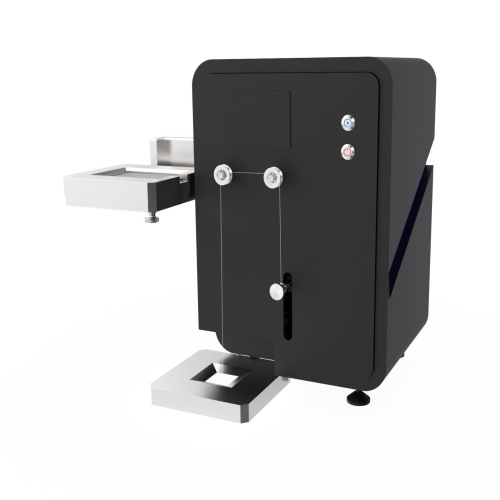
Key Applications
By simulating the wet conditions encountered in real-world use, the Fabric Wet Adhesion Performance Tester measures changes in adhesion between materials, helping to determine whether a product is prone to issues such as delamination, layer separation, or a reduction in bond strength when exposed to water.
Wet-state adhesion testing: Measures the adhesion strength between fabrics and other materials in a wet state to evaluate their bonding capability under such conditions. Coating adhesion testing: Assesses the bond strength of coatings on waterproof fabrics, functional textiles, and coated fabrics in damp environments. Composite material bond strength testing: Evaluates the adhesion between fabrics and materials such as plastic films, polyurethane coatings, or other composites. Wet-state peel strength testing: Measures the force required to peel materials apart after they have been submerged or wetted, providing insight into the stability of the bond. Quality control: Used for inspecting raw materials, semi-finished products, and finished goods during the manufacturing process, enabling companies to promptly identify any failures in adhesion performance. Research and development: Provides data for the development of new functional fabrics, composite textiles, and coated materials, assisting R&D teams in optimizing material formulations and production processes. Water-resistance evaluation: Analyzes the impact of moisture on bond strength by comparing the adhesion performance of materials in dry versus wet states.
The Fabric Wet Adhesion Performance Tester is primarily used in industries that require the assessment of adhesion properties for fabrics, coated textiles, and composite materials in damp or wet environments. By testing the adhesion strength and bonding stability of materials under these conditions, it helps companies maintain product quality, refine production processes, and enhance overall product reliability.
Application Sectors
In the textile manufacturing industry, it is used to test the adhesion properties of various fabrics in a wet state, evaluate the bond strength between fabrics and other materials, and ensure that fabric quality meets production requirements. In the garment manufacturing industry, it is employed to test the wet-state adhesion of functional garment fabrics, composite fabrics, and coated textiles, assessing the stability of bonds during washing, wear, and exposure to humid environments. In the waterproof fabric sector, it is used to test the adhesion of waterproof textiles, coated waterproof fabrics, and laminated materials under wet conditions, determining whether coatings or films are prone to peeling or delamination. In the textile coating industry, it helps evaluate the bond strength between functional coatings—such as polyurethane (PU) or polyvinyl chloride (PVC)—and fabric substrates, assisting companies in optimizing coating formulations and processing techniques. In the footwear materials industry, it is used to test the adhesion of shoe-upper fabrics, composite materials, and related adhesives in humid environments, thereby enhancing the structural stability of footwear components. In the automotive interior sector, it is used to test the wet-state adhesion of seat fabrics, composite decorative materials, and interior textiles, assessing their reliability in humid operating conditions. In the technical textiles sector, it is used to evaluate the wet-state bonding performance of filtration fabrics, protective textiles, industrial composite fabrics, and other functional textile materials. In the composite materials industry, it is used to assess the wet-state adhesion of fabrics bonded with plastic films, rubber, polymer coatings, or other materials, providing a basis for quality control.
Advantages
High testing precision: Equipped with a force measurement system, the device accurately captures changes in adhesion force during testing, providing reliable data for evaluating the wet-state adhesion of fabrics. Stable performance: Featuring a robust mechanical loading structure, the device applies loads to samples according to predefined test conditions, minimizing the influence of human error on test results. Ease of operation: Equipped with an intuitive control system, the device allows operators to easily set test parameters, initiate tests, and view results, simplifying the operation process. This equipment offers practical testing capabilities, allowing for the assessment of wet-state adhesion strength, peel performance, and material bonding stability—meeting the diverse testing requirements of various materials. It provides intuitive data, recording force fluctuations, peak force, and other relevant metrics throughout the testing process, which facilitates result analysis and performance comparisons. The equipment is highly versatile, suitable for a wide range of flexible materials, including fabrics, coated textiles, and composite textile materials, thereby addressing the quality inspection needs of various products. It enhances testing efficiency by enabling in-house laboratory testing of wet-state adhesion, reducing the time otherwise spent sending samples to third-party laboratories. Furthermore, it supports product R&D by analyzing how adhesion performance varies across different materials and process conditions, providing valuable insights for the development of new textile materials, the selection of adhesives, and the optimization of coating processes. It also strengthens quality control, helping enterprises identify issues such as delamination, layer separation, or a decline in adhesion strength when materials are exposed to wet environments, ultimately elevating the standard of product quality management.
Summary
This equipment enables enterprises to scientifically evaluate the adhesion performance of fabrics and composite materials in wet environments, providing robust data to support material R&D, production process improvements, and product quality inspection. It is primarily designed for textile manufacturers, producers of functional fabrics, textile coating facilities, footwear material manufacturers, and companies producing composite materials—serving needs related to wet-state adhesion testing, quality control, and the development of new materials.