

How to use the Elmendorf Tearing Strength Tester?
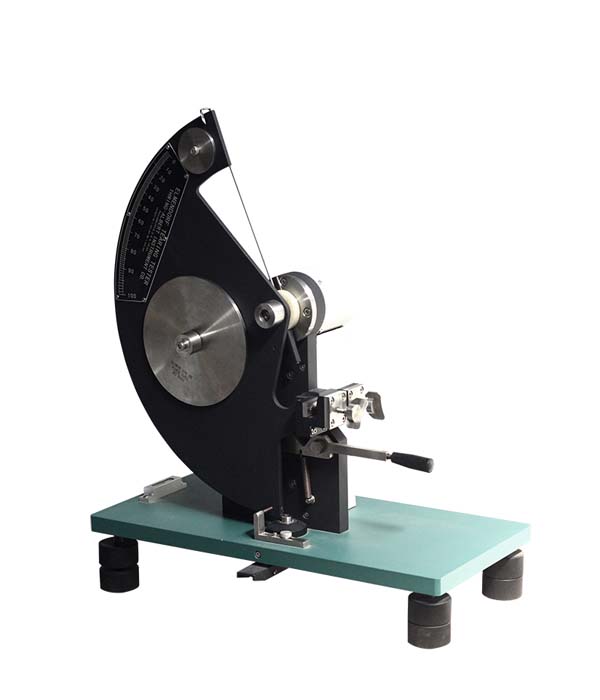
Elmendorf Tearing Strength Testers are testing instruments based on the Elmendorf method, designed to determine the tear resistance of materials such as paper, films, textiles, and non-woven fabrics. The device employs a swinging pendulum to tear a pre-cut specimen; by measuring the energy consumed during this process, it calculates the tearing force, with results expressed in millinewtons (mN) or as a tear index.
Test Procedure
Test the specimens in a standard atmosphere for textile testing—specifically, a temperature of 21 ± 1°C and a relative humidity of 65 ± 2%—unless otherwise specified in the material specifications or contractual agreement. Set the pendulum to its starting position and zero the force-recording mechanism. For specimens prepared using the tester’s integrated cutting blade: center the long side of the specimen within the clamps, ensuring the bottom edge rests carefully against the alignment stop and the top edge is parallel to the top of the clamps. Close the clamps, securing the specimen with approximately equal tension on both sides. The specimen should hang freely, with its upper section facing the pendulum to facilitate the shearing action. Use the integrated blade to cut a 20 mm slit into the specimen, extending upward from the bottom edge, leaving 43.0 ± 0.15 mm of fabric to be torn. For die-cut or manually cut specimens: if a pre-slit die is not used, manually cut a 20 mm slit at the center of one edge along the long side of the specimen. Ensure that the remaining length of fabric to be torn is 43 ± 0.15 mm. Position the specimen in the clamps with the uncut, parallel side aligned; the bottom edge should rest against the alignment stop, the top edge should be parallel to the top of the clamps, and the slit should be centered between the clamps. Close the clamps, securing the specimen with approximately equal tension on both sides. The specimen should hang freely, with its upper section facing the pendulum to facilitate the shearing action.
For wet specimen testing: remove the specimen from the water and immediately mount it in the tear tester, following the standard setup procedure. Testing must be completed within 2 minutes of removing the specimen from the water; otherwise, discard the specimen and replace it with a new one. Depress the pendulum stop to its limit and hold it in place until the tear is complete and the pendulum has finished its forward swing. Once the pendulum has passed the peak of its backward swing, catch it and return it to its locked starting position. Ensure that the position of the pointer is not disturbed during setup. Record the scale reading required to completely tear the specimen. The decision to discard a tear result should be based on observations made during the test and the inherent variability of the material. In the absence of other criteria—such as those specified in material standards—a value may be discarded and another specimen tested if an identifiable, anomalous cause is found. Discard any reading if the specimen slips within the clamps or if the tear deviates from the projection of the original cut by more than 6 mm. Note any folds or creases that occur during the test. For microprocessor-based systems, follow the manufacturer’s instructions to remove a discarded tear value from the device's memory; otherwise, for certain types of test equipment, the average value may need to be calculated manually. If the scale reading falls below 20% or exceeds 80% of the full-scale range during testing, or if the tear deviates across the intended line of rupture, record this occurrence and classify the specimen as "non-tearable." Remove the tested specimen and continue the procedure until five valid tear measurements have been recorded for each test direction and condition for every laboratory sampling unit.
Primary Purpose
This instrument utilizes the energy released by a swinging pendulum to propagate a tear in a specimen that has been pre-cut to a specific length. The tearing strength of the specimen is calculated based on the energy lost by the pendulum. It is used to determine the tearing strength of woven fabrics, knitted fabrics, and other textile materials, as well as to evaluate a fabric's resistance to tearing and damage during use. It allows for the assessment of how different fibers, yarns, and fabric structures influence tearing performance, and facilitates the comparison of tearing properties across various fabrics, manufacturing processes, and finishing treatments. With the appropriate instrument range and clamps, it can also be used to test the tearing properties of paper, plastic films, non-woven fabrics, and other flexible materials. It serves textile manufacturers, quality inspection agencies, and research laboratories for the purposes of product quality control and performance evaluation.
Scope of Application
Textile Industry: Used to test the tearing strength of woven fabrics, knitted fabrics, non-woven fabrics, and other textile materials, evaluating their resistance to tear propagation. Apparel Industry: Used to assess the tearing performance of garment fabrics, specifically their resistance to damage during wear and use. Home Textiles: Used to test the tearing strength of items such as bed sheets, duvet covers, curtains, and upholstery fabrics. Technical Textiles: Used to evaluate the tearing performance of materials such as tent fabrics, tarpaulins, protective textiles, and industrial filter fabrics.
Non-woven Industry: Used to determine the tearing strength of non-woven fabrics, hygienic materials, and filtration media, assessing their mechanical properties. Paper Industry: Used to measure the tearing strength of paper, paperboard, and other paper-based products, evaluating their resistance to tearing. Plastics and Packaging Industry: Used to test the tearing performance of applicable plastic films, packaging materials, and flexible composite materials. Research and Quality Inspection Institutions: Used for material R&D, product quality testing, the improvement of production processes, and the comparative analysis of tearing properties across different materials.
Summary
The Elmendorf Tearing Strength Tester is widely used across industries—including textiles, apparel, home furnishings, nonwovens, papermaking, and plastic packaging—to measure the tearing strength of materials. It provides essential data for product quality control, the comparison of material properties, and research and development.