

How Does a Dry Heat Shrinkage Tester Work?
A Dry heat shrinkage tester is a specialized, high-precision device used to evaluate the dimensional stability, dry-heat shrinkage rate, and dry-heat shrinkage force of linear materials—such as fibers, yarns, tire cords, and industrial filaments—when subjected to specific high-temperature, dry-heat air conditions. Common variants include single-station dry-heat shrinkage testers, multi-station high-speed dry-heat shrinkage testers, and fiber-specific dry-heat shrinkage testers.
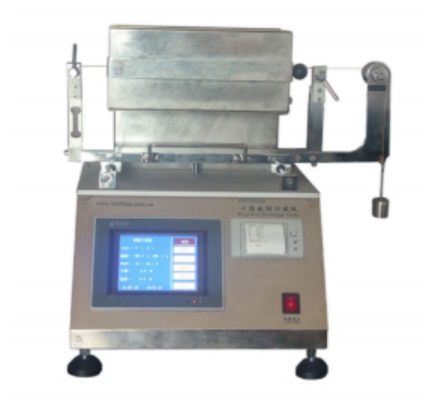
Operating Procedure
The core operating principle of a dry-heat shrinkage tester involves simulating a high-temperature, dry-heat environment. By applying a specific pre-tension, the instrument measures changes in the specimen’s length or the force exerted before and after heating, which are then used to calculate the material's thermal shrinkage rate or dry-heat shrinkage force.
Apply a standard pretension by securing the prepared specimen into the instrument’s clamps. In accordance with relevant standards, the instrument exerts a light, standardized pretension, ensuring the specimen remains straight and uniformly stressed in its initial state. For dry-heat testing, the specimen is placed within an enclosed or semi-enclosed dry-heat apparatus. A specific test temperature and duration are set and precisely controlled to simulate the thermal exposure a material might undergo during high-temperature processing, setting, or end-use.
Depending on the instrument’s detection mode, there are two primary measurement methods: The length-change method involves monitoring the specimen as it undergoes contraction or expansion—driven by the uncoiling or relaxation of molecular chains upon heating—and using clamps, displacement sensors, or a high-resolution camera system to record the change in length. The force-change method, by contrast, keeps the specimen’s length constant; as the material tends to contract when heated, it exerts a tensile force on a sensor, which converts this contraction force into an electrical signal for subsequent data calculation.
Scope of Application
The dry-heat shrinkage tester is designed to evaluate the thermal shrinkage properties of various materials. It assists manufacturers and testing institutions in assessing the dimensional stability of materials, providing reliable data for product R&D, production process optimization, and quality control. The instrument is primarily used to measure the dry-heat shrinkage rate and dry-heat shrinkage force of materials such as dipped polyester cords, dipped yarns and cords made from nylon or polyester fibers, tire cords, industrial polyester filaments, and processed yarns. It serves a dual purpose, capable of testing both shrinkage rate and shrinkage force. The system features a touchscreen interface for intuitive user interaction and input. It is equipped with a temperature acquisition module and an internal thermocouple, utilizing PID control to regulate the heater; both the heating temperature and heating rate can be configured via the touchscreen. An LCD screen displays real-time test data. The system includes data storage capabilities, allowing for the retrieval and calculation of multiple sets of test results, and comes with a micro-printer for printing individual values for shrinkage rate and shrinkage force.
Key applications include testing the dimensional stability and shrinkage force of tire cords and industrial filaments under precisely controlled temperatures, which helps prevent deformation in tires during high-temperature vulcanization or high-speed operation. It is also used to evaluate the dry-heat shrinkage properties of synthetic staple fibers, monofilaments, cotton threads, and various other yarns, providing guidance for textile process design and quality control. Furthermore, it assesses the shrinkage rate and dimensional stability of heat-shrinkable films (such as PE, PVC, POF, OPS, and PET), heat-shrink tubing, and rigid pharmaceutical blister films upon heating, ensuring secure packaging seals and consistent appearance. The instrument is suitable for use by fiber inspection bureaus, textile research institutes, and corporate laboratories, facilitating the R&D of new materials and product quality arbitration in accordance with national and international standards.
In the textile industry, it is used to test the shrinkage of textile fibers, yarns, woven fabrics, and knitted fabrics in dry-heat environments, thereby evaluating the dimensional stability of these materials. In the apparel industry, it is employed to assess the shrinkage of garment fabrics, interlinings, and other clothing materials following high-temperature ironing, drying, or heat treatment. In the plastic film sector, it serves to determine the dimensional changes of plastic films, packaging films, and heat-sensitive materials when exposed to heat, allowing for the evaluation of their thermal stability. Within the packaging industry, it is used to detect any tendency for packaging materials to shrink, deform, or undergo dimensional deviations during thermal processing or storage. In the nonwoven materials sector, it is utilized to test the dry-heat shrinkage properties of nonwoven fabrics, filtration media, and industrial nonwovens. In the rubber and composite materials industry, it is applied to study the dimensional stability of such materials under dry-heat conditions, providing a reference for performance evaluation. Furthermore, it is used by scientific research and quality inspection institutions for material R&D, product quality control, comparative performance testing, and assessments mandated by relevant standards.
Summary
The significance of a dry-heat shrinkage tester lies in its ability to evaluate the dimensional changes of textile materials, films, and other substances when exposed to dry heat. By measuring the thermal shrinkage rate, it allows for the assessment of a material's thermal and dimensional stability. As an essential instrument for quality inspection and performance evaluation, the dry-heat shrinkage tester helps improve the dimensional stability of products, ensuring that materials maintain the necessary performance characteristics for their intended practical applications after being subjected to heat.