

Why Is Shank Stiffness Important for Shoe Tester?
A Shoe Shank Stiffness Tester evaluates the stiffness and flexural resistance of a shoe—or specific footwear components—by applying a prescribed force or bending displacement and measuring the resulting deformation. The test results provide data on the mechanical properties of the footwear structure, serving as a basis for product development, material selection, and quality control.
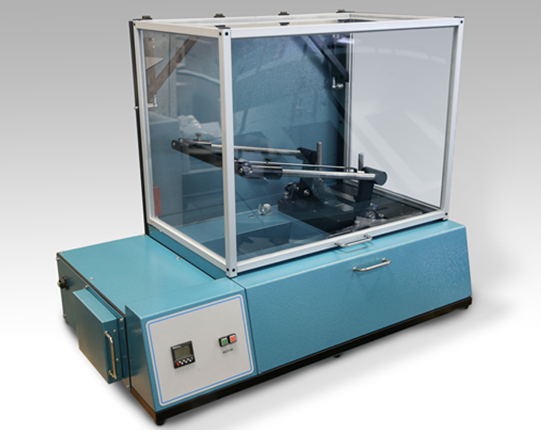
Operating Principle
The shoe or footwear component to be tested is secured within specialized fixtures on the testing machine. The specimen is positioned according to specific test requirements to ensure it is held firmly in place, preventing any unintended slippage during the test. Once the equipment is activated, a drive mechanism engages a loading device to apply force to the specimen under defined test conditions, inducing bending or other specified forms of deformation. Throughout the process, force sensors and displacement measurement systems record data such as the applied force, bending displacement, or angle—with the specific parameters depending on the machine's design and the chosen test method. Based on the recorded force and deformation data, the equipment calculates or assesses the specimen's stiffness in accordance with the relevant test standard. For systems that measure bending moment and rotation angle, flexural stiffness is evaluated based on the relationship between these two variables; other system configurations process the data according to their respective methodologies. Upon completion of the test, the results can be viewed via the machine’s display system or dedicated software. This allows for the comparison of performance across different shoe models, materials, or production batches, helping to determine whether the items meet established design and quality specifications.
Importance
A footwear stiffness testing machine is a piece of equipment used to evaluate the stiffness and flexural properties of footwear and its components. By measuring the mechanical response of footwear under specified loads or deformations, this equipment enables footwear manufacturers, material suppliers, and testing laboratories to assess the structural performance of footwear, providing reliable data to support product development, material selection, and quality control.
Footwear stiffness testing machines measure the mechanical response of footwear when subjected to force or bending, allowing manufacturers to understand the product's flexural capacity and structural characteristics, and to determine whether it meets design specifications. Factors such as sole materials, upper construction, and internal support components all influence the overall stiffness of a shoe. By testing various design configurations, manufacturers can compare the mechanical performance of different products and optimize both structural design and material combinations. Standardized testing methods allow companies to compare the performance of different production batches, identify variations in stiffness, and ensure greater consistency in product quality. Since different types of soles, insoles, and support materials possess distinct stiffness profiles, test results serve as a valuable reference for material selection and supplier evaluation, helping companies choose materials that align with specific product positioning and functional requirements. Because a shoe's stiffness directly affects its flexural behavior and mechanical response during movement, manufacturers can use these evaluations to strike an optimal balance between structural support and flexibility, tailored to the intended use and design goals of the footwear. During new product development, these testing machines allow for the comparison of different materials, structures, and manufacturing processes, providing an objective basis for product refinement and overcoming the limitations of relying solely on subjective experience. By conducting stiffness tests during both the R&D and production inspection phases, companies can identify products that fail to meet design requirements early on, thereby reducing the need for rework and minimizing quality issues stemming from inconsistent structural performance.
Scope of Application
The footwear stiffness testing machine is primarily designed to evaluate the stiffness and flexural properties of footwear products and their components. It provides objective mechanical performance data for footwear manufacturers, material suppliers, and testing laboratories, and is widely used in the following areas:
Footwear Manufacturing: Used to test the stiffness of athletic shoes, casual footwear, leather shoes, work boots, and other types of footwear, helping manufacturers assess product structural characteristics and quality consistency.Sole Manufacturing: Used to evaluate the flexural properties of rubber, polyurethane (PU), thermoplastic polyurethane (TPU), and other sole materials or components, providing a reference for material selection and structural design.Footwear Support Components: Used to test the stiffness of shanks, heel supports, midsole structures, and other related components, ensuring that their mechanical performance meets design specifications.R&D and Product Design: Used to analyze how different materials, thicknesses, structures, and manufacturing processes affect footwear stiffness, providing data for new product development, material formulation optimization, and structural improvements.Quality Control and Inspection: Used for incoming raw material inspection, in-process quality control, and finished product performance evaluation, helping companies identify stiffness variations between production batches and enhance product quality stability.
Conclusion
The footwear stiffness testing machine provides objective data for evaluating the stiffness and flexural properties of footwear, serving as a valuable tool for material selection, structural optimization, product development, and quality control. Specific test protocols and evaluation metrics should be determined based on the equipment’s design, testing principles, and applicable standards.