

How to Choose the Right Upper Leather Flexing Tester?
The Upper Leather Flexing Testeris designed to simulate the compression, stretching, and bending forces exerted on a shoe upper during walking. This equipment is used to evaluate the flex resistance of shoe upper materials, such as leather, textiles, and other flexible materials.
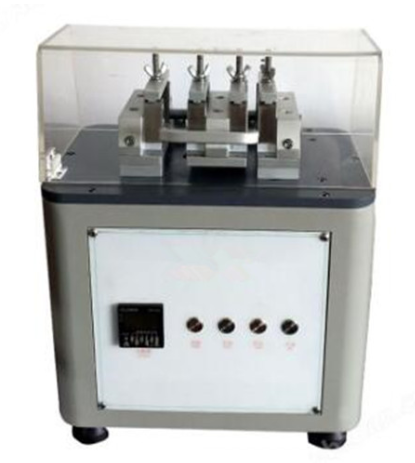
Operating Principle
The shoe upper material flexing tester operates by simulating the compression, stretching, and bending that a shoe upper undergoes while being worn during walking. During testing, the specimen is secured in a fixture and subjected to continuous, repetitive flexing (bending) at a specific frequency and stroke length. After a predetermined number of flexing cycles, the surface of the specimen is examined for the presence and severity of creases or cracks, thereby assessing the material's flex resistance.
Secure the leather specimen—intended for use as a shoe upper—into the clamps or holding fixture of the testing machine. Depending on the equipment design, a mechanical drive system is used to either push the leather specimen upward with a spherical indenter or apply tensile force via stretching clamps. As the load gradually increases, the leather undergoes stretching or biaxial extension. Parameters such as the extension height, applied load, and elongation at break are measured. The surface of the leather is observed for the appearance of cracks, damage to any coatings, or ruptures; based on these test results, the material's extension properties and its suitability for the lasting process (shaping the upper over a last) are evaluated.
Key Selection Criteria
First, identify the specific performance characteristics to be tested—such as leather extensibility, surface cracking, bursting strength, tensile strength, or elongation at break—as different test parameters require specific equipment configurations and methodologies. Select equipment based on the materials you intend to test, ensuring it is suitable for natural leather, artificial leather, synthetic leather, or other footwear upper materials, while also accounting for variations in material thickness, elasticity, and surface coatings. Verify the measurement range and accuracy.
Pay particular attention to the maximum test load or pressure, the range for measuring extension height or displacement, the accuracy of force and displacement measurements, the applicable range for specimen dimensions and thickness, as well as data acquisition capabilities and test repeatability.
Application Value
The shoe upper leather extension/flexing tester is primarily used to evaluate the elongation properties, surface crack resistance, and deformation tolerance of leather and related materials intended for shoe uppers. It provides essential data for the research and development of footwear materials, quality control, and the optimization of production processes. By measuring parameters such as the height of extension, degree of deformation, or tensile performance under specified test conditions, the equipment assesses how well a material adapts during the shoe-lasting and upper-forming processes, enabling companies to select materials that meet specific product requirements. For leather with a surface finish (coating), the test can reveal issues such as surface cracking or coating damage that may occur during stretching, thereby reducing the risk of visible defects during the manufacturing of shoe uppers.
Standardized testing methods allow for the comparison of leather across different batches, suppliers, or processing techniques. This helps companies identify variations in material performance, ensuring greater consistency in incoming material inspection and quality control. In the development of new types of leather, artificial leather, or synthetic leather, test results can be used to analyze how different material formulations, coating structures, and processing methods affect elongation, providing a basis for material selection and product refinement.
Understanding how upper materials behave under stress and deformation helps companies determine whether a material is suitable for specific forming or lasting processes, and provides guidance for adjusting manufacturing parameters. By conducting performance tests during the raw material procurement phase or prior to production, companies can identify potential material defects early, minimizing rework and waste caused by cracking, surface damage, or material unsuitability. Unlike relying solely on visual inspection or subjective human judgment, instrumental testing provides objective, recordable, and comparable data, which supports supplier evaluation, batch quality tracking, and internal quality management.
Conclusion
The core value of a shoe upper leather extension/flexing tester lies in its ability to translate the elongation characteristics and surface-damage risks of upper materials into quantifiable test results, facilitating material selection, quality inspection, and process improvement. Before purchasing, companies should require suppliers to specify the relevant testing standards for the equipment and provide technical documentation—such as applicable materials, measurement ranges, and testing methodologies. Where necessary, validation should be performed using actual shoe upper leather samples. This ensures that the equipment effectively meets the requirements for laboratory testing or production-line quality control.