

Why is the Geosynthetic Clogging Tester important?
In geotechnical engineering and hydraulic construction, geosynthetic materials serve as critical filtration and drainage media. The long-term stability of their performance is directly related to the safety and service life of engineering projects. The Geosynthetic Clogging Test Apparatus is a specialized testing instrument designed to evaluate the performance of such materials. It is primarily used to simulate the interaction between soil particles and geotextiles under actual service conditions and to scientifically determine the clogging resistance of filtration systems.
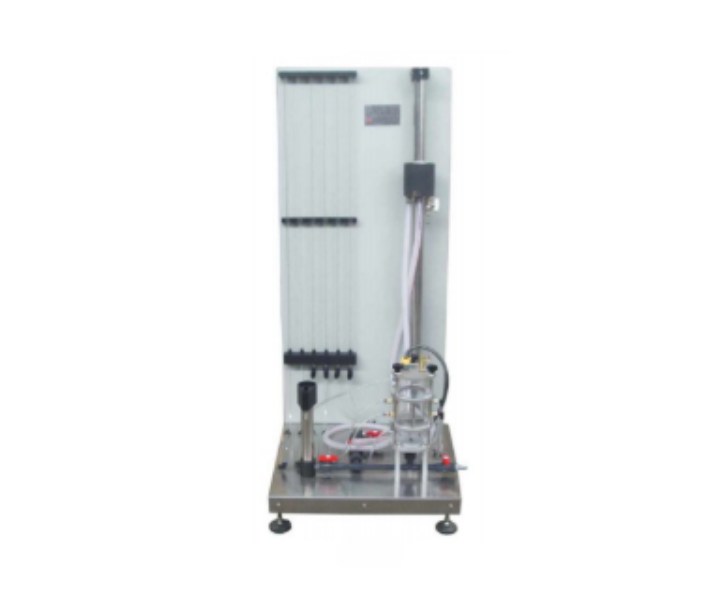
Core Test Principle: Gradient Ratio Method
The working principle of the Geosynthetic Clogging Test Apparatus is based on the Gradient Ratio (GR) method. In a filtration system composed of geotextiles and soil, water flowing through the system generates a head loss. When clogging occurs in the geotextile, soil particles can accumulate and fill its pores, reducing permeability and consequently causing changes in the hydraulic gradient.
The tester establishes a stable seepage field, allowing water to flow through the soil specimen and geotextile under a constant or specified hydraulic gradient. Multiple piezometers are installed inside the apparatus at different elevations within the soil specimen and at the interface with the geotextile. By continuously monitoring changes in the water levels in these piezometers, the hydraulic gradients across different sections of the test specimen can be calculated.
The key evaluation involves comparing the hydraulic gradient near the geotextile with that within the soil, expressed as the Gradient Ratio (GR). If the Gradient Ratio increases significantly over time and exceeds the specified critical value, it indicates that clogging has occurred in the geotextile, resulting in a loss of filtration performance.
The Necessity and Engineering Significance of Geosynthetic Clogging Testing
In modern geotechnical engineering, hydraulic construction, and transportation infrastructure, geosynthetic materials, such as geotextiles and geogrids, are widely used because of their excellent filtration, drainage, reinforcement, and protection functions. Among these materials, geotextiles used as filter layers play a critical role in allowing water to pass through while retaining soil particles and preventing soil loss. However, under actual service conditions, geotextiles are highly susceptible to clogging, which can lead to system failure. Therefore, geosynthetic clogging testing is not only a key step in evaluating material performance but also an essential means of ensuring the long-term safety and stability of engineering projects.
1. Revealing the Clogging Mechanism and Preventing Functional Failure
Clogging of geotextiles refers to the phenomenon in which fine particles from the protected soil migrate with seepage water and gradually accumulate within the pores or on the surface of the geotextile, resulting in reduced permeability. Depending on the cause, clogging can generally be classified into three types: mechanical clogging, chemical clogging, and biological clogging, with mechanical clogging being the most common.
Mechanical clogging can be further divided into three situations:
Fine soil particles enter the internal flow channels of the geotextile and cause blockage.
Soil particles with sizes similar to the pore openings of the geotextile block the entrances of the flow channels.
Soil particles accumulate on the surface of the geotextile and form a filter cake, resulting in a blocking effect.
Without clogging testing, it is difficult for engineering designers to predict the actual operating condition of a specific soil-geotextile combination. Once clogging occurs, the effective water-permeable area of the geotextile decreases and its permeability coefficient is reduced, directly causing a significant decline in the efficiency of the drainage system and potentially resulting in complete loss of drainage capacity.
For example, in subsurface pipe drainage systems, severe clogging can significantly increase flow attenuation and inlet resistance, which may subsequently cause an increase in soil pore-water pressure and threaten structural stability. Through clogging tests, the migration and accumulation behavior of fine particles can be directly observed, helping engineers understand the mechanism of clogging and prevent functional failure at the design stage.
2. Optimizing Material Selection and Ensuring Soil-Geotextile Compatibility
The clogging resistance of a geotextile is not determined solely by the material itself. Instead, it depends largely on the compatibility of the soil-geotextile system. Soils with different particle-size distributions have substantially different requirements for geotextile pore characteristics. Soils with a high silt content are generally more susceptible to clogging, while appropriately graded sand filter materials can help mitigate this problem.
Geosynthetic clogging tests simulate actual water-flow conditions and measure parameters such as the permeability coefficient and gradient ratio of the soil-geotextile system and its interface, providing a scientific basis for material selection.
Test results can reveal the performance differences between different solutions, such as using a geotextile alone versus incorporating a sand filter layer. This helps engineers select material combinations that not only meet strength requirements but also provide adequate water permeability. Such data-based material selection avoids the potential mistake of focusing solely on high strength or high modulus while overlooking interface characteristics, thereby ensuring coordinated performance between the geotextile and the surrounding soil.
3. Verifying Design Parameters and Ensuring Long-Term Engineering Durability
In roads, dams, and underground drainage systems, the long-term durability of geotextiles is directly related to the service life of the entire infrastructure. Although the traditional Gradient Ratio test is widely used, the applicability of the indicator may be limited under certain conditions. Improved clogging test methods can provide a more accurate assessment of the degree of clogging by monitoring changes in seepage velocity and permeability coefficient over time.
Test results generally show that as the degree of system clogging increases, the Gradient Ratio increases, while the seepage velocity and permeability coefficient decrease. By continuously monitoring changes in these parameters over an extended period, the performance degradation of geotextiles during long-term service can be evaluated.
This not only helps verify the validity of theoretical calculation models but also provides practical evidence for establishing appropriate maintenance intervals and construction specifications. For impermeable systems involving environmental protection, preventing clogging caused by damage or failure of the filtration layer is also an important safeguard against environmental pollution and soil instability.
Conclusion
The Geosynthetic Clogging Test Apparatus, with its scientific testing principles and precise structural design, has become an essential tool for evaluating the filtration performance of geosynthetic materials. A proper understanding of its operating principle and strict adherence to testing procedures are of great practical significance for ensuring the quality and safety of geotechnical engineering projects.With the continuous advancement of testing technology, such equipment is developing toward higher levels of automation and more precise temperature control, providing the geotechnical engineering industry with more efficient and reliable testing solutions.