

What is the carbon black dispersion test method used for?
In the modern plastics industry, carbon black is not only an effective coloring agent but also a key filler for enhancing a material's resistance to UV aging, electrical conductivity, and mechanical properties. However, the extent to which carbon black can deliver its full value depends entirely on how uniformly it is dispersed within the plastic matrix. Poor dispersion can lead to the formation of agglomerates, which act as stress concentration points within the material, resulting in reduced product strength, surface defects, and even premature failure.As a result, the Carbon Black Dispersion Measurement System has been developed. Like a “microscope” and “brain” on an industrial production line, it captures microscopic images with precision and performs intelligent analysis, providing a scientific basis for quality control in high-performance plastics.
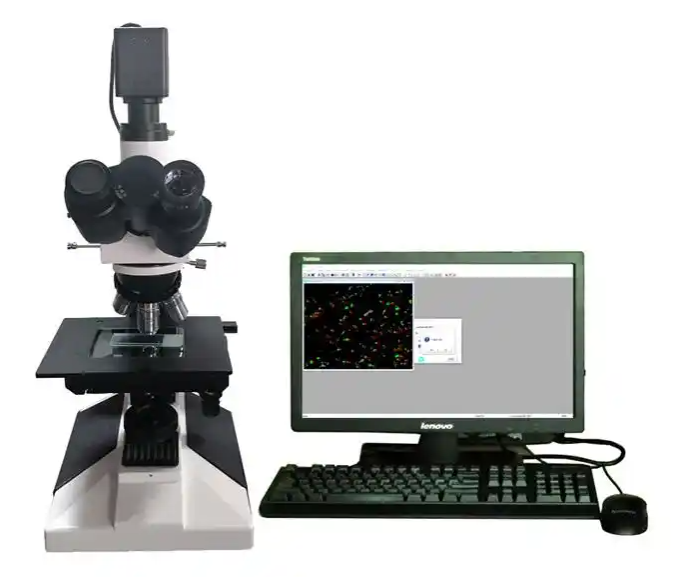
Correlation Between Carbon Black Dispersion and Product Performance
As a reinforcing agent and pigment, carbon black plays a critical role in determining material performance, and its dispersion uniformity has a significant impact on the properties of plastic materials. When carbon black particles agglomerate or are distributed unevenly, the following issues may occur:
1. Reduced Mechanical Properties
Agglomerates act as stress concentration points, reducing the material's impact strength and tensile performance.
2. Uneven Electrical Conductivity
In antistatic materials, poor carbon black dispersion can lead to fluctuations in electrical resistivity.
3. Surface Defects
Spots and streaks may appear on the surface of finished products, affecting their appearance and coating adhesion.
Using a Carbon Black Dispersion Measurement System, the size, shape, and distribution density of carbon black agglomerates can be quantitatively analyzed. This makes it possible to establish a correlation between dispersion quality and product performance, providing data-driven support for process optimization and manufacturing adjustments.
Features of the Plastic Carbon Black Dispersion Measurement System
1. Accurate Visualization of Carbon Black Dispersion
The core strength of the system lies in its ability to accurately reproduce and magnify the actual distribution of carbon black within the polymer matrix. For illumination, the system employs 30° oblique lighting or dark-field illumination technology. By utilizing the refractive index differences between carbon black agglomerates and the polymer matrix, it produces high-contrast dark images of undispersed carbon black against a light-colored background, providing a solid foundation for subsequent precise identification.
2. Advanced Digital Image Analysis
To ensure objective and reliable test results, modern measurement systems are equipped with powerful digital image analysis software. Through advanced grayscale recognition, edge detection, and adaptive threshold algorithms, the software can automatically distinguish and extract complex carbon black agglomerate morphologies. The system supports both automatic and manual image segmentation modes, allowing it to handle connected particles with ease. It can also accurately calculate a wide range of morphological parameters, including equivalent diameter, major and minor axis lengths, area, perimeter, circularity, and aspect ratio.
3. Intelligent Operation and Data Traceability
Modern measurement systems have entered an increasingly intelligent era, offering excellent ease of operation and data traceability. Operators only need to place a flat specimen, prepared through cutting or polishing, on the sample stage. The system can then automatically complete the entire workflow, including image acquisition, particle identification, data statistics, and report generation.
4. Standardized Evaluation and Efficient Analysis
The system incorporates multiple standard grading templates, supports customized report formats, and enables original images to be stored in association with statistical data in a database. This highly standardized testing process not only reduces the analysis time for a single field of view to less than one minute but also ensures high repeatability of test results and comparability across different laboratories.
Operating Procedures and Key Parameter Analysis
To fully utilize the capabilities of the Carbon Black Dispersion Measurement System, standardized operation and accurate data interpretation are essential.
1. Calibration and Verification
Use a micrometer scale for pixel-size calibration to ensure that measurement results correspond to actual dimensions.
Regularly inspect and verify the optical components of the system to prevent image distortion.
2. Image Acquisition Optimization
Select an appropriate resolution based on the characteristics of the sample. High-resolution mode (such as 2592 × 1944) is suitable for analyzing micron-scale agglomerates, while routine inspections can use 1024 × 768 pixels to improve efficiency.
Adjust the illumination angle and intensity to enhance the contrast between carbon black and the polymer matrix.
3. Key Points of Data Analysis
Dispersion Rating: According to the GB/T 18251-2019 standard, the dispersion state is classified into five grades (Grades 1–5), where Grade 1 represents uniform dispersion and Grade 5 represents severe agglomeration.
Particle Size Distribution Chart: Analyze the concentrated particle size ranges. A high proportion of small particles (less than 5 μm) may indicate effective dispersion processing.
Grayscale Distribution: Use a grayscale histogram to evaluate the consistency of carbon black concentration. A narrow peak may indicate a more uniform distribution.
4. Correlation Analysis for Process Improvement
When a large number of agglomerates larger than 10 μm are detected, the mixing process should be optimized, such as by extending the mixing time or adjusting the rotor speed.
If the particle size distribution covers a wide range, inspect the carbon black pretreatment process, such as drying temperature, or review the masterbatch formulation.
Note: The specific grading criteria, particle-size thresholds, and recommended process parameters should be verified against the applicable testing standard, equipment configuration, and material formulation before being used as formal quality-control requirements.
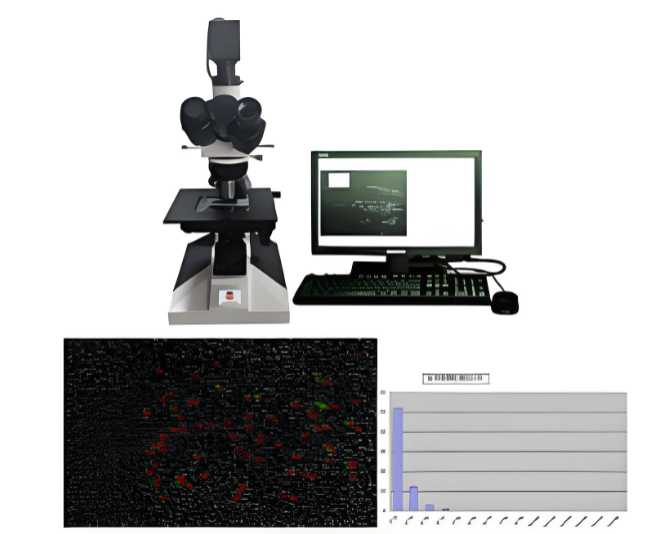
System Advantages: Overcoming the Limitations of Traditional Testing Methods
Compared with traditional metallographic analysis and manual assessment based on experience, modern Carbon Black Dispersion Measurement Systems offer significant technical advantages:
Objective and Consistent, Minimizing Human Error: Traditional methods rely on the experience and visual judgment of testing personnel. Significant differences may occur between different operators or even when the same operator performs evaluations under different conditions. Automated systems use standardized algorithms to perform assessments, ensuring a high level of data repeatability.
Efficient and Fast, Meeting Mass Production Requirements: The system supports multi-area scanning with an automated sample stage and batch image processing. A single test can be completed within several minutes, substantially improving testing efficiency and meeting the requirements of online production-line monitoring or large-scale batch sampling inspections.
Data Visualization, Supporting Process Optimization: Test results are presented not only as dispersion grades but also through intuitive distribution charts, particle size statistical histograms, and other visual data. Engineers can use these results to trace production processes and analyze the effects of mixing time, temperature, and shear rate on dispersion performance, enabling precise adjustments to process parameters.
In conclusion, the Plastic Carbon Black Dispersion Measurement System is more than a precision instrument used in the laboratory. It also serves as a bridge connecting microscopic structure with macroscopic performance. By supporting data-driven decision-making, it helps companies transition from “experience-based manufacturing” to “scientific and intelligent manufacturing” in an increasingly competitive market.As artificial intelligence and optical technologies continue to converge, future measurement systems are expected to become more intelligent and portable, providing ongoing support for the high-quality development of the plastics industry.