

What is a shoelace and eyelet abrasion tester?
Among the many aspects of footwear product design and quality, the abrasion resistance of eyelets and shoelaces is undoubtedly an important factor that should not be overlooked. As key components connecting the upper and shoelaces, eyelets not only bear the essential function of securing the shoelaces but also directly influence the wearer's comfort and the overall durability of the footwear. Shoelaces, as components that are subjected to frequent stress during daily shoe fastening and unfastening, also require excellent abrasion resistance. Therefore, the development and application of the Eyelet and Shoelace Abrasion Resistance Tester have become an important part of quality control and technological innovation in the footwear manufacturing industry.
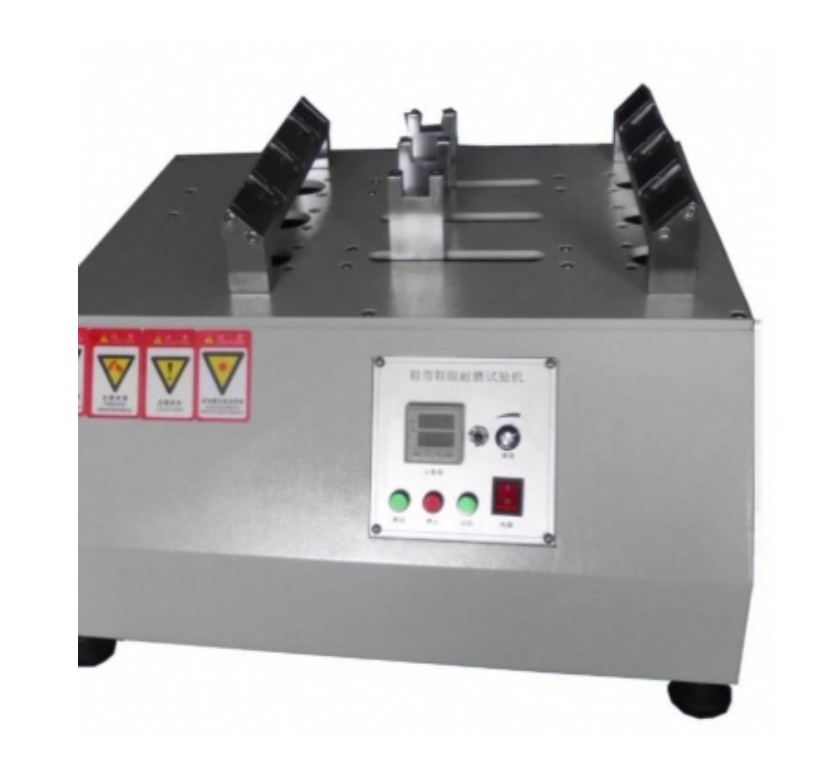
Working Principle of the Eyelet and Shoelace Abrasion Resistance Tester
The core design concept of the Eyelet and Shoelace Abrasion Resistance Tester is to realistically simulate actual use conditions. The tester is primarily driven by a motor, causing the shoelace to repeatedly rub against the eyelet or another shoelace under specified tension, speed, and stroke conditions until the specimen fails or reaches the preset number of cycles. At present, the main testing modes include the following two methods:
1. Shoelace-to-Eyelet Abrasion Test
The shoelace is threaded through an eyelet fixed to a fiberboard. The angle is adjusted so that the shoelace forms a 90° angle with the eyelet, while the fiberboard is positioned at a 45° angle to the shoelace. Under a standard tensile load, typically applied using a 455 ± 5 g weight, the shoelace is repeatedly pulled back and forth through the eyelet.
This test mode is mainly used to evaluate the abrasion resistance of shoelaces when passing through metal or plastic eyelets, as well as the cutting and wear effects caused by the edges of the eyelet on the shoelace.
2. Shoelace-to-Shoelace Interlocking Abrasion Test
The middle sections of two shoelaces are interlocked with each other. One end of each shoelace is secured to a movable clamp, while the other end is connected to a suspended weight through a pulley. The movable clamp reciprocates at a specified frequency, such as 60 ± 3 cycles/min, causing intense friction between the two shoelaces at their point of contact.
This test mode is mainly used to evaluate the abrasion resistance and breaking strength of shoelaces when subjected to repeated friction against each other.
Technical Features of the Eyelet and Shoelace Abrasion Resistance Tester
1. High-Precision Control:
The tester adopts an advanced servo motor and precision transmission mechanism, enabling precise control of key parameters such as friction force, speed, and stroke distance. The servo motor provides fast response and high positioning accuracy. Combined with the precision transmission mechanism, it effectively minimizes transmission backlash and motion errors, ensuring that all parameters remain stable within the preset ranges throughout the test process and providing reliable assurance for the accuracy and repeatability of test results.
2. Versatility:
The tester supports the testing of eyelets and shoelaces in various materials, shapes, and specifications. Whether testing commonly used synthetic fiber shoelaces and cotton shoelaces or metal and plastic eyelets, the test can be performed by replacing the appropriate fixtures or adjusting the test parameters. This meets the diverse testing requirements of different footwear products.
3. High Level of Automation:
The entire testing process is automated, from specimen mounting and parameter setting to test execution and result output. No repeated manual intervention is required, which not only reduces errors caused by manual operation but also significantly improves testing efficiency and consistency between batches.
4. Data Recording and Analysis:
The tester is equipped with advanced data acquisition and analysis software that can record various data throughout the test process in real time. The collected data can be statistically processed, organized, and compared, with detailed and standardized test reports generated automatically. This facilitates subsequent review, archiving, and quality traceability.
5. Safety Protection:
The tester is equipped with comprehensive safety protection mechanisms, including overload protection, emergency stop, and protective cover interlocking. When an abnormal load occurs or an operator enters a hazardous area inadvertently, the system can respond promptly and stop the equipment, effectively protecting both operator safety and the service life of the equipment.
Application Scenarios and Value
The Eyelet and Shoelace Abrasion Resistance Tester is widely used throughout various stages of the footwear industry supply chain:
1. Manufacturing and Production:
Used for incoming inspection of raw materials and quality control before finished products are shipped. It helps manufacturers select high-quality shoelace materials such as cotton, linen, and synthetic fibers, while also optimizing eyelet structural design.
2. R&D and Product Design:
Provides data support for the development of new footwear styles. By comparing abrasion resistance data for different materials and manufacturing processes, manufacturers can accelerate product development and iteration while improving overall product durability.
3. Third-Party Testing Laboratories:
Used as an important testing method for international certifications and testing services provided by organizations such as SATRA and SGS. It helps generate objective and accurate test reports, supporting product quality verification and enhancing brand competitiveness in the market.
Future Development Trends
1. Intelligentization:
With the rapid development of technologies such as the Internet of Things (IoT), big data, and artificial intelligence (AI), the Eyelet and Shoelace Abrasion Resistance Tester will evolve toward greater intelligence. By integrating smart sensors, cloud computing, and data analytics technologies, the equipment can provide functions such as remote monitoring, automatic alerts, and fault diagnosis.
2. Green and Sustainable Development:
As global environmental awareness continues to increase, green manufacturing has become an important development trend in the footwear industry. In the future, the Eyelet and Shoelace Abrasion Resistance Tester will place greater emphasis on energy conservation, emission reduction, and resource recycling, helping drive the footwear industry toward more environmentally friendly and sustainable development.
3. Customized Testing Solutions:
As consumer demand for personalized products continues to grow, footwear products are becoming increasingly diverse. Therefore, the Eyelet and Shoelace Abrasion Resistance Tester will place greater emphasis on customized testing services, providing different customers with more precise and efficient testing solutions tailored to their specific requirements.
In conclusion, as an important piece of equipment in footwear testing, the Eyelet and Shoelace Abrasion Resistance Tester plays a significant role in improving footwear product quality and promoting technological advancement in the industry. With continuous technological progress and evolving market demands, this equipment is expected to have broader development prospects in the future.