

Why is the suitcase vibration and impact tester important?
In today's fast-paced world, luggage and bags have become indispensable companions for travel, business trips, and daily commuting. From lightweight carry-on cases to heavy-duty checked hard-shell suitcases, their quality directly affects the user experience and the safety of personal belongings. However, throughout complex logistics and transportation chains and during frequent daily use, luggage is often subjected to severe vibration, collisions, and impacts. To scientifically evaluate the durability and structural strength of luggage, the Luggage Oscillation Test Machine has been developed as an essential precision testing instrument in the luggage manufacturing and quality inspection industries.
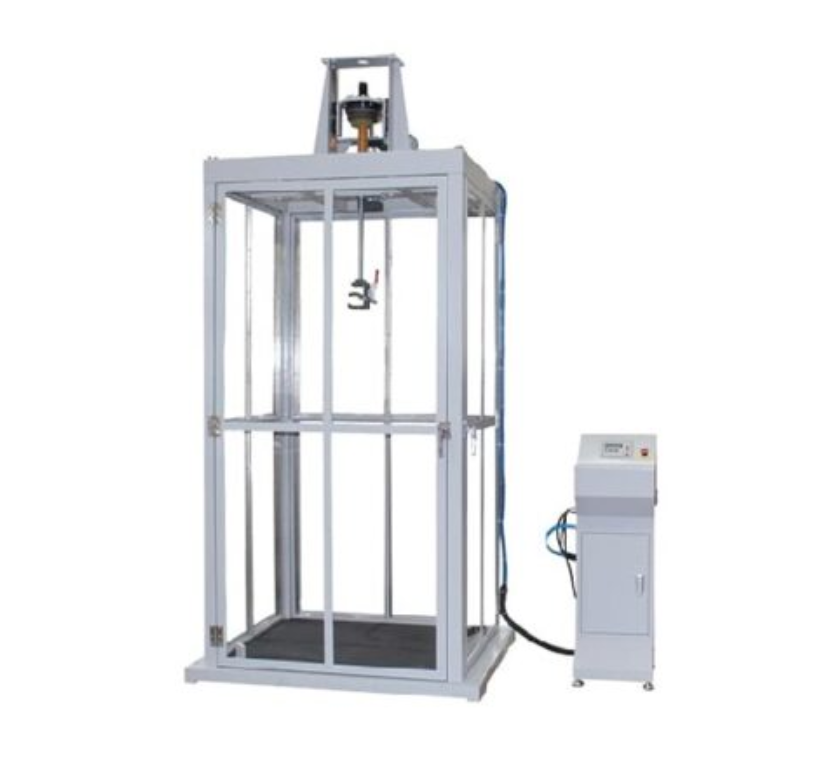
Working Principle of the Luggage Oscillation Test Machine
The working principle of the Luggage Oscillation Test Machine is based on the ingenious combination of mechanical transmission and physical mechanics. Its core function is to simulate the “lifting–dropping” cycle that occurs when luggage is carried by hand or transported by vehicles, while mechanically, systematically, and repeatedly performing this process at high intensity.
The equipment typically adopts a spring-type vibration structure or a mechanical linkage drive system. Before testing begins, the operator loads the luggage with a specified standard load to simulate the load-bearing condition during actual use. The handle or pull rod of the luggage is then secured to the moving arm of the testing machine using a dedicated fixture.
Once the machine is started, the drive system moves the moving arm back and forth. This process consists of two key stages. The first is the lifting stage, during which the motor drives the luggage upward to a preset height. The second is the release and impact stage, during which the luggage moves downward under its own gravity. At this point, the built-in damping spring or cushioning device intervenes to absorb part of the falling kinetic energy and generate a rebound force, causing the luggage to undergo brief oscillation and impact at the bottom. This cycle of “lifting–free falling–spring cushioning–rebound” creates continuous alternating stress on the connection points of the luggage.
Key Testing Items and Application Value of the Luggage Oscillation Test Machine
With the Luggage Oscillation Test Machine, testing institutions and manufacturers can conduct comprehensive and rigorous evaluations of the following key components, providing reliable means and evidence for quality control of luggage products:
Handle and Connection Component Strength: Inspect whether the stitching at the handle attachment points is secure, whether the riveted joints are at risk of cracking, and whether the materials develop fractures under repeated loading.
Telescopic Handle System Durability: Evaluate whether the telescopic movement of the handle remains smooth during prolonged reciprocating oscillation, whether the locking mechanism remains reliable under impact, and whether the handle itself has sufficient resistance to deformation to withstand high-frequency stress.
Overall Case Structural Strength: Carefully observe whether cracks or dents develop on the surface of hard-shell cases after continuous oscillation, and whether the internal frame exhibits significant deformation or displacement. Particular attention should be paid to vulnerable areas such as the corners of the case, which are often the first locations to reveal potential damage.
Accessory Functional Reliability: Verify whether the casters become detached or loose under severe vibration, and whether the case locks open accidentally or lose their locking function during impact, thereby ensuring the stability and safety of all accessories during actual use.
These test data have significant practical value. They not only provide a direct indication of the durability of products under real-world usage conditions, but also provide manufacturers with reliable data to support design improvements, material selection optimization, and process control. Meanwhile, third-party testing institutions can rely on these objective and comprehensive test results to issue impartial and authoritative quality assessment reports, helping companies effectively mitigate market risks arising from quality issues while further strengthening and enhancing brand reputation and competitiveness.
Operating Procedures and Maintenance
To ensure the accuracy of test results and extend the service life of the equipment, operators must strictly follow all operating procedures during daily use. First, the selection of the testing environment is crucial. The equipment should be installed in a location with a suitable temperature and good ventilation, while avoiding adverse conditions such as high temperatures, excessive dust, humidity, and direct sunlight as much as possible, ensuring that all components operate under stable environmental conditions. At the same time, the power supply system must be properly grounded to prevent potential hazards such as static electricity and electrical leakage from causing damage to the equipment or operators, thereby ensuring the safety and reliability of the testing process.
Daily maintenance is essential for extending the service life of the equipment and should be carried out systematically according to the specified intervals and procedures. Specifically, before and after each use, operators should carefully clean the surface of the machine with a clean cotton cloth and promptly remove dust and debris left during testing to keep the equipment clean. The metal components should be evenly sprayed with anti-rust oil once a week to effectively slow down oxidation and corrosion during long-term use and maintain their proper mechanical performance. The transmission components should be lubricated with an appropriate amount of lubricating oil once a month to ensure smooth operation of all moving parts and reduce friction, thereby maintaining stable and accurate oscillation. In addition, the sensitivity of the control panel buttons should be checked regularly to ensure that all function buttons respond properly and that the indicators are clear, preventing malfunctions of the operating interface from affecting the recording and reading of test data.
During equipment operation and maintenance, the following points should also be given special attention: Benzene and nitro-based strong solvents must not be used to clean the equipment, as such chemicals may cause irreversible corrosion and damage to the equipment surface and internal components. Electrical components must not be disassembled or repaired without authorization by non-professional personnel, as improper operation may result in circuit failures or safety accidents. Only by strictly following the above procedures can the equipment maintain stable operation over the long term and ensure that test data remain accurate and reliable.
In conclusion, the Luggage Oscillation Test Machine scientifically simulates the mechanical conditions encountered during actual use, transforming the abstract concept of “durability” into observable and measurable test results. It is not only an important quality-control checkpoint for manufacturers before products leave the factory, but also an authoritative tool for third-party testing institutions to evaluate product compliance. Through rigorous testing of handles, pull rods, and overall structural integrity, the equipment helps manufacturers identify design defects and optimize material selection, ultimately providing consumers with safer and more reliable travel companions.