

What is the Yellowing resistance test chamber used for?
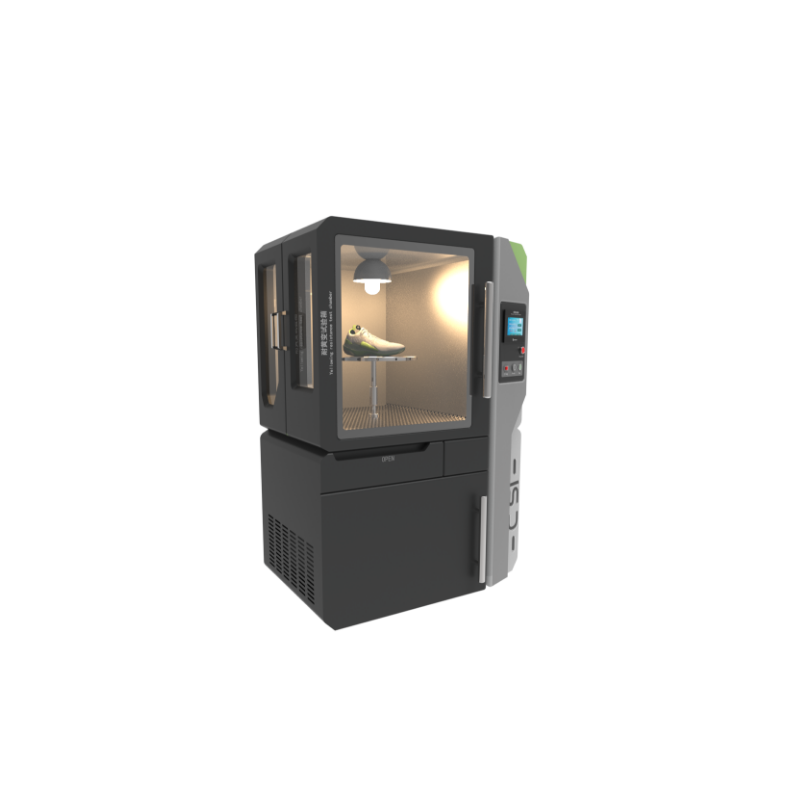
In the consumer goods market, white and light-colored products often represent purity and a premium aesthetic, but “yellowing” is an unavoidable issue for such products. From yellowing of athletic shoe soles to discoloration of automotive interiors, it not only affects appearance but may also indicate degradation in material performance. As a core piece of equipment for simulating environmental aging, the Yellowing Resistance Test Chamber accelerates this process through scientific methods, making it an indispensable “time accelerator” in research and development and quality control.
How Does Yellowing Occur
Material yellowing is typically caused by the following mechanisms:
Photo-oxidation: Ultraviolet radiation triggers polymer chain scission, resulting in the formation of chromophoric groups.
Thermal oxidation aging: High temperatures accelerate oxidation reactions, leading to color changes.
Effects of nitrogen oxides: Particularly in urban polluted environments, NOx can react with amine compounds in materials to form yellow nitro compounds.
Decomposition of residual catalysts or additives: Certain antioxidants, for example, may undergo discoloration themselves during long-term use.
Therefore, yellowing resistance testing must consider not only light exposure and temperature, but in some cases also the simulation of atmospheric pollutants, which leads to different types of...
Background of Yellowing Resistance and Testing Requirements
The Nature and Impact of Yellowing
Material yellowing refers to the gradual yellowing of a material’s surface under environmental factors such as light, heat, and oxygen. Its underlying cause is a change in molecular structure, such as free-radical reactions and the formation of chromophores, which alters the material’s light absorption characteristics in the visible spectrum. This issue not only reduces product aesthetics but may also be accompanied by hidden risks such as decreased mechanical properties and reduced chemical stability.
In the plastics industry, yellowing of outdoor products, such as automotive interiors and appliance housings, directly affects consumers’ purchasing decisions. In the textile industry, yellowing of white and light-colored fabrics shortens their service life and damages brand reputation. For coatings and rubber products, yellowing indicates insufficient oxidation resistance and is associated with deficiencies in product weatherability.
Limitations of Traditional Testing
Although natural exposure testing provides realistic conditions, it typically takes several months to several years, making it difficult to meet the needs of rapid product development and iteration. A Yellowing Resistance Test Chamber uses artificial accelerated aging technology to simulate the effects of years of environmental exposure under controlled conditions, reducing the testing period to days or weeks and significantly improving R&D efficiency and the ability to predict product quality.
Scientific Principles and Technical Implementation of the Yellowing Resistance Test Chamber
1. Simulation of Core Aging Mechanisms
The equipment regulates multiple environmental factors to selectively reproduce the primary chemical reaction pathways responsible for yellowing:
Photo-oxidation: Ultraviolet radiation breaks molecular bonds in materials, initiating free-radical chain reactions and generating conjugated chromophores, such as quinone structures. Yellowing resistance test chambers commonly use fluorescent UV lamps or xenon lamps to accurately reproduce the UV wavelength ranges found in natural sunlight, with peak wavelengths such as 340 nm and 313 nm. By controlling parameters such as light-source power and exposure time, the irradiance and cumulative radiation dose can be adjusted, thereby controlling the rate and degree of material yellowing.
Thermal oxidation: Elevated temperatures accelerate molecular motion and increase the rate of chemical reactions, making materials more susceptible to yellowing under the influence of light and other factors. At the same time, temperature variations may cause changes in internal material stress, affecting material stability. A Yellowing Resistance Test Chamber is equipped with a temperature control system that precisely regulates the chamber temperature. During testing, an appropriate temperature can be set according to the characteristics of different materials and specific testing requirements. The temperature control system typically combines heating and refrigeration units to achieve precise control over different temperature ranges, ensuring uniform and stable temperatures inside the chamber and providing a consistent thermal environment for material yellowing tests.
Ozone oxidation (available on some equipment): For materials containing unsaturated bonds, such as rubber, ozone can attack double bonds and form ozonides that contribute to yellowing. Some high-end models integrate an ozone generator to simulate specific ozone concentration environments, further expanding the range of applicable testing scenarios.
2. Analysis of Key Functional Modules
Lighting system: Uses ozone-free quartz-tube UV lamps or full-spectrum xenon lamps covering UV/Vis/IR wavelengths, combined with optical filters to remove ineffective wavelengths. The irradiance range can be 0.1–1.5 W/m² @ 340 nm, ensuring consistency with applicable standard test methods. By precisely controlling the light source type, wavelength range, and irradiance, the equipment can simulate different lighting environments and accelerate the photo-oxidation process of materials.
Temperature and humidity control: A PID-controlled electric heating/compressor refrigeration system, combined with a humidity generator, enables precise regulation of temperature and relative humidity. Parameters such as temperature control range, fluctuation, and uniformity are particularly important for the accuracy of test results. The equipment should precisely maintain the temperature within the specified range to ensure stable testing conditions. Humidity generally has a relatively limited effect on material yellowing; however, under certain conditions, such as high humidity, hydrolysis reactions may be promoted, accelerating material aging and yellowing. Therefore, some equipment provides humidity control to further enhance the comprehensiveness of testing.
Monitoring and calibration: Real-time sensors continuously monitor irradiance, chamber temperature, and humidity, with automatic compensation supported. Regular calibration of light-source irradiance ensures long-term testing reliability. Continuous monitoring and calibration help keep the environmental parameters within the specified ranges, ensuring the accuracy and repeatability of test results.
Mainstream Types and Applicable Scenarios
Yellowing resistance test chambers can be classified into several types according to their testing principles and application fields.
UV Yellowing Resistance Test Chambers mainly simulate the effects of the ultraviolet portion of sunlight on materials. They use fluorescent UV lamps as the light source and are suitable for evaluating the tendency of materials to yellow under UV exposure, particularly for outdoor products or UV-sensitive materials.
High-Temperature Yellowing Resistance Test Chambers focus on evaluating material yellowing under high-temperature conditions. By precisely controlling high temperature and, where applicable, humidity conditions, they are used to assess the thermal stability of materials and are commonly applied to evaluate the performance of plastics, coatings, and other materials under high-temperature storage or service conditions.
Comprehensive Environmental Yellowing Resistance Test Chambers combine multiple environmental factors, such as ultraviolet radiation, high temperature, humidity, and ozone, to more comprehensively simulate the complex environmental conditions that materials may encounter during actual use. They can provide test results that more closely reflect real-world applications, although the testing period may be relatively longer.
In addition, yellowing resistance test chambers can also be classified according to the type of light source into fluorescent UV yellowing resistance test chambers and xenon lamp yellowing resistance test chambers.
Fluorescent UV test chambers use UV fluorescent lamps with specific wavelengths, enabling more precise simulation of the ultraviolet portion of sunlight.
Xenon lamp test chambers provide a broader spectrum, including ultraviolet, visible, and infrared radiation, making them more representative of the full-spectrum characteristics of natural sunlight. The appropriate type of yellowing resistance test chamber should be selected based on specific testing requirements and material characteristics.
Conclusion
By scientifically simulating environmental conditions and precisely controlling test parameters, the Yellowing Resistance Test Chamber transforms complex environmental aging processes into quantifiable and repeatable laboratory evaluations, making it a core tool for material durability research. When selecting equipment, companies should focus on actual testing requirements and balance technical parameter accuracy, compliance with applicable standards, and cost-effectiveness to maximize testing value and safeguard product quality.