

What Are the Advantages of Using a Hydraulic Fabric Bursting Tester?
In the field of quality control and material research within the textile industry, the evaluation of fabric mechanical properties is of critical importance. Among these properties, bursting strength is a key indicator used to assess the ability of knitted fabrics, nonwoven fabrics, and composite materials to withstand multidirectional stresses applied perpendicular to their plane. As the core equipment for conducting this test, the Hydraulic Fabric Bursting Strength Tester has become an indispensable tool in modern laboratories due to its high precision, excellent stability, and outstanding adaptability to low-strength, high-elongation materials.
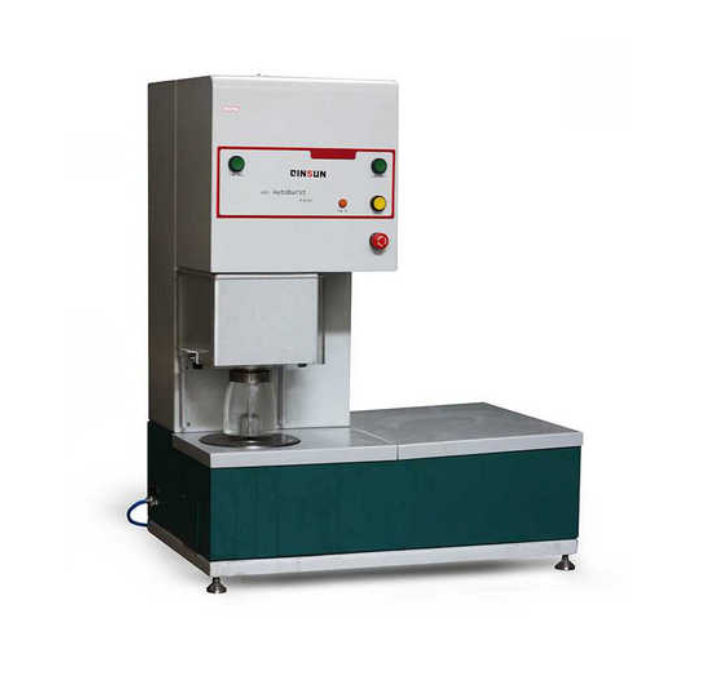
Working Principle of the Hydraulic Fabric Bursting Strength Tester
The Hydraulic Fabric Bursting Strength Tester operates based on the principle of hydrostatics. During testing, a circular specimen with a specified area is securely clamped onto an elastic diaphragm by an annular clamping fixture. The instrument then injects liquid beneath the diaphragm through a hydraulic system, causing the diaphragm and the specimen to expand upward simultaneously.
As the liquid volume increases, the pressure rises steadily, applying uniform multidirectional tension to the specimen. This process simulates the complex stress conditions that fabrics experience during actual use. At the moment of specimen rupture, the instrument records the maximum hydraulic pressure value. The final fabric bursting strength is calculated by subtracting the correction pressure required to expand the elastic diaphragm to the same height from the maximum recorded pressure.
In addition, the instrument can simultaneously measure the bursting expansion (height) at the moment of specimen failure, providing a comprehensive evaluation of the material’s deformation capability and stretch performance.
Key Advantages of the Hydraulic Fabric Bursting Strength Tester
Compared with pneumatic testing methods, the Hydraulic Fabric Bursting Strength Tester offers significant technical advantages:
Stable and Precise Pressure Control
Since liquids are nearly incompressible, the hydraulic system provides an extremely stable pressure increase rate, avoiding pressure fluctuations that may occur in pneumatic methods. It is particularly suitable for testing materials with high elongation and relatively low strength, such as knitted fabrics and nonwoven fabrics.
High-Precision Data Acquisition
Modern high-end models are equipped with high-accuracy pressure sensors and non-contact laser displacement sensors, enabling real-time detection of the peak bursting pressure and deformation height at the moment of specimen rupture. This ensures excellent data accuracy and repeatability.
Intelligent Operation Experience
Mainstream instruments feature touchscreen human-machine interfaces with bilingual operation support (Chinese/English). They offer functions such as automatic specimen clamping, automatic reset, automatic data storage, and test report generation. Some models also support multiple testing modes, including constant speed, constant pressure, and constant height testing, meeting the requirements of different testing standards.
Wide Range of Applications
In addition to conventional textiles, the equipment is widely used for mechanical property testing of various sheet materials, including paper, paperboard, leather, geosynthetic materials, and polymer waterproof membranes.
Main Application Areas of the Hydraulic Fabric Bursting Strength Tester
1. Textile and Apparel Industry
In garment manufacturing, areas such as elbows, knees, and hips are frequently subjected to stretching, pressure, and friction during wear, resulting in complex multidirectional stresses. Traditional single-axis tensile testing cannot fully reflect these actual stress conditions. The Hydraulic Fabric Bursting Strength Tester provides an accurate evaluation of fabric durability in these critical areas.
Knitted Fabrics and Sportswear
Used to evaluate the bursting resistance of elastic fabrics such as sweaters and athletic compression garments, ensuring that clothing remains intact and resistant to tearing during high-intensity movements.
Children’s Clothing
As an important safety evaluation parameter, bursting strength testing helps prevent potential safety risks caused by insufficient fabric strength.
Denim and Casual Wear
Used to assess the overall strength of fabrics under localized stress conditions, helping optimize material selection and improve garment service life.
2. Geosynthetic Materials and Construction Engineering
With the continuous development of infrastructure projects, materials such as geotextiles and geomembranes are widely used in applications including roadbed reinforcement, tunnel waterproofing, and landfill liners.
Puncture and Rupture Resistance Evaluation
The tester simulates the local high-pressure conditions caused by sharp stones penetrating geosynthetic materials during construction or by uneven settlement during service. It evaluates the material’s ability to resist damage under actual working conditions.
Waterproof Membrane Performance Characterization
For polymer waterproof membranes used in tunnel engineering and similar applications, multi-axial tensile testing through the hydraulic bursting method avoids the “necking effect” commonly observed in uniaxial testing. It provides stress-strain data that more closely represents real service conditions, offering scientific support for engineering design.
3. Other Industrial Textile Applications
Medical Textiles
Used to test the strength and durability of medical materials such as bandages and surgical gowns, ensuring reliability during medical procedures.
Filter Materials
Used to evaluate the bursting resistance of filter fabrics under conditions such as pulse-jet cleaning and pressure fluctuations, helping extend filter element service life.
Packaging and Papermaking
Applied for bursting strength testing of paper, cardboard, and packaging materials to evaluate their resistance to external pressure and protective performance.
Leather and Footwear Materials
Used to assess the tear and burst resistance of leather products under deformation and loading conditions, improving the comfort and durability of footwear and leather goods.
Conclusion
Overall, the Hydraulic Fabric Bursting Strength Tester plays an important role in improving quality control standards for textiles and related materials due to its precise measurement capabilities and realistic simulation of multidirectional stress conditions. From everyday clothing comfort to the safety requirements of major engineering projects, the testing data provided by this equipment helps manufacturers optimize product design and material selection, while also providing reliable technical support for the development and implementation of industry standards.
With the further integration of intelligent and automated technologies, future bursting strength testing will become more efficient, accurate, and reliable, continuously supporting advancements in material science.
We sincerely welcome inquiries regarding equipment specifications, testing standards, operating procedures, or other technical questions. Please feel free to leave a message or contact us directly. We will provide detailed product information, demonstration videos, or customized solutions to help you fully understand the functions and advantages of the equipment.