

What is the value of an Upper Leather Flexing Tester?
In the footwear industry, the performance of upper materials directly affects the comfort, durability, and appearance retention of footwear. As a traditional high-end upper material, leather is particularly important in terms of its stretch and shrinkage properties. The Upper Leather Stretch Tester is a professional testing instrument specifically designed to evaluate the stretch and extensibility properties of leather and other footwear upper materials under applied loads. It can simulate the tensile, bending, and other mechanical forces that uppers are subjected to during actual wear, providing a scientific basis for footwear design and quality control.
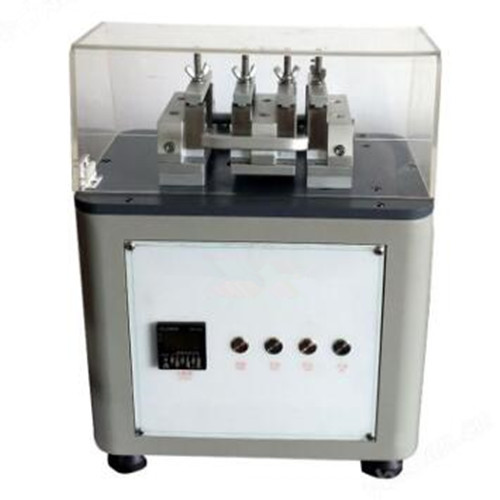
Working Principle and Test Purpose
The core function of the Upper Leather Stretch Tester is to simulate the dynamic changes that occur in footwear uppers during walking. During the test, a specimen of specified dimensions is secured in a V-shaped clamp and subjected to continuous reciprocating stretching and flexing movements at a specified frequency and stroke.
After a preset number of repeated flexing cycles, the specimen surface is visually inspected or examined with the assistance of the instrument to determine whether defects such as wrinkles, creases, cracks, finish cracking, or grain cracking have occurred, and to assess their severity.
This test is intended to quantify the fatigue resistance and durability of the material, helping manufacturers determine whether the material meets the quality requirements of specific types of footwear, such as occupational footwear, protective footwear, and sports footwear.
Main Features of the Upper Leather Stretch Tester
1. Realistic Simulation of Actual Working Conditions
The equipment is designed to closely simulate the mechanical stresses experienced by footwear upper materials during actual wear. It performs continuous and stable reciprocating movements to accurately reproduce the repeated flexing of the upper during walking and running, providing realistic test conditions for evaluating the fatigue resistance of materials.
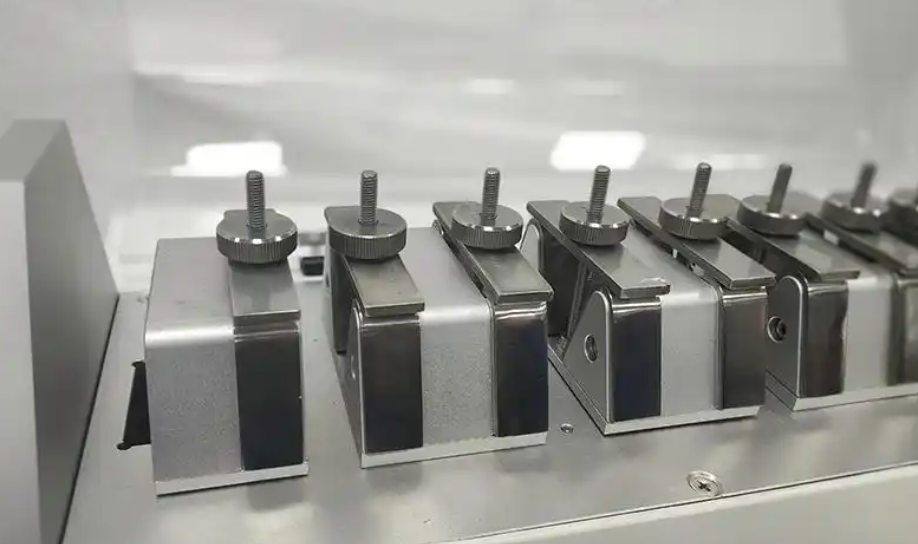
The specimen fixture features a unique V-shaped structure, which securely holds the specimens and ensures uniform application of flexing forces. The machine can also test multiple specimens simultaneously, with common configurations accommodating 4 or 12 specimens, significantly improving testing efficiency and data comparability.
2. Advanced Control and Safety
Modern Upper Leather Stretch Testers generally use highly integrated intelligent control systems. Mainstream models feature a color touchscreen as the human-machine interface, combined with a high-performance 32-bit ARM processor or servo drive system to ensure precise and stable motion control.
The tester supports automatic counting based on either a preset number of cycles or testing time. It may also provide count-up, countdown, and automatic shutdown when the preset value is reached.
For enhanced safety, the equipment is typically equipped with a hinged transparent safety cover and a sensitive detection device, providing an automatic stop when the cover is opened. This active safety mechanism helps prevent accidents during operation while making testing safer and more convenient.
3. Robust Construction and Reliability
To ensure stable operation and a long service life during long-term, high-frequency testing, high-quality materials and manufacturing processes are used for key mechanical components. The main moving parts and frame are commonly manufactured from stainless steel or high-strength aluminum alloy, providing excellent corrosion and wear resistance.
The transmission system uses precision bearings to ensure smooth operation, low vibration, and low noise, while improving test repeatability. Some high-end models also provide convenient functions such as manual jog and reset for precise specimen positioning and one-touch automatic test operation, further simplifying operation and improving laboratory automation.
4. Compliance with Applicable Standards
The design, calibration, and testing procedures of the tester are developed in accordance with relevant international standards, such as ISO and ASTM standards, as well as applicable industry specifications.
This ensures that the test conditions, parameter settings, and evaluation methods are authoritative and comparable. The resulting flex resistance data can be used for footwear material supplier evaluation, new product development and validation, and quality compliance assessment of finished footwear products, providing reliable technical support for quality control in the footwear industry.
Application Value of the Upper Leather Stretch Tester in the Footwear Industry
As consumers continue to demand higher levels of comfort, durability, and appearance from footwear products, the footwear industry is shifting from traditional experience-based manufacturing toward more refined and data-driven quality control. In this process, the Upper Leather Stretch Tester, as a key testing instrument for evaluating the flex resistance of footwear upper materials, plays an important role.
1. Realistic Simulation of Dynamic Wear Conditions for Accurate Durability Evaluation
Footwear upper materials are not subjected to static conditions during actual wear. Instead, they continuously experience combined stresses such as compression, stretching, and flexing. The Upper Leather Stretch Tester is designed around these real-world conditions, using rapid reciprocating movements to closely simulate the deformation experienced by the upper during walking.
Unlike conventional static tensile testing, this dynamic simulation can more accurately reveal the fatigue behavior of materials under repeated loading over an extended period. After testing, technicians can inspect the specimen surface for wrinkles, creases, finish cracking, or cracks, allowing the flex resistance of flexible materials such as leather and textiles to be evaluated objectively.
This predictive testing approach enables manufacturers to identify potential durability problems before products enter the market, helping prevent customer complaints and damage to brand reputation caused by premature material aging or failure.
2. Standardized Testing to Ensure Compliance with International and Domestic Requirements
In the context of global trade, footwear products may need to comply with multiple standards and regulatory requirements. The design and operation of the Upper Leather Stretch Tester can be based on relevant international and national standards, ensuring standardized testing conditions and reliable evaluation results.
Standardized testing provides manufacturers with comparable and traceable data, supporting material qualification, product development, quality inspection, and compliance assessment.
3. Optimized Material Selection and R&D to Reduce Production Costs and Risks
During the development of new footwear products, designers and purchasing personnel often face challenges when selecting from a wide range of upper materials with different prices and performance characteristics. The Upper Leather Stretch Tester provides objective test data to support material selection.
By comparing leather or synthetic materials from different suppliers under identical testing conditions, manufacturers can quickly eliminate materials with poor flex resistance and select materials offering a better balance of performance, stability, and cost-effectiveness.
In addition, the equipment commonly supports simultaneous testing of multiple specimens and may be equipped with a color touchscreen, ARM processor, and automatic counting system, significantly improving testing efficiency. This efficient screening process can shorten R&D cycles and reduce the risk of large-scale rework or material waste caused by unqualified materials, thereby lowering overall production costs.
4. Improving the Protective Performance of Occupational and Safety Footwear
For occupational footwear, protective footwear, and safety footwear, the integrity of the upper material is directly related to foot protection. In these applications, upper materials must not only provide good appearance and comfort but also maintain structural integrity under demanding working conditions.
The Upper Leather Stretch Tester subjects upper materials to repeated flexing to evaluate their resistance to cracking and failure under intensive use. This helps ensure that the footwear maintains its protective function during service and supports manufacturers in meeting applicable safety and quality requirements.
Conclusion
In summary, the Upper Leather Stretch Tester is more than a testing instrument for the footwear industry. It serves as an important link between material science, manufacturing processes, and end-user experience.Through realistic simulation, standardized testing, efficient material selection, and safety-oriented evaluation, the instrument helps the footwear industry improve product quality, reduce production risks, and move toward higher-quality and more standardized manufacturing. With the continued integration of intelligent testing technologies, such equipment is expected to play an increasingly important role in improving the competitiveness of the footwear manufacturing industry.