

Why Is Steel Hook Bending Tester Machine Essential for Footwear Quality Control?
Steel shanks are often referred to as the “spine” of leather shoes. Hidden deep inside the sole, they play a crucial role in maintaining the shoe shape, distributing pressure, and ensuring walking stability. If the quality of the steel shank fails to meet the required standards, it can easily cause heel tilting, deformation, or even create safety hazards such as sprains or falls for the wearer. Therefore, strict testing of the bending resistance performance of steel shanks is an essential step in ensuring footwear quality and consumer safety.
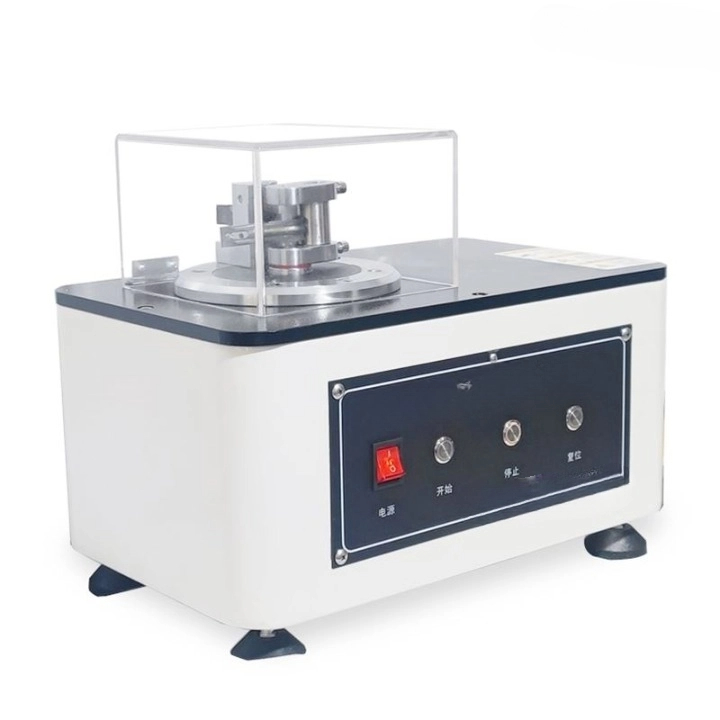
Why is it necessary to use this equipment for testing
First of all, the steel shank is firmly installed inside the sole, precisely connecting the forefoot and heel of the shoe, and serving as the core supporting framework of the sole structure. During daily activities such as walking, standing, and running, the steel shank must continuously withstand repeated dynamic bending stresses caused by the wearer’s body weight. These stresses are cyclically applied and vary with changes in gait.
To ensure the safety, durability, and reliability of footwear products, relevant standards clearly specify that steel shanks must have sufficient and stable bending resistance. This is a fundamental requirement for their function as critical load-bearing components. The Electric Steel Shank Bending Performance Tester is a precision testing instrument specifically designed to simulate these real-life loading conditions.
Its core function is clear and focused: through standardized mechanical movements, the tester evaluates whether a steel shank will fracture or develop visible cracks under predetermined extreme bending conditions. This allows for a scientific and objective assessment of whether the product quality meets national standards.
Compared with manual bending tests that rely on personal strength and experience, machine-based testing offers significant advantages. It establishes a unified and repeatable testing method, completely eliminating evaluation errors caused by differences in operator force, bending angle, and other subjective factors. As a result, the test data is more accurate, fair, highly comparable, and authoritative.
Working Principle: As Simple as Bending a Metal Wire
Although its working principle sounds technical, it is actually very intuitive and can be understood as a standardized “metal wire bending” process. The entire operation mainly consists of three clear steps:
Step 1: Fixing the Sample
The operator carefully places the steel shank sample to be tested into the dedicated fixture of the machine. The sample is then firmly secured using a knob or pressing block to ensure that it remains completely stable during the test, without any sliding or displacement.
Step 2: Automatic Bending
After the equipment is started, the built-in motor smoothly drives the fixture to rotate around a standard central mandrel with a precisely controlled diameter of 10 mm. During this process, the steel shank is forcibly bent to an extreme angle of 180°, accurately simulating the maximum bending stress that the steel shank may experience under severe footwear usage conditions in real-world applications.
Step 3: Result Evaluation
After the bending operation is completed, the operator removes the sample from the fixture and carefully inspects the surface of the steel shank under sufficient lighting, especially the bent area, to determine whether there are any fine cracks, bending marks, or complete fractures. If the sample remains unbroken after bending and no visible cracks appear on the surface, it is considered qualified.
The entire testing process is fully electrically driven with a high level of automation. It does not require manual force application or subjective judgment of bending strength. Therefore, it ensures that the bending force, rotation speed, and final bending angle remain exactly consistent in every test, eliminating variations in testing conditions at the source.
Equipment Features: Compact Design, High Precision, and Easy Operation
This type of testing machine is equipped with multiple outstanding features, making it an essential instrument commonly used in footwear manufacturing laboratories and factory quality inspection departments.
First, it offers a high level of standardization:
The equipment is designed and manufactured strictly according to national or industry standards. The bending angle is fixed at 180°, and the standard diameter of the central mandrel is 10 mm. These strict parameter requirements ensure that test results from different production batches and different laboratories can be compared horizontally, providing a unified measurement standard for quality control.
Second, it is extremely easy to operate:
The equipment is generally equipped with a simple and user-friendly control panel. The operator only needs to press the start button, and the machine can automatically complete a series of coordinated actions, including resetting, clamping, bending, stopping, and returning to the initial position. This automated process greatly reduces operational requirements, allowing even non-professional quality inspectors to quickly master independent operation after brief training.
Third, it features a compact structure and flexible installation:
Most models have an overall weight of approximately 25–30 kg, with compact dimensions of around 400 mm in length, 300 mm in width, and 300 mm in height. The space-saving design allows the equipment to be easily placed beside production lines, on quality inspection workbenches, or inside standard laboratories, enabling rapid on-site sampling inspections.
Finally, it provides safe and reliable operation:
The equipment is usually equipped with safety protection devices such as a transparent protective cover, emergency stop button, and overload protection system. These features effectively reduce risks such as sample fragments flying out or accidental fixture movement during testing, ensuring the personal safety of operators.
Why Is It Important to Consumers
Why is this seemingly ordinary piece of testing equipment so important to consumers? Although ordinary consumers may never see this machine operating during the shoe manufacturing process, its testing results are directly related to the safety, comfort, and overall wearing experience of everyday footwear.
First, it helps prevent shoe deformation:
Steel shanks that have passed strict performance testing ensure that shoes can maintain their proper shape and structural integrity even after long-term use. The connection between the forefoot and heel will not collapse or deform due to prolonged stress and fatigue, allowing the footwear to maintain both its appearance and functional performance over time.
Second, it serves as an important safety barrier against injuries:
This is especially critical for high heels and other footwear that require stronger structural support. The bending strength of the steel shank directly affects the stability and balance of the shoe during walking and turning movements. Poor-quality steel shanks or those that have not undergone sufficient testing may suddenly break during use, causing the overall shoe structure to collapse and greatly increasing the risk of ankle sprains, falls, or even more serious accidents.
Therefore, responsible and reputable footwear manufacturers conduct strict batch sampling inspections of steel shanks using this type of testing equipment before products leave the factory, effectively eliminating potential quality risks at the production stage.
When selecting leather shoes in a store, consumers can gently bend the sole to feel its resilience and overall stiffness. Behind this reliable support and sense of security are countless Electric Steel Shank Bending Performance Testers performing rigorous “stress tests” at the end of production lines, silently ensuring that every step taken by the wearer is stable, safe, and confident.
Conclusion
Although the Electric Steel Shank Bending Performance Tester is not considered a cutting-edge high-tech device, it plays an essential role in ensuring basic safety within the footwear manufacturing industry. Through a simple, efficient, and standardized testing process, it transforms abstract “quality requirements” into clear and measurable “qualified” or “unqualified” results, ensuring that every pair of shoes entering the market is equipped with a strong and reliable “spine.”