

How does the Carpet Abrasion Tester work?
Carpets are widely used as floor-covering materials, and their durability directly affects both service life and aesthetic appearance. The Carpet Abrasion Tester is a key instrument for evaluating carpet appearance retention and physical durability. By simulating actual service conditions such as daily foot traffic and furniture movement, it provides standardized data support for product development, quality control, and performance classification. Currently, the main testing methods can be categorized into three types: six-roller drum abrasion testing, castor abrasion testing, and Martindale abrasion testing.
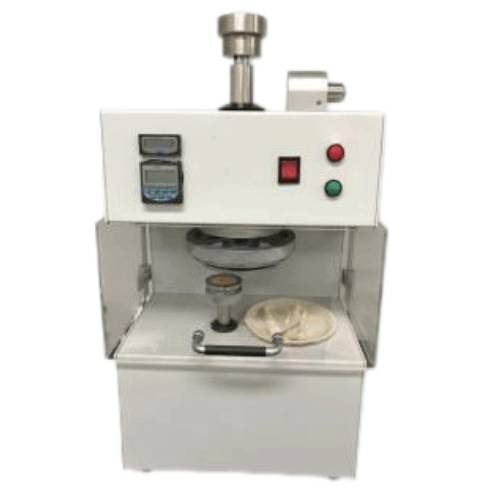
Detailed Working Principle of Carpet Abrasion Tester
1. Rotational Sliding Wear Simulation Principle
The equipment adopts a rotary turntable abrasion mechanism to simulate the actual wear conditions of carpets in daily use. In real-world applications, pedestrian traffic does not produce friction in a single reciprocating direction; instead, it generates sliding wear along multiple angles and paths. The specimen platform is driven by a motor to rotate at a constant speed, while a standard abrasion wheel mounted eccentrically creates continuous, intersecting sliding friction tracks across the carpet surface. This ensures comprehensive coverage of the specimen without dead zones.
This motion pattern realistically reproduces the uniform wear caused by daily foot traffic and multidirectional friction. Compared with unidirectional abrasion testing, it provides test conditions that more closely reflect actual service conditions, resulting in more representative and reliable test data.
2. Constant-Load Pressure Abrasion Principle
The degree of abrasion is directly related to contact pressure. Uneven pressure can lead to inconsistent wear and unreliable test results. The equipment uses standard weights to apply a constant vertical load to the abrasion wheel, accurately simulating the pressure generated by human footsteps and furniture loads.
The loading mechanism maintains stable and consistent pressure throughout the test, without displacement, load decay, or spring interference. This ensures consistent contact force during every abrasion cycle and provides standardized conditions for each specimen, making test results comparable and reproducible across different carpet materials and production batches.
3. Accelerated Fatigue and Aging Wear Principle
Natural carpet wear is a gradual fatigue process that occurs over months or even years, making long-term wear difficult to evaluate within a short period. The equipment applies an accelerated mechanical fatigue principle by performing high-frequency, continuous standardized abrasion cycles to accumulate wear damage equivalent to long-term use in a shorter testing period.
High-density tufted carpets with good abrasion resistance may show only slight pile flattening after tens of thousands of abrasion cycles, with little visible pile loss or backing exposure. In contrast, low-density or inferior synthetic carpets may quickly develop pile loss, surface damage, and exposed backing. This principle significantly reduces the testing period and enables rapid evaluation of carpet durability and quality.
4. Combined Weight-Loss and Appearance Evaluation Principle
The equipment uses a combination of weight-loss measurement and appearance grading to provide a comprehensive evaluation of abrasion resistance. Before and after testing, the specimen is weighed using a precision electronic balance to determine the amount of weight loss. Generally, a smaller weight loss indicates better abrasion resistance.
At the same time, the carpet surface is visually inspected and compared with standard reference images to evaluate pile integrity, wear uniformity, degree of pile loss, and backing exposure. Combining quantitative weight-loss data with visual assessment reduces the subjectivity of conventional manual evaluation and provides a more accurate, standardized, and consistent basis for abrasion performance classification.
5. Automatic Cycle Counting and Timing Control Principle
The equipment is equipped with an intelligent counting and control system that allows the abrasion cycles and test speed to be preset. It can automatically perform the entire sequence of continuous abrasion, cycle counting, and automatic shutdown.
The system may provide functions such as power-off memory, fault shutdown, cycle reset, and data storage, allowing long-duration tests to be performed with minimal operator intervention. Automated program control eliminates errors caused by manual timing and start/stop operations, ensuring consistent test procedures and accurate, traceable results.
Core Advantages of Carpet Abrasion Tester
The key advantage of the Carpet Abrasion Tester lies in its ability to closely reproduce real-world service conditions and provide intuitive, reliable evaluations of carpet durability. Its main advantages include:
1. Realistic Wear Simulation for Reliable Results
The tester does not simply apply basic friction to the carpet. Instead, it uses specific mechanical movements, such as rotary or reciprocating motion, to simulate the complex friction generated by walking, foot traffic, and furniture movement. This testing method can realistically reveal pile flattening, fiber loss, and backing exposure during daily use, providing results that closely reflect actual service performance.
2. Standardized Operation with Reduced Human Error
Manual evaluation can be significantly affected by subjective factors. The abrasion tester uses controlled pressure, fixed speed, and standardized abrasion conditions to maintain consistent test parameters. As a result, properly conducted tests can produce comparable results regardless of when or where the testing is performed, minimizing operator-related variation.
3. Multiple Testing Conditions for Comprehensive Evaluation
Advanced models may support both dry and wet testing conditions. In addition to evaluating abrasion resistance under dry conditions, wet testing can simulate wear caused by wet footwear or humid environments. This multi-condition testing capability helps manufacturers better understand carpet performance under different climates and usage conditions.
4. High Automation for Reduced Labor Requirements
The equipment is typically equipped with automatic cycle counting and shutdown functions. Once the required number of cycles is preset, the tester can operate automatically without continuous operator supervision. This improves testing efficiency and makes it practical for batch quality control in manufacturing environments.
5. Wide Application Range and Flexible Configuration
In addition to conventional household carpets, the tester can be used for automotive carpeting, commercial floor coverings, and other related materials. Some models support interchangeable abrasion heads or fixtures to accommodate different materials and thicknesses, providing greater versatility and cost-effectiveness.
Conclusion
With accurate testing performance, broad application capabilities, and flexible configuration options, the Carpet Abrasion Tester is a valuable instrument for quality control, product development, and research. It helps manufacturers verify product durability and compliance with applicable quality requirements while providing reliable test data for research institutions and testing laboratories.