

How Does a Zipper Slippage Tester Work?
Zippers are essential functional components widely used in garments, luggage, outdoor equipment, and other products. Their operating smoothness directly affects user experience and perceived product quality. The zipper closing and opening smoothness, referring to the force required and smoothness during zipper operation, is an important indicator for evaluating zipper performance.The Zipper Closing and Opening Smoothness Tester is a professional testing instrument designed to quantitatively evaluate the operating force and smoothness of zippers. It is widely used for zipper product development, quality control, performance evaluation, and compliance testing, helping manufacturers ensure consistent product quality and improve user satisfaction.
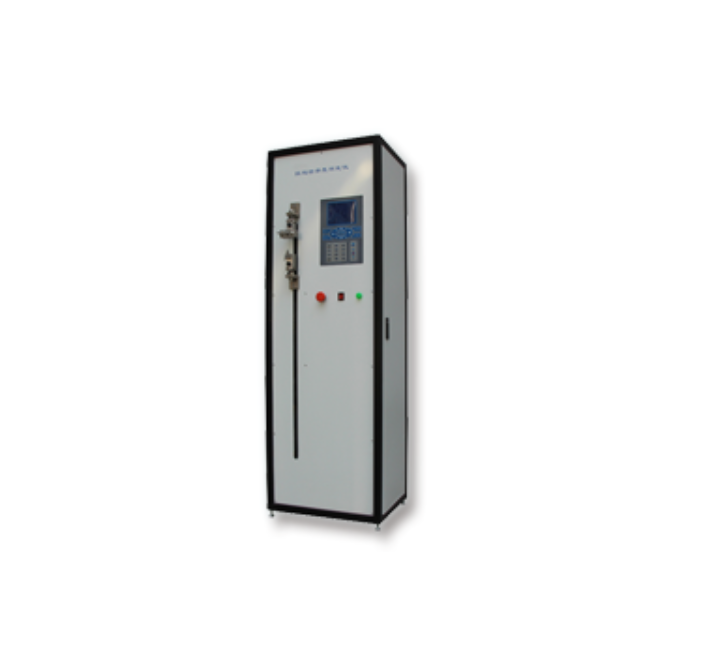
Composition and Technical Features of the Zipper Closing and Opening Smoothness Tester
The Zipper Closing and Opening Smoothness Tester mainly consists of a motorized drive system, high-precision force sensor, fixture system, and data acquisition and analysis software. Its core function is to simulate the action of manually pulling a zipper slider. The instrument pulls the slider at a constant speed while accurately recording the force changes throughout the entire zipper opening and closing process in real time.
Key Technical Features
High-Precision Measurement: Provides high-resolution force measurement at the micro-Newton or centi-Newton level to ensure accurate and reliable test results.
Dedicated Fixture Design: The fixtures securely hold the zipper tapes and slider, preventing slipping or twisting during testing and ensuring test accuracy.
Intelligent Control and Display: Equipped with a color touchscreen for intuitive display of instrument status, test batches, sliding distance, and real-time force values. Supports both Chinese and English interfaces.
Automated Data Processing: The software automatically generates force-displacement curves and calculates key parameters such as peak force, average force, and force variation. Statistical reports can also be generated, with data query and printing functions supported.
Test Procedure for the Zipper Closing and Opening Smoothness Tester
To ensure the repeatability and accuracy of test results, the test should be performed according to a standardized procedure.
1. Conditioning
Condition the zipper specimens in a standard temperature and humidity environment, such as 20 ± 2°C and 65 ± 4% RH, for at least 24 hours before testing.
2. Instrument Calibration and Setup
Before testing, calibrate the force measurement system using standard weights. Enter the parameter-setting interface and select the applicable test standard. Set the measurement range, unit, clamping distance, test speed, stroke length, and number of test cycles according to the specimen requirements.
3. Sample Preparation and Clamping
Place the zipper specimen flat. Secure the upper zipper tape to the displacement fixture and attach the zipper pull tab to the fixed fixture. Before mounting, it is recommended to open and close the zipper several times to eliminate initial stress. Adjust the pull-tab height so that the slider and zipper move along the same horizontal line, then tighten the fixtures.
4. Test Execution
Press “Tare” to zero the force value, then click “Run” to start the test. The instrument pulls the zipper slider at the preset speed to complete the opening and closing movement while automatically recording force changes throughout the test.
5. Data Analysis and Report
After the test, the fixture automatically returns to its initial position. The system calculates parameters such as maximum force and average force. Test data from different batches can be viewed through the query interface. The final report can include sample information, test standard, environmental conditions, force-displacement curve, test data, and evaluation conclusion.
Result Evaluation
Test results are mainly evaluated based on force magnitude and force stability.
Maximum Peak Force: The maximum force during zipper operation should meet the upper-limit requirements specified by the applicable product standard. In general, a lower operating force indicates easier zipper operation.
Force Stability: The force-displacement curve should remain relatively smooth. Small fluctuations and the absence of abnormal peaks generally indicate smooth operation without sticking or jamming.
The specific acceptance criteria depend on the applicable product standard. The final test report should clearly present the relevant test data and evaluation results for quality assessment.
Can Film and Textile Testing Instruments Replace a Zipper Smoothness Tester
When purchasing a Zipper Closing and Opening Smoothness Tester, many users consider replacing it with a general-purpose coefficient-of-friction tester. However, the unique structure of zippers places specific requirements on the testing equipment.
Why Zipper Testing Requires Specialized Equipment
Intermittent contact between zipper teeth: Requires a force sensor with a sufficiently high sampling rate to capture rapid force changes.
Composite structure of teeth and zipper tape: Requires adaptive fixtures to provide stable and appropriate clamping force.
Dynamic friction during opening and closing: Requires dedicated algorithms to accurately analyze the force curve throughout the test.
Limitations of Film Friction Testers
Common plastic film friction testers can measure basic coefficients of friction, but they have several limitations:
Flat fixtures may not securely hold curved zipper tapes.
Standard sleds cannot accurately reproduce the actual movement path of a zipper slider.
The available test-speed range may not cover the dynamic conditions of rapid zipper operation.
Limitations of Textile Friction Testers
Textile friction testers are generally closer to the requirements, but several factors should still be considered:
Ring-type fixtures designed for fiber testing may distort the force distribution of the zipper.
Low-load force sensors may fail to capture peak forces caused by zipper-tooth jamming.
They may lack dedicated calibration modes for metal or plastic zipper teeth.
Key Criteria for Evaluating Alternatives
The feasibility of a replacement should ultimately be determined by whether the equipment can accurately capture the three typical operating conditions of a zipper:
Dynamic friction during smooth sliding
Transient peak force during jamming or sticking
Performance degradation after repeated opening and closing
If an adjacent-category instrument cannot capture these characteristics completely, potential zipper quality problems may be overlooked.
For laboratories that need to test both film packaging materials and zippers, it is recommended to prioritize equipment with interchangeable specialized fixture modules. This can provide greater long-term cost efficiency than purchasing multiple single-purpose instruments.
Importance of the Zipper Closing and Opening Smoothness Tester
The Zipper Closing and Opening Smoothness Tester is a key instrument for quantitatively evaluating zipper operating resistance and smoothness. It provides objective test data for product performance, quality control, compliance evaluation, and trade acceptance, helping manufacturers improve product quality while reducing potential after-sales costs.
Core Benefits
Improve User Experience and Safety:
Accurately measures the maximum operating force and force fluctuation curve to identify defects such as sticking, tooth skipping, and uneven resistance. This helps reduce the risk of garment tearing or accidental opening of luggage caused by difficult zipper operation.
Support Quality Compliance and Market Access:
Test results based on applicable industry and international standards provide objective evidence for quality inspection, supplier evaluation, and export-related acceptance requirements.
Optimize Manufacturing Processes and Reduce Quality Risks:
Test data can help identify potential problems related to mold accuracy, slider geometry, or zipper-tooth forming, providing useful feedback for production-line improvements. Early detection of defective products can reduce returns, complaints, and potential brand reputation losses.
Reduce Subjective Evaluation:
The tester converts subjective descriptions such as “smooth operation” into measurable parameters including force values, CV values, and smoothness curves, improving the comparability and repeatability of results between different batches and laboratories.
Conclusion
The Zipper Closing and Opening Smoothness Tester provides accurate quantitative testing and comprehensive data analysis for zipper performance evaluation. It is an important tool for improving product quality, optimizing manufacturing processes, strengthening quality control, and reducing quality risks.For manufacturers of garments, luggage, footwear, outdoor equipment, and other zipper-containing products, the tester can provide valuable technical data for product development and quality assurance. Product specifications, customized testing solutions, and application guidance can be provided according to specific testing requirements.