

How Accurate Is Automatic Long Filament Curl Shrinkage Testing?
Imagine when you touch a soft, fluffy sweater or a stretchy pair of yoga pants, have you ever wondered how those fine fibers manage to maintain their perfect shape and resist deformation even after prolonged wear? Behind this seemingly simple phenomenon lies a modest yet indispensable "quality examiner" — the Automatic Long Filament Curl Shrinkage Tester. It is not a cold and soulless piece of machinery, but rather an intelligent housekeeper in the textile laboratory, specifically tasked with conducting comprehensive "physical examinations" on synthetic filaments such as polyester and nylon. By simulating extreme environments such as boiling water immersion or dry heat exposure, it can precisely capture the minute shrinkage changes that occur in the fibers when subjected to heat and tension. It then translates these observations into quantifiable data, telling the producer whether the filament possesses sufficient elasticity and whether it is prone to shrinkage. In doing so, it ensures that the garments which ultimately reach your hands are both comfortable to wear and durable in performance.
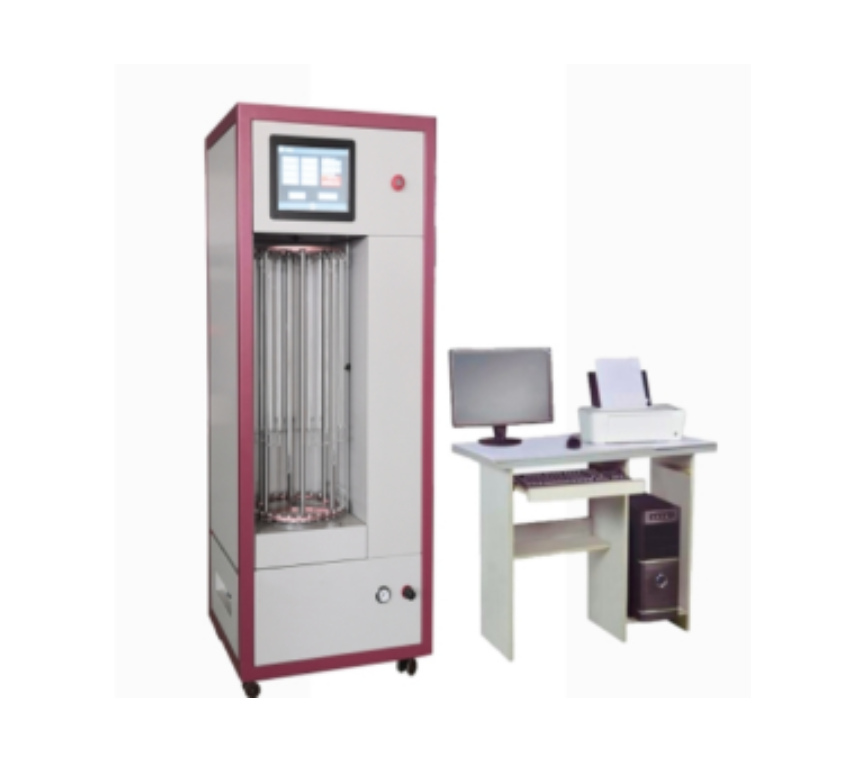
Principle Analysis of the Automatic Long Filament Curl Shrinkage Tester
The core principle of the Automatic Long Filament Curl Shrinkage Tester is as follows: by automatically applying varying magnitudes of tensile force in conjunction with a heated environment (either boiling water or dry heat), the instrument measures the length changes of synthetic filaments under conditions of "relaxation, light loading, heavy loading, and thermal exposure," thereby calculating their crimp elasticity and thermal shrinkage performance.
This process can be likened to testing a resilient "springlike filament":
FixedLength Mounting: A segment of filament is first naturally suspended and secured, and its original baseline length is recorded.
Graded Tensioning: The machine automatically applies a minimal force to observe how easily the filament straightens, and subsequently applies a substantial force to determine its fully extended length. By comparing the length difference between these two states, the instrument assesses how much crimp is embedded within the fiber and how securely that crimp is retained.
Heat Exposure Test: The filament is placed in boiling water or a hightemperature oven to simulate a heatexposure scenario. As the internal stresses within the fiber are released, the filament actively shortens. The machine then measures the length once again to calculate the degree of thermal shrinkage that has occurred.
Automatic Calculation: The entire process is controlled by a computer system that manages force application, timing, and length measurement. The system directly compares the length differentials between the "pretreatment" and "posttreatment" states to derive key indicators such as the crimp shrinkage rate.
Key Operational Mechanisms
Variable Load Mechanism: The instrument is capable of precisely alternating between "light load" and "heavy load" conditions. The light load is used to reveal the crimp characteristics, while the heavy load is applied to measure the fully straightened length, thereby enabling the derivation of elastic recovery performance.
Environmental Simulation: The device is equipped with a constanttemperature water bath (simulating boiling water) or a dedicated oven (simulating dry heat), providing a standardized thermal stimulation environment that triggers fiber shrinkage.
ClosedLoop Computation: From sample mounting, force application, and heating to final data acquisition, the entire procedure requires no manual intervention. The system automatically eliminates systematic errors and outputs the final results.
In brief, this instrument employs standardized "tensioning" and "heating" protocols to probe the limits of the filament, revealing how prone it is to crimping and how susceptible it is to thermal shrinkage. The fully automated operation ensures that the results are both objective and accurate.
Core Technical Features of the Automatic Long Filament Curl Shrinkage Tester
HighPerformance Control Core
The instrument is equipped with a 32bit imported industrialgrade central processing unit, featuring an ultrahigh sampling frequency and highspeed data processing capability. It can rapidly respond to multiparameter synchronous acquisition and instruction execution throughout the testing process, effectively reducing system latency and ensuring efficient operation of the test workflow as well as the timeliness of data collection.
Stable and Reliable Control Architecture
The system adopts a modular program interconnection mode between a commercial personal computer and the main instrument. Compared with the conventional inputoutput board control scheme used in traditional industrial computers, this architecture significantly improves data transmission efficiency and processing precision. At the same time, it simplifies the hardware structure, reduces the equipment failure rate, and enhances the overall operational stability and longterm service reliability of the instrument.
HighPrecision Sensing and Detection System
The instrument is configured with highprecision force and length sensors. In comparison with traditional electronic weighing scale detection solutions, this design substantially improves the accuracy of load application and length measurement, while reducing environmental interference and systematic errors. It ensures the repeatability and reproducibility of test data, thereby meeting the demands of highprecision testing applications.
Intelligent Data Management System
All test data are automatically stored in an encrypted database. The system supports precise querying and categorized management based on multiple retrieval criteria, including test date, operator, sample name, and test remarks. This facilitates data traceability, statistical analysis, and batch processing, and is fully compatible with the requirements of laboratory information management systems for digitalized laboratory operations.
Flexible Parameter Customization Function
The software allows users to independently set test parameters according to specific experimental requirements, including load gradients, holding time, and measurement precision. This enables the optimization of test protocols for samples of different materials and specifications, and provides personalized data analysis tools for quality control, process optimization, and academic research.
Fully Automated Testing Process
The system achieves fully closedloop automated control throughout the entire testing procedure, including automatic load switching and application, intelligent timing, dynamic length measurement, and automatic zero calibration. No manual intervention is required throughout the process, effectively eliminating human operational errors. In addition, the system automatically computes test results and supports printout functions, thereby enhancing both testing efficiency and data accuracy.
UserFriendly Operation and Fault Diagnosis System
The instrument is developed based on the Windows operating system and features a Chineselanguage visual interface. The humanmachine interaction is highly intuitive, and the operational workflow is concise and easy to understand, significantly reducing the learning curve for operators. An intelligent builtin fault selfdiagnosis module is integrated into the system, which monitors the equipment's operational status in real time. When abnormalities are detected, the system automatically triggers Chineselanguage prompts, facilitating rapid fault localization and maintenance, and ensuring the continuous and stable operation of the instrument.
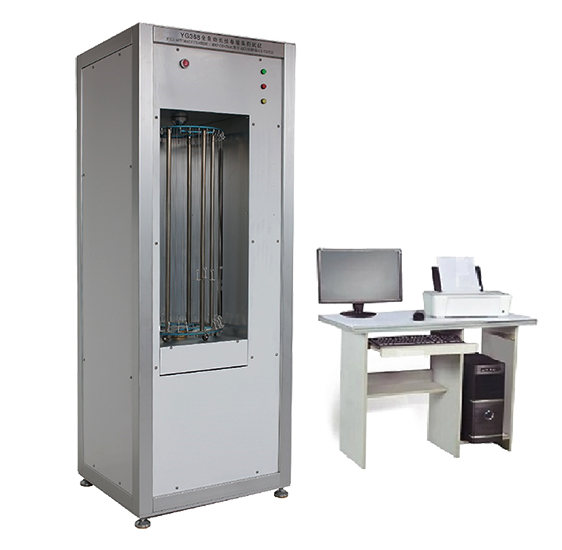
The Importance of the Automatic Long Filament Curl Shrinkage Tester
The Automatic Long Filament Curl Shrinkage Tester is the core equipment in the chemical fiber industry for quantitatively evaluating the elastic recovery, bulkiness, and dimensional stability of textured yarns. It directly determines raw material classification, process optimization, and finished product quality consistency.
Accurate Characterization of Key Properties
The instrument objectively measures crimp shrinkage rate, crimp modulus, and crimp stability, which reflect the fiber's ability to recover its threedimensional crimped structure after being stretched. These parameters serve as the fundamental basis for distinguishing lowelasticity yarns from highelasticity yarns and for determining their appropriate application scenarios, such as knitting, weaving, and filling.
Elimination of Human Error and Assurance of Impartiality
Through automatic load application, automatic load switching, automatic length measurement, and automatic zero calibration, the system completely eliminates the subjective fluctuations inherent in manual operations. This ensures data comparability across different laboratories and meets the compliance requirements for trade arbitration and thirdparty testing.
Guidance for Production Process Control
The test results are a key basis for the feedback regulation of texturing machine heater temperatures, draw ratios, and overfeed rates. They help enterprises find the optimal balance between "bulky hand feel" and "smooth processing unwindability," thereby reducing the risks of yarn breakage and fuzzing.
Prediction of Finished Fabric Performance
The test data are directly correlated with the elastic recovery, collapse resistance, and dimensional stability of the final products after heat setting. This enables the prevention of quality issues such as fabric shrinkage, deformation, or stiff hand feel at the source.
In summary, the Automatic Long Filament Curl Shrinkage Tester, as an essential fiber property testing instrument, plays a critically important role in safeguarding and enhancing product quality across the entire textile industry, optimizing production processes, and strengthening the core competitiveness of enterprises. We sincerely welcome interested companies, research institutions, and relevant professionals to contact us directly for more detailed technical specifications, application case studies, operational demonstrations, or customized solutions regarding this instrument. We look forward to exploring together how precision testing can drive innovation and quality improvement in textile products.