

What is a Molten Metal Splash Resistance Tester?
In high-temperature working environments such as metallurgy, casting, and metal processing, molten metal splashes or spills pose extremely hazardous risks. Protective equipment, including production-grade protective clothing, safety helmets, and heat-resistant gloves, serves as the “safety barrier” for workers. As a professional testing device, the Molten Metal Splash Resistance Tester can accurately evaluate the resistance of these protective equipment and materials against molten metal splash, providing essential quality assurance for workplace safety.
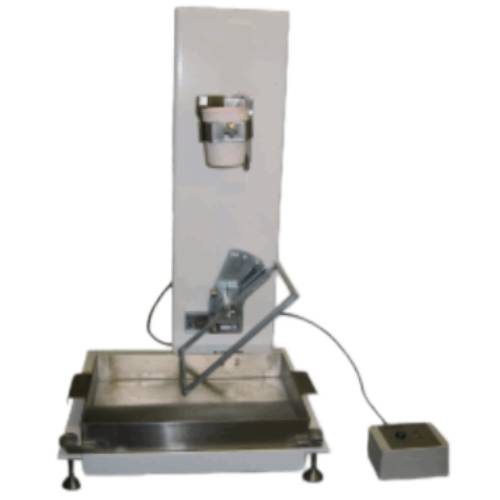
Structure Composition and Performance Features of the Molten Metal Penetration Resistance Tester
The Molten Metal Splash Resistance Tester consists of multiple core components that work together to ensure accurate, stable, and safe testing procedures.
High-Frequency Heating Device:
This is the key component responsible for achieving metal melting. It can be used to melt various metals, including aluminum, copper, iron, and mild steel. The maximum heating temperature is not lower than 1800°C, meeting the testing requirements for different molten metal media.
Molten Metal Pouring Device:
The device adopts stepper motor control and is equipped with a graphite crucible. It can precisely control the tilting speed and angle, enabling accurate pouring onto the test specimens and simulating different molten metal exposure conditions.
Sample Holder and Adjustment Device:
The sample holder has a size of 160 mm × 248 mm and features an adjustable inclination angle. It is also equipped with a specimen holder adjustment mechanism, allowing convenient adjustment of the pouring height to ensure that the test specimen is positioned at the optimal testing location.
High-Temperature Radiometer:
The radiometer is capable of measuring molten metal temperatures of not less than 1650°C, with an accuracy of not less than ±10°C, providing reliable temperature data references for the testing process.
Testing Principle: Reproducing the Real Impact Scenario of Molten Metal Splash
The core principle of the Molten Metal Splash Resistance Test is to simulate the process in which molten metals (such as steel, aluminum, and copper) splash onto the surface of materials in industrial environments, thereby evaluating the material’s resistance to penetration, flame ignition, and heat insulation performance. The Yiheng Molten Metal Splash Resistance Tester adopts a controlled molten metal droplet method, with a rigorous and controllable testing procedure:
First, the metal wire (with the material selected according to testing requirements, such as a 3 mm diameter low-carbon steel wire) is heated to a molten state using a high-frequency induction heating system. The temperature can exceed 1500°C, with a precise temperature control accuracy of ±10°C.
Then, the molten metal droplets fall under the action of gravity from a preset height (adjustable from 50 to 300 mm) onto the surface of the test specimen fixed on the testing platform.
Finally, a high-speed camera system records the interaction process between the molten droplets and the specimen. The temperature changes on the reverse side of the specimen, as well as any penetration or burning phenomena, are monitored to determine the material’s molten metal splash resistance rating.
To ensure the authenticity and repeatability of test results, the equipment incorporates several innovative design features:
Automatic wire feeding mechanism: Ensures a uniform metal wire feeding speed and prevents inconsistent molten droplet sizes caused by manual wire feeding operations.
Three-dimensional adjustable testing platform: Enables precise positioning of the specimen and ensures that molten droplets consistently impact the central area of the test sample.
High-precision rear-side temperature monitoring system: Uses thermocouple sensors with an accuracy of ±0.5°C to capture real-time temperature variation curves, providing accurate data support for evaluating the thermal insulation performance of materials.
Five Core Advantages of the Molten Metal Splash Resistance Tester
1. Multi-Metal Material Compatibility:
The instrument supports testing with various commonly used molten metals, including low-carbon steel, stainless steel, aluminum, and copper. According to different industrial application scenarios (such as focusing on molten steel splash resistance in the metallurgy industry or aluminum welding splash resistance in automotive manufacturing), users can flexibly select suitable metal materials for testing. One single device can cover the testing requirements of multiple protective materials used by enterprises, meeting diverse evaluation needs.
2. Full Visualization and Data Traceability:
Equipped with a 4K high-speed camera system, the tester can clearly record the instant impact process of molten metal droplets on test specimens, with a frame rate of up to 1000 fps, allowing engineers and technicians to analyze the impact resistance mechanism of materials in detail. Meanwhile, the instrument automatically stores testing temperature curves, video data, and evaluation results. Data can be exported via a USB drive or uploaded to the cloud, meeting the requirements of enterprise quality traceability and safety audits.
3. Strict Compliance with International Standards:
The tester is fully compatible with authoritative domestic and international molten metal splash resistance testing standards, including GB/T, ISO, and EN standards. The test results demonstrate high credibility and can be directly applied for product quality certification and customer acceptance. Before delivery, each instrument undergoes calibration by qualified national metrology institutions to ensure the accuracy and validity of test data.
4. Comprehensive Safety Protection Upgrade:
Considering the high-temperature risks involved during testing, the instrument is equipped with a double-layer high-temperature-resistant protective chamber, infrared temperature monitoring and warning system, and emergency stop button. In the event of abnormal chamber temperature or unexpected conditions, the system immediately cuts off the heating power supply and activates an alarm to ensure operator safety. The protective chamber is made of high-temperature-resistant transparent materials, allowing convenient observation of the testing process while effectively blocking high-temperature radiation.
Application Fields of the Molten Metal Splash Resistance Tester
The Molten Metal Splash Resistance Tester is mainly used in metallurgy, casting, welding, and high-temperature metal processing industries to evaluate the ability of personal protective equipment (PPE), such as protective clothing, helmets, gloves, and textile materials, to resist penetration caused by molten metal droplets or splashes. It provides professional testing solutions for high-temperature protection performance evaluation.
1. Protective Equipment Development and Quality Inspection:
The tester is used to verify the molten metal impact resistance performance of finished or semi-finished protective products, including thermal protective clothing, heat-resistant gloves, safety helmets, and other protective materials, ensuring that these products meet required safety performance standards.
2. Compliance Testing for High-Risk Working Environments:
The equipment serves industrial environments with risks of high-temperature molten metal splashes, such as steel smelting, non-ferrous metal casting, metal welding and cutting, and glass manufacturing. It helps ensure that protective equipment complies with safety access requirements and occupational protection regulations.
3. Textile and Functional Material Testing:
The tester is applied for the performance evaluation and quality control of special protective textiles, such as flame-retardant and thermal insulation fabrics. It supports the classification of heat resistance performance and provides technical support for relevant industry standard certifications.
In summary, the Molten Metal Splash Resistance Tester provides strong support for the research and development, manufacturing, and quality control of protective equipment through scientific and accurate testing methods. It enables manufacturers to strictly control product quality before delivery, ensuring that protective equipment truly possesses the ability to withstand molten metal splashes. It also provides professional testing evidence for regulatory authorities, helping standardize market requirements. More importantly, it enhances the safety protection of workers in high-temperature environments, providing greater confidence and security during operation.With its precise testing capabilities, wide range of applications, and strict compliance with international standards, the Molten Metal Splash Resistance Tester has become an essential piece of equipment in high-temperature occupational safety protection systems.