

What is a carpet static electricity tester?
In modern architecture and industrial environments, static electricity is no longer merely a minor disturbance affecting comfort; it has become a hidden threat that can compromise the safety of precision equipment and create potential fire hazards. From data centers and hospital operating rooms to high-end office buildings and electronic manufacturing facilities, carpets are widely used as floor covering materials, and their electrostatic properties directly affect the safety and stability of the surrounding environment.As a key instrument for evaluating this critical performance indicator, the Carpet Static Electricity Tester has become the industry’s “gold standard” for quality control and safety assessment, thanks to its precise simulation technology and scientific data analysis capabilities.
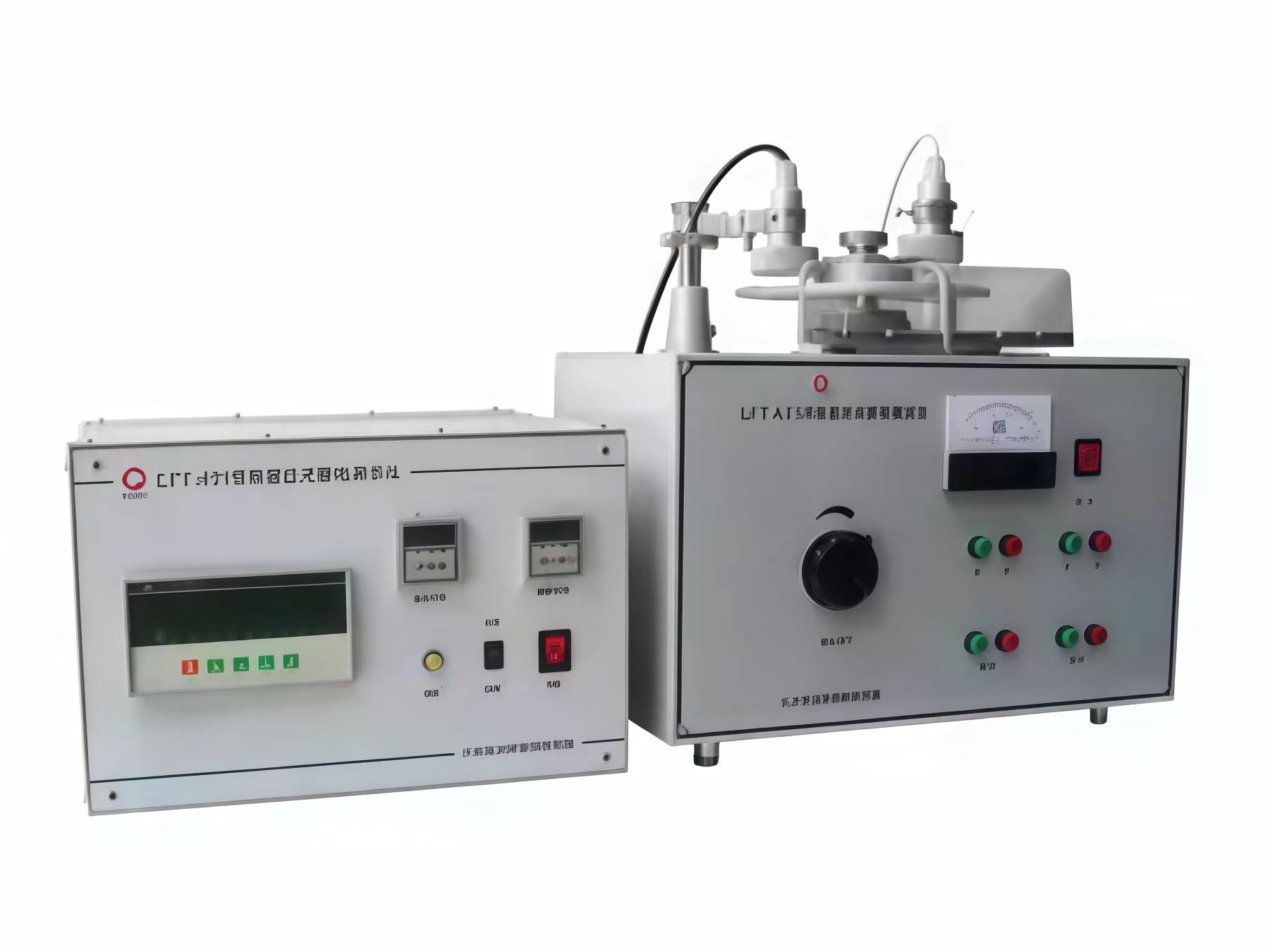
Core Advantages: Multi-Dimensional Parameters for Comprehensive Control
The Carpet Static Electricity Tester is not merely a measuring device, but a complete static performance analysis system. Its core testing capabilities cover multiple key indicators, including:
Static Voltage Decay Time (Half-Life):
Accurately records the time required for static charges to decay from the initial value to a specified percentage, providing a direct evaluation of the material’s charge dissipation speed.
Surface Resistivity and Volume Resistivity:
Evaluate the ability of charges to spread and dissipate across the material surface and through its internal structure, helping to assess the material’s electrostatic control performance.
Triboelectric Charging Voltage:
Quantifies the tendency of materials to generate static electricity under dynamic friction conditions, enabling the prediction of potential electrostatic shock risks.
Data Visualization:
Some advanced models are equipped with computer-controlled systems that can display real-time voltage–time curves, automatically record the maximum voltage value, and ensure excellent data repeatability and measurement accuracy.
Multi-Dimensional Application Scenarios of Carpet Static Electricity Tester
In modern architectural and industrial environments, static electricity not only affects human comfort but can also become a potential safety hazard. As a widely used floor covering material, the electrostatic performance of carpets is directly related to usage safety and environmental stability. With its ability to accurately simulate the static electricity generated during real walking friction, the Carpet Static Electricity Tester has become an essential tool for ensuring the safety performance of flooring materials. The following section provides an in-depth analysis of its applications in various key fields.
1. Carpet Manufacturing Industry
Leading carpet manufacturers integrate the walking-type carpet static electricity tester into their routine production quality control processes. The equipment is used for batch sampling tests on finished products, including hotel carpets, residential carpets, and commercial carpet tiles.
By measuring the peak static voltage generated during simulated walking, manufacturers can strictly evaluate whether the anti-static performance of carpets meets required standards. The test results help optimize raw material formulations, weaving processes, and the proportion of anti-static additives. By improving electrostatic performance at the production stage, manufacturers can eliminate products with excessive static electricity and enhance the overall quality and reliability of finished carpets.
2. Commercial Buildings and Public Facilities
After carpet installation in large public spaces such as office buildings, shopping malls, hotels, and exhibition centers, engineering quality inspectors use this equipment to conduct on-site walking simulation tests.
The anti-static performance of carpets is considered an important acceptance criterion during project inspection. The test ensures that carpets will not generate excessive static electricity caused by frequent human movement after being put into use, thereby improving walking comfort and maintaining a safe indoor environment in public areas.
3. Electronic Manufacturing and Precision Industrial Facilities
Special industrial environments, including semiconductor production workshops, precision instrument assembly areas, and cleanrooms for communication equipment manufacturing, have extremely strict requirements for electrostatic control.
Excessive static electricity in these environments can easily damage sensitive electronic components, cause electrostatic discharge failures, and affect the normal operation of equipment. Therefore, anti-static carpets used in such facilities must pass walking simulation static electricity tests to verify whether the amount of static charge generated under daily walking conditions complies with workshop electrostatic protection requirements.
By evaluating the electrostatic performance of flooring materials, the tester helps establish a reliable static protection barrier from the ground level.
4. Healthcare Facilities and Clean Environments
High-level hygiene environments, such as hospital wards, operating rooms, and pharmaceutical production cleanrooms, require not only strict environmental cleanliness control but also effective static electricity management.
Using a walking-type carpet static electricity tester to evaluate the electrostatic performance of installed carpets helps prevent static electricity from attracting dust and microorganisms. It also reduces the risk of electrostatic discharge interfering with precision medical equipment, ensuring a stable, safe, and controlled healthcare environment.
5. Textile Research and Carpet Product Development
Textile research institutions and carpet technology development departments utilize this walking test equipment to evaluate new anti-static fibers, conductive yarns, and anti-static finishing agents.
By comparing the triboelectric charging performance of carpets produced with different modification processes and conductive fiber arrangements, researchers can investigate the relationship between raw material structures, finishing technologies, and electrostatic properties.
This supports the development of advanced functional carpets featuring low static generation, rapid charge dissipation, and environmentally friendly performance.
6. Quality Inspection Institutions and Third-Party Testing Laboratories
Building material quality supervision institutes and third-party textile testing laboratories use the walking-type carpet static electricity tester according to national testing standards to perform commissioned testing, quality inspections, and product certification services.
The equipment enables laboratories to issue authoritative test reports with legal validity, which can be used for market access evaluation, qualification assessment in bidding projects, and quality dispute arbitration between suppliers and buyers.
These testing activities help standardize production and application requirements throughout the carpet industry.
7. Residential Interior Decoration and Home Applications
In the home furnishing industry, walking static electricity tests are conducted on household carpets used in living rooms and bedrooms to improve user experience.
The testing process effectively addresses common problems associated with carpets in dry seasons, such as static shocks caused by walking, dust and hair attraction, and reduced comfort. By improving electrostatic control performance, manufacturers can enhance the comfort, user satisfaction, and market reputation of residential carpets.
Functions and Working Principle of Carpet Static Electricity Tester
The working principle of the Carpet Static Electricity Tester is based on a “mechanical simulation of human walking” mechanism.
The instrument is generally composed of a transmission system, rotating platform, insulating elastic plate, rolling body (simulating a shoe sole), measuring capacitor, and computer control system.
During testing, a carpet specimen with a diameter of 450 mm is placed on the circular rotating platform.
The rolling body moves back and forth across the surface of the specimen under a fixed pressure and speed, simulating the friction generated by human walking. The static charges generated during the friction process are collected and recorded by a high-precision sensor to measure the maximum voltage value. The system also generates a voltage–time curve to analyze the characteristics of charge accumulation and decay.
According to relevant testing standards, some models allow the test duration to be set at 30 seconds, 2 minutes, or 5 minutes to meet different testing requirements.
After the test is completed, the system automatically calculates the static voltage half-life, which refers to the time required for the static voltage to decrease from its peak value to half of the original value. This is a key indicator for evaluating the anti-static performance of materials. The shorter the half-life, the faster the material dissipates static electricity and the higher the safety performance.
Some advanced models are equipped with humidity control systems, allowing tests to be conducted under constant temperature and humidity conditions.
This helps reduce the influence of environmental factors on test results and improves data comparability and reliability.
The tester provides a more realistic simulation of actual usage conditions and is particularly suitable for applications requiring walking friction simulation.
It is regarded as an authoritative method for evaluating the overall electrostatic performance of carpets. The latest generation of instruments integrates AI algorithms, enabling automatic identification of abnormal data, automatic generation of test reports, remote monitoring, and cloud-based data management.
Some advanced systems have integrated multiple performance testing functions, including static electricity testing, abrasion resistance testing, and pilling resistance testing, significantly improving testing efficiency.
Portable handheld static electricity testers have also been developed. Although their accuracy is slightly lower than that of laboratory benchtop models, they offer convenient on-site rapid screening capabilities. For emerging environmentally friendly materials such as biodegradable carpets and recycled fiber carpets, testing parameters can be optimized to ensure accurate and reliable performance evaluation.
Conclusion
With increasing requirements for indoor environmental safety and comfort, the anti-static performance of carpets has become a key factor in evaluating the quality of mid-to-high-end carpet products.The Carpet Static Electricity Tester, featuring scientific and rigorous testing principles, standardized operating procedures in compliance with international requirements, and accurate and reliable data output, provides strong technical support for carpet manufacturers, third-party testing institutions, and end users.Choosing a professional Carpet Static Electricity Tester means more than selecting a testing instrument—it represents a commitment to safety, quality, and professional excellence.