

What is a static load test?
As a key material in interior soft decoration and commercial flooring applications, carpets are widely used in residential spaces, hotel lobbies, office buildings, exhibition halls, shopping malls, and other public environments. During long-term service, carpets are continuously subjected to static loads caused by stationary furniture, prolonged standing of people, heavy object placement, and other pressure conditions.The Carpet Static Load Tester adopts a constant static pressure loading method to accurately simulate the actual working conditions of carpets under long-term static compression. Through controlled loading, timed pressure holding, and precise displacement measurement, the tester quantitatively evaluates key performance indicators such as carpet thickness loss rate, residual deformation, and recovery resilience.Featuring stable operation, accurate measurement, and excellent adaptability to real application conditions, this equipment is an essential testing instrument for carpet manufacturers, soft furnishing and building material suppliers, third-party quality inspection organizations, and university material research laboratories.
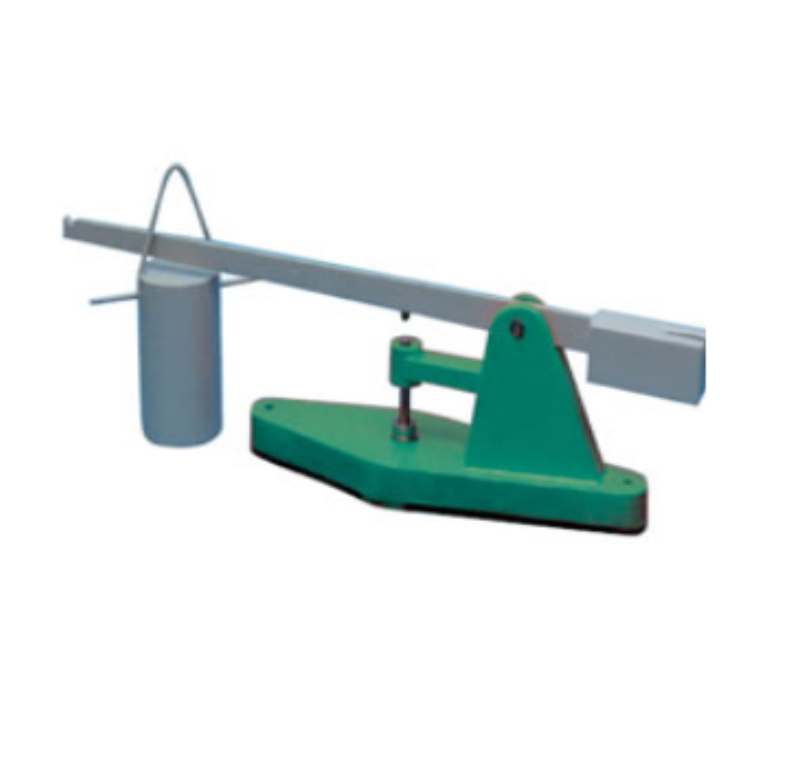
Components of Carpet Static Load Tester
1. The tester is equipped with an integrated thickened steel frame, anti-slip fixed base, and horizontal leveling knobs. The robust structure effectively minimizes slight vibrations during the loading process, ensuring stable operation. It guarantees that the compression plate moves vertically downward with uniform force distribution, providing a reliable foundation for standardized testing.
2. The system consists of standard national calibration weights, a vertical guide transmission mechanism, and a flat load-bearing compression plate, which provide accurate and constant static pressure loading. The compression plate maintains uniform force distribution without tilting, ensuring consistent pressure across the entire specimen area and fully complying with standard test conditions.
Equipped with a high-precision displacement sensor, thickness measurement probe, and data acquisition module, the tester can accurately capture thickness variations of the specimen at different testing stages. It achieves millimeter-level measurement accuracy, ensuring precise and reliable deformation and recovery rate data.
3. The tester features a touchscreen control panel, programmable timer module, automatic start/stop system, and audible & visual alarm device. It supports customized parameter settings and enables fully automated operation throughout the entire testing process, providing convenient operation and suitability for various testing applications.
The flat anti-slip test platform, specimen positioning limit plates, and flexible protective cushioning layer can securely fix carpet specimens of different sizes and materials, preventing specimen displacement during testing, reducing measurement errors, and ensuring high testing accuracy.
Testing Principles of Carpet Static Load Tester
1. Constant Static Pressure Uniform Loading Principle
The tester utilizes a standard calibration weight module and precision transmission structure to apply a constant vertical downward load to the compression plate. The pressure is evenly distributed across the surface of the carpet specimen, eliminating localized stress concentration.
Unlike manual loading methods, which suffer from inconsistent force application and pressure fluctuations, the tester achieves stable load output through mechanical weighting, accurately simulating real-life static loading conditions such as furniture placement, heavy object storage, and prolonged standing.
The constant pressure continuously compresses the surface pile fibers and internal cushioning layers of the carpet, precisely reproducing the physical changes caused by long-term loading, including fiber compaction and pore structure reduction. This ensures consistent test conditions for each test cycle and provides highly comparable and repeatable test results.
2. Timed Pressure Holding and Time Accumulation Principle
Permanent deformation of carpets is not caused by instantaneous loading but results from the cumulative effect of long-term pressure exposure. The tester is equipped with an intelligent timing control system, allowing users to set different pressure holding durations such as 5 minutes, 30 minutes, and 2 hours according to national standards and testing requirements.
Through continuous static pressure loading, the system accelerates the accumulation of fatigue damage, inducing failure phenomena such as carpet fiber compaction and cushioning layer compression relaxation.
Short-duration pressure holding is suitable for routine production quality inspection, while long-duration pressure holding is applicable for extreme performance verification of new products. This method effectively simulates aging and wear caused by long-term carpet usage while significantly reducing testing time, enabling rapid prediction of carpet surface collapse and durability performance after extended service.
3. Thickness Difference Deformation Quantification Principle
Thickness reduction and residual deformation are key indicators for evaluating the compression resistance of carpets. The tester is equipped with a high-precision displacement measurement module, which collects three sets of critical data:
Initial specimen thickness
Compressed thickness under pressure holding
Residual thickness after unloading and recovery
The built-in calculation system automatically determines the compression deformation rate and recovery resilience rate based on these measurements.
High-quality carpets feature excellent fiber elasticity and stable cushioning structures, allowing rapid recovery after unloading with minimal residual deformation. In contrast, carpets made with inferior fibers or weak cushioning structures are prone to irreversible permanent collapse after compression, resulting in significantly reduced recovery performance.
This principle converts subjective evaluations such as softness, comfort, and durability into accurate digital parameters, enabling objective classification and quality assessment of carpet performance.
4. Fiber Structure Fatigue Failure Evaluation Principle
Carpets are porous flexible fiber composite structures consisting of surface pile fibers, intermediate foam cushioning layers, and bottom anti-slip backing layers. Each structural layer has different compression resistance and recovery characteristics.
Under continuous static pressure, surface pile fibers gradually flatten and become compacted, reducing the gaps between fibers. Meanwhile, the intermediate cushioning layer undergoes both elastic and plastic deformation. With prolonged loading, plastic deformation continues to accumulate, eventually resulting in permanent compression and collapse.
Through standardized static compression testing, the tester can accurately distinguish between elastic deformation and permanent plastic deformation, identify weak points within the carpet structure, and evaluate the influence of fiber materials, weaving processes, and cushioning layer formulations. The obtained data provides reliable support for product design optimization and manufacturing improvement.
5. Intelligent Sequential Closed-Loop Control Principle
The tester is equipped with a programmable intelligent control system, enabling fully automated operation throughout the entire testing process, including loading, pressure holding, unloading, recovery resting, and data acquisition.
The system allows flexible setting of test parameters and automatically performs the complete test sequence. After completion, the tester automatically stops and stores all test data. It is also equipped with safety functions including overload protection, travel limit protection, and abnormal alarm functions.
The entire testing process requires no manual intervention. Test results are automatically recorded and securely stored, ensuring data traceability and integrity. The system fully meets the requirements of quality management systems and third-party inspection standards in the building materials industry, making it suitable for standardized and regulated quality control applications.
Application Scenarios of Carpet Static Load Tester
1. Carpet Manufacturing for Residential and Commercial Applications
Manufacturers of home carpets for bedrooms and living rooms can utilize the tester to perform routine static compression tests, optimize pile fiber materials, weaving density, and cushioning layer formulations. The equipment helps address common issues such as localized carpet collapse and reduced recovery performance caused by long-term furniture pressure, improving the surface flatness, walking comfort, and service life of household carpets while reducing after-sales quality complaints.
For specialized commercial carpets used in hotels, office buildings, exhibition centers, and other high-traffic environments, which are exposed to frequent usage and long-term pressure from standing personnel and office equipment, manufacturers can use this tester to evaluate compression resistance and durability. By identifying high-resilience and anti-collapse carpet products, manufacturers can better meet the long-term service requirements of commercial applications, ensuring stable installation appearance and extended product lifespan.
2. Outdoor Artificial Turf and Landscape Carpet Applications
Manufacturers of outdoor artificial turf and garden landscaping carpets can rely on the tester to simulate real operating conditions such as heavy object placement and long-term compression.
The equipment enables evaluation of artificial turf fiber resistance to compression flattening and recovery performance, helping optimize fiber formulations and weaving processes. This improves the weather resistance, durability, and long-term appearance retention of outdoor paving products.
3. Product Research, Development, and Quality Control Applications
Soft furnishing and building material R&D departments can use static load testing to compare the compression resistance and recovery characteristics of different fiber materials, cushioning structures, and weaving processes.
The test results help determine optimal product formulations and manufacturing processes for developing high-end carpets with excellent resilience, anti-collapse performance, and rapid recovery capability, thereby enhancing product competitiveness in the market.
Medium and large-scale carpet manufacturers can integrate the tester into their production quality control systems for batch sampling inspections. By strictly monitoring key performance indicators such as compression deformation rate and recovery rate, manufacturers can prevent products with insufficient compression resistance from entering the market, ensuring consistent product quality and maintaining brand reputation.
4. Material Engineering and Soft Furnishing Research Laboratories
Material engineering laboratories and soft furnishing design research centers can utilize the tester to investigate the influence mechanisms of fiber structures and cushioning materials on carpet compression resistance and recovery performance.
The equipment supports research and development of innovative flexible flooring materials and advanced carpet structures. Meanwhile, it can also serve as a professional training device for cultivating technical personnel in building material quality inspection, performance evaluation, and manufacturing process optimization.
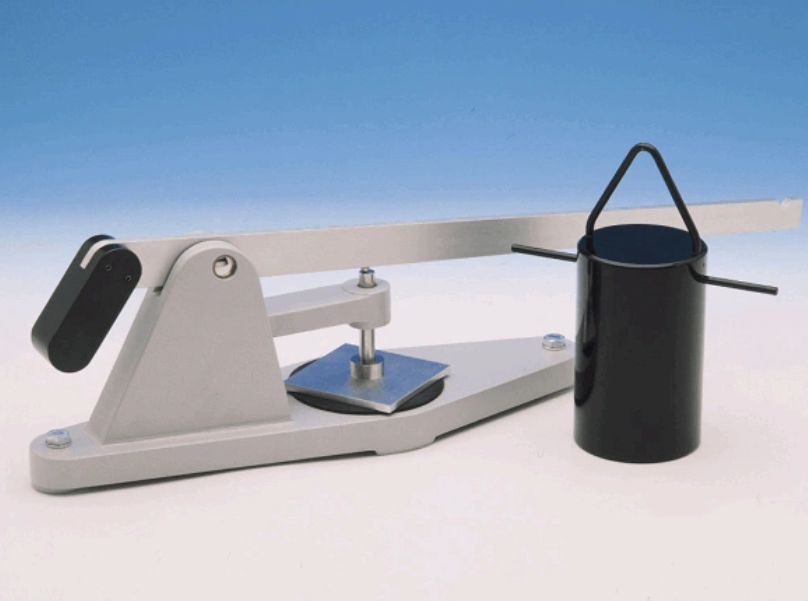
Importance of Carpet Static Load Tester
The core importance of the Carpet Static Load Tester lies in its ability to accurately simulate long-term static pressure conditions caused by furniture and other heavy objects, scientifically quantify carpet resistance to permanent deformation and recovery performance, and provide a critical testing method for ensuring installation appearance, service life, and product quality compliance.
1. Realistic Simulation of Actual Service Conditions
The tester transforms the common problem of permanent impressions left by furniture movement into a controllable laboratory testing process. By simulating long-term static compression conditions, it eliminates the subjectivity and uncertainty of traditional manual evaluation methods, enabling accurate and quantitative assessment of carpet performance.
2. Durability Performance Prediction
By measuring thickness loss and recovery performance after compression, the tester directly reflects the structural stability of carpet pile fibers and cushioning layers. It can provide early warnings of potential issues such as localized collapse, hardening, and reduced resilience after long-term use, helping manufacturers improve product reliability.
3. Support for Product Development and Process Optimization
The test results provide objective data for optimizing fiber material selection, backing layer formulation, and weaving density adjustment. This enables manufacturers to improve carpet fatigue resistance from the source, achieve a better balance between production cost and long-term durability, and develop higher-performance carpet products.
4. Quality Control and Product Compliance Verification
As a designated testing device for international and industry standards, the Carpet Static Load Tester serves as an essential compliance tool in third-party quality inspection, engineering acceptance, and brand quality control systems. It provides reliable test evidence for evaluating product performance and ensuring consistent manufacturing quality.
Conclusion
Overall, the Carpet Static Load Tester plays an important role in improving carpet product development efficiency and quality management. It not only provides objective technical support for fiber selection, backing material optimization, and weaving structure adjustment, helping manufacturers enhance product fatigue resistance at the source, but also serves as a professional testing solution recognized by industry standards.Through its application in third-party inspection, engineering project acceptance, and brand quality assurance systems, the tester provides reliable performance verification and compliance support for carpet manufacturers.We sincerely welcome customers to contact us for more information regarding technical specifications, application cases, and customized testing solutions. We look forward to discussing how this professional testing equipment can be integrated into your production and quality control processes to improve product performance and market competitiveness.