

What is a fabric fiber shedding degree tester?
The Fabric Hairiness Tester evaluates the degree of fiber shedding from the surface of textiles through quantitative testing by simulating friction during actual use. Its core value lies in establishing a standardized quality evaluation method, providing comparable data on fabric hairiness performance for the textile industry. This article will introduce the equipment from the following aspects and aims to provide useful information and guidance.
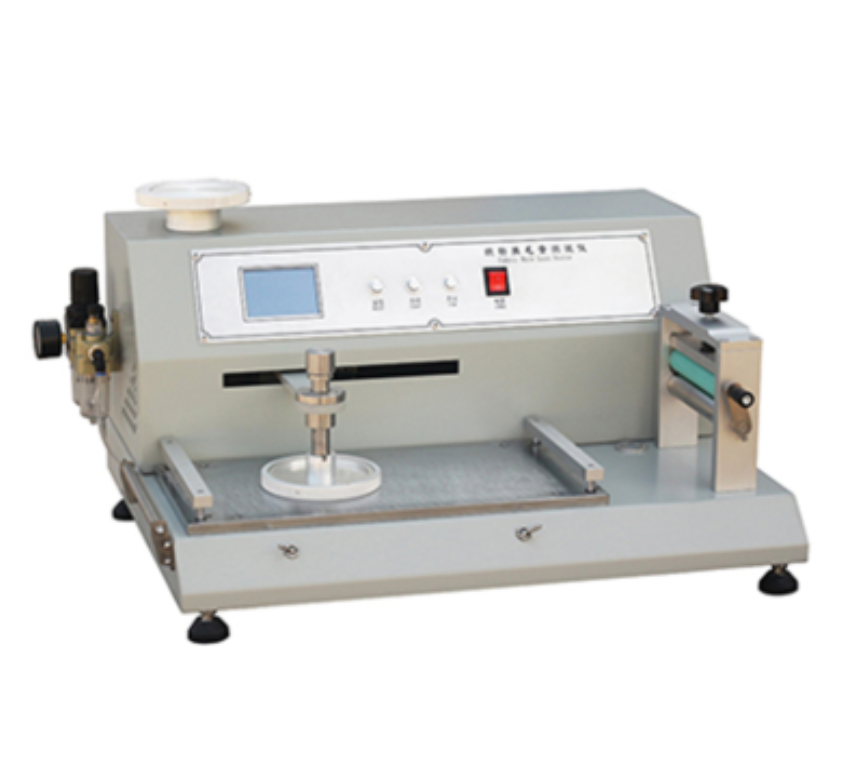
Test Principle of Fabric Hairiness Tester
Friction Method
The Fabric Hairiness Tester (Friction Method) mainly consists of a main frame, weights, clamping device, friction head, reciprocating movement mechanism for the friction head, touchscreen, control system, and other components.
The friction cloth clamping system adopts a quick installation and removal structure, making operation convenient and efficient. The reciprocating movement mechanism of the friction head is controlled by a stepper motor, ensuring stable and adjustable movement speed. The friction head can move vertically up and down freely, providing uniform and stable applied pressure during testing.
A textile liquid pick-up padding device can be optionally equipped to control the moisture content of the wet friction cloth. This method is applicable to fabrics with raised surface styles, such as brushed fabrics, napped fabrics, cut pile fabrics, velour fabrics, and terry fabrics. Other types of fabrics can also be tested according to this method as a reference.
During the test, the specimen is fixed onto the clamp, and a cotton friction cloth with a moisture content of 100% is used as the wet abrasive material. Under a specified load, the friction cloth performs reciprocating friction strokes (usually 10 cycles) over a defined distance. After testing, the amount of fibers transferred and attached to the abrasive cloth is evaluated by visual comparison with standard photographic samples. The grading scale ranges from Grade 5 (no fiber shedding) to Grade 1 (severe fiber shedding). A lower rating indicates a more serious degree of fabric hairiness or fiber shedding.
Product Features of Fabric Hairiness Tester
The tester adopts a servo motor-driven linear guide system to ensure that the friction head performs reciprocating motion at a constant speed of 30 cycles/min with a stroke length of 200 mm, effectively simulating the friction frequency and movement range during daily human activities. The friction head applies a constant load of 595 g ± 1 g, which is achieved through precision weights or a pneumatic loading system with stepless adjustment, ensuring consistent pressure between different test specimens.
The friction material is cotton fabric with a moisture content of 100 ± 5%, which simulates fiber shedding conditions under human perspiration or washing environments. Moisture reduces the friction force between fibers, making it easier for fibers to be pulled out from yarn structures and allowing the test results to better reflect actual usage conditions.
The equipment accurately captures the entire process of fiber behavior, from fiber raising (fiber ends being pulled out) → entanglement (fibers hooking together) → pilling (fiber mass expansion and formation) → shedding (fatigue fracture and detachment), providing microscopic data support for process optimization. High-strength fibers are less likely to break but may form persistent pills, while short fibers have more exposed ends and are easier to pull out, resulting in more significant fiber shedding.
The testing environment should be controlled at 20 ± 2°C temperature and 65 ± 4% relative humidity to prevent abnormal fiber adhesion caused by static electricity accumulation in dry conditions, which may affect the accuracy of hairiness measurement. Studies show that when relative humidity is below 40%, electrostatic adsorption effects can cause deviations of more than 30% in test results.
The tester is equipped with a built-in high negative-pressure suction system that collects shed fibers through a specially designed filter bag, eliminating contamination caused by manual cleaning. After testing, the abrasive cloth with attached fibers is compared with Grade 5 standard photographic samples (Grade 5 = no fiber shedding, Grade 1 = severe fiber shedding) to achieve non-contact visual evaluation with reduced subjective errors. This method is currently the only evaluation method recognized by national standards in the industry.
Applicable Industries of Fabric Hairiness Tester
I. Application Scope
Medical Protective Materials
In medical protective materials, the tester is used to determine the lint generation and particulate matter index of nonwoven fabrics under dry conditions. Excessive lint shedding can directly threaten the sterile environment during surgical procedures. Therefore, this test has become a mandatory evaluation procedure for medical device registration and quality control.
Automotive, Aviation, and High-Speed Rail Interior Materials
For flocked fabrics used in aircraft seats, high-speed rail interiors, and premium automotive door panels, fiber shedding not only affects appearance but may also block precision ventilation systems or electronic components. By calculating the fiber shedding rate, different materials can be classified and evaluated to ensure long-term stability under continuous vibration and friction conditions.
Down Jacket and Functional Textile Industry
Although down jackets use down as the filling material, fiber shedding from the outer fabric may cause down leakage and increase cleaning difficulties. The tester is used to evaluate the anti-down leakage and anti-shedding performance of outer shell fabrics, becoming an important tool for high-end brands to distinguish between genuine down-proof fabrics and inferior alternatives.
Intelligent Detection and Automated Evaluation Development
Although some studies have proposed using deep learning models to automatically identify fiber density on abrasive materials, no universally accepted industry algorithm has been established yet. At present, mainstream manufacturers still rely on manual visual grading, and achieving consistency above 90% remains challenging.
IoT and Digital Twin Applications
The large-scale implementation of IoT and digital twin technology in fiber shedding testing has not yet been achieved. Some advanced testing equipment has integrated Wi-Fi modules to enable cloud-based data transmission; however, the lack of unified data standards and platform compatibility prevents the establishment of complete production batch traceability systems. Digital twin simulations for predicting fiber shedding trends are still mainly limited to university research laboratories and have not yet been widely adopted in industrial R&D processes.
Importance of Fabric Hairiness Tester
The Fabric Hairiness Tester plays a crucial role throughout the textile industry supply chain. Its importance is mainly reflected in several aspects, including quality control, consumer experience improvement, production process optimization, and safety compliance in specific industries.
1. Objective Quality Quantification and Elimination of Subjective Errors
Traditional evaluation of fabric hairiness often relies on manual visual inspection or hand-touch assessment, which is highly affected by the tester’s experience, lighting conditions, and personal judgment. This may result in poor consistency and limited comparability of test results.
The Fabric Hairiness Tester converts the vague sensory perception of "fiber shedding" into a repeatable, traceable, and objective quality indicator through standardized mechanical friction and precise fiber collection systems. This standardized testing method provides a unified quality evaluation basis for brands, manufacturers, and testing institutions, ensuring consistency, fairness, and reliability in product grading.
2. Improving Consumer Experience and Protecting Brand Reputation
Fiber shedding is one of the common causes of consumer complaints. During wearing or washing, loose fibers from textiles not only affect the appearance of garments but may also cause discomfort, such as skin irritation or fiber contamination on other clothes.
By using the tester to identify high-risk fabrics during the research, development, and production stages, companies can effectively reduce the risks of large-scale customer complaints and product returns. For premium brands, stable low-shedding performance is an important indicator of manufacturing quality and craftsmanship, directly influencing customer loyalty and brand value, while helping establish a market image of high-quality products.
3. Guiding Process Improvement and Reducing Production Costs
The tester is not only a final inspection device but also an effective feedback tool for product development and process optimization. It can quickly identify potential fiber shedding problems caused by factors such as poor-quality fiber materials, insufficient yarn twist, weak fiber cohesion, or improper finishing processes (such as washing, fiber removal treatment, or coating processes).
By analyzing test results, engineers can accurately optimize spinning parameters, fabric density, or chemical additive formulations to solve fiber shedding issues at the source. This proactive quality control approach helps prevent rework, product rejection, and material waste after production, significantly reducing after-sales costs and improving manufacturing efficiency.
4. Supporting Market Access and Standard Compliance
With the continuous improvement of national and international textile standards, fabric hairiness and fiber shedding performance have become important indicators for evaluating overall textile quality. The Fabric Hairiness Tester provides companies with reliable compliance verification and serves as a technical qualification tool for products entering large retail chains, e-commerce platforms, and international markets. It helps ensure that products meet relevant regulations and industry requirements.
Conclusion
In summary, as consumers continue to demand higher levels of comfort and quality from textiles, fiber shedding performance has become a key focus in brand quality control. Proper selection of testing equipment and strict implementation of testing standards can not only effectively monitor critical production parameters such as fiber removal treatment and washing processes but also significantly improve the market competitiveness and customer satisfaction of finished products.We sincerely welcome inquiries and discussions. Please feel free to leave a message or contact us directly, and we will provide more detailed product information and technical support.