

What is an Electronic Single Fiber Strength Meter?
Electronic Single Fiber Strength Tester is a professional testing instrument designed for accurately evaluating the tensile properties of individual fibers. It is mainly used to measure the breaking strength, elongation at break, elastic properties, and mechanical behavior characteristics of single fibers during the tensile testing process.Equipped with a high-precision load cell and an intelligent control system, the instrument enables automated test operation and accurate data acquisition. It is suitable for performance evaluation of various single fiber materials, including natural fibers, chemical fibers, glass fibers, carbon fibers, and other advanced fiber materials.By analyzing the mechanical properties of individual fibers, the tester provides reliable data support for fiber research and development, quality control, production process optimization, and the development of new fiber materials.
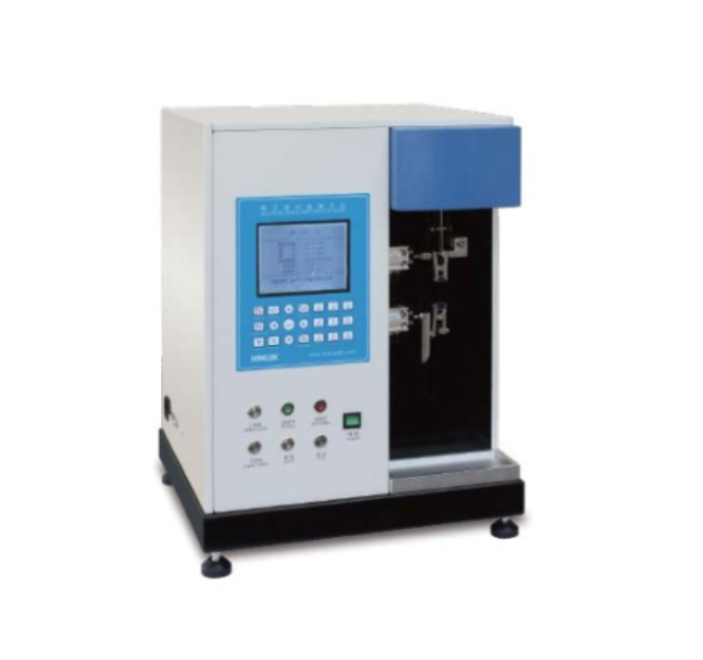
Wide Application Fields of Electronic Single Fiber Strength Tester
The Electronic Single Fiber Strength Tester is a professional instrument designed for accurately measuring the mechanical properties of individual fibers. Its applications cover various fields, including material research and development, quality control, standard testing, and performance evaluation. The major application areas are described below from the perspectives of industries, material types, and specific testing scenarios.
1. Textile and Apparel Industry
Fiber Raw Material Quality Testing
The tester is widely used for measuring the tensile strength and elongation at break of natural fibers such as cotton, linen, silk, and wool, as well as synthetic fibers including polyester, nylon, and acrylic fibers. It helps evaluate fiber spinnability and adaptability during textile processing.
Application Example:
In cotton yarn production, testing single fiber strength helps determine the expected yarn strength and reduces yarn breakage during weaving processes.
Yarn and Fabric Development
The instrument is used to analyze the strength compatibility of blended fibers (such as cotton/polyester blends) and optimize spinning processes. It is also applied to evaluate high-strength fibers, including aramid fibers and ultra-high molecular weight polyethylene (UHMWPE), used in special protective textiles such as bulletproof vests and firefighting clothing.
2. Composite Materials and Industrial Manufacturing
Reinforcing Fiber Performance Evaluation
High-performance fibers such as carbon fibers, glass fibers, and basalt fibers are widely used in aerospace components, wind turbine blades, and lightweight automotive parts. Single fiber strength testing is essential for ensuring the overall strength and reliability of composite materials.
Application Example:
Insufficient tensile strength of individual glass fibers used in wind turbine blades may increase the risk of blade damage or failure.
Rubber and Sealing Materials
The tester is used to evaluate reinforcing fibers, such as tire cord yarns, in rubber products to ensure the fatigue resistance and durability of tires, seals, and other industrial components.
3. Scientific Research and University Laboratories
New Material Development
The instrument is used for mechanical characterization of advanced materials such as nanofibers and bio-based fibers (e.g., alginate fibers and chitin fibers), providing essential data for material modification and performance improvement.
Fundamental Material Research
Single fiber tensile testing helps researchers analyze the relationship between fiber molecular structures and mechanical properties, such as the influence of polymer chain orientation on the strength of polyester fibers.
4. Medical and Healthcare Applications
Medical Material Testing
The tester is used to evaluate the tensile strength of fibers used in medical products, such as surgical sutures (including absorbable polylactic acid sutures), medical nonwoven fabrics, masks, and gauze, ensuring product safety and reliability.
Biomedical Engineering Research
It can be applied to test the mechanical properties of fibers used in artificial blood vessels and tissue engineering scaffolds, helping simulate strength changes under physiological conditions.
5. Paper and Packaging Industry
Papermaking Fiber Quality Control
The instrument is used to measure the tensile strength of individual pulp fibers, wood fibers, and bamboo fibers, supporting the optimization of paper strength for packaging paper and specialty industrial paper products.
Packaging Material Development
It helps evaluate the mechanical properties of environmentally friendly fibers, such as hemp fibers and straw fibers, promoting the development and application of biodegradable packaging materials.
6. Aerospace and Defense Industry
High-Performance Fiber Applications
The tester is used to evaluate the strength of aramid fibers, carbon fibers, and other advanced fibers used in aerospace materials, ensuring the structural integrity of satellite components, rocket structures, and other products operating under extreme conditions.
Military Material Testing
It supports the mechanical performance evaluation of high-strength fibers used in bulletproof vests, armored vehicles, and other protective equipment to meet strict defense and safety requirements.
7. Other Specialized Applications
Environmental Protection Materials
The instrument is used to test biodegradable fibers, such as polyhydroxyalkanoates (PHA), to evaluate their durability, service performance, and degradation characteristics in natural environments.
Sports Equipment Industry
It is applied to analyze the tensile strength of high-performance fibers used in products such as badminton racket strings and fishing lines, helping optimize elasticity, durability, and resistance to breakage.
Detailed Working Principle of Electronic Single Fiber Strength Tester
The working principle of the Electronic Single Fiber Strength Tester is based on fundamental mechanical testing principles. By precisely controlling tensile loading, displacement measurement, and data acquisition, the instrument enables quantitative analysis of the mechanical properties of individual fibers. Its core operating principles can be explained from three aspects: the mechanical structure, sensor technology, and data processing system.
1. Mechanical Structure and Force Loading Principle
1.1 Clamping System
Function:
The clamping system securely fixes both ends of a single fiber to ensure uniform force distribution during the tensile test.
Structure:
Upper Clamp:
Connected to the load cell and moves vertically through the drive system to apply tensile force to the fiber.
Lower Clamp:
Fixed on the base of the instrument. Some models support adjustable pre-tensioning, such as applying initial tension through weights or spring mechanisms.
Key Design Features:
The clamping surfaces are usually designed with textured patterns or made of soft materials such as rubber or soft metal to prevent fiber slippage and avoid premature breakage caused by clamping damage rather than actual tensile failure.
1.2 Drive and Loading System
Power Source:
A servo motor or stepper motor drives the loading mechanism. Through transmission components such as lead screws and gears, rotational motion is converted into precise linear movement.
Loading Modes:
Constant Rate of Extension (CRE):
The most commonly used testing mode, where the fiber is stretched at a constant speed (for example, 10 mm/min) until rupture.
Constant Rate of Elongation / Constant Rate of Loading (CRL):
Different loading modes can be selected according to specific testing standards to ensure that the loading speed meets the requirements of the test method.
2. Sensor Technology and Data Acquisition Principle
2.1 Load Cell (Force Sensor)
Working Principle:
The force sensor is based on strain gauge electrical measurement technology. When the fiber is subjected to tensile force, the elastic body inside the load cell deforms, causing changes in the resistance value of the strain gauges. These resistance changes are converted into voltage signals through a Wheatstone bridge circuit. After signal amplification and filtering, accurate tensile force data is obtained.
Accuracy Requirements:
The force resolution can typically reach 0.1 cN (centinewton) or higher, making it suitable for precise micro-force measurement of individual fibers.
2.2 Displacement Sensor
Function:
The displacement sensor continuously records the movement distance of the clamps and calculates the elongation of the tested fiber.
Common Types:
Optical Encoder / Linear Scale:
Uses optical measurement principles to achieve high-precision displacement detection. Accuracy can reach approximately ±0.01 mm, making it suitable for advanced tensile testing applications.
Rotary Encoder:
Connected with the motor shaft and converts rotation pulses into displacement values. It offers a more economical solution, although its accuracy is generally lower than optical linear scales.
2.3 Data Acquisition and Processing System
Sampling Frequency:
The system typically provides a sampling frequency of ≥100 Hz to capture rapid force changes during fiber failure, including yield points and peak breaking force.
Signal Processing:
The analog signals collected from the sensors are converted into digital signals through an A/D converter. A microcontroller or computer-based testing software processes the data in real time, displaying the force–elongation curve and calculating key parameters, including:
Breaking strength
Elongation at break
Elastic modulus
Tensile deformation characteristics
3. Core Technologies and Innovations
3.1 Micro-Force Measurement Technology
For ultra-fine fibers, the instrument uses high-precision load cells and low-noise signal amplification circuits to minimize external interference, such as vibration and electrical noise. In high-precision applications, the tester is usually installed on a vibration-isolation platform to improve measurement stability.
3.2 Dynamic Response and Data Curve Fitting
The force variation at the moment of fiber breakage occurs within an extremely short time. Therefore, the instrument requires high-speed data acquisition capability. Advanced software algorithms are used to fit tensile curves, remove noise interference, and improve the accuracy of mechanical property analysis.
3.3 Automation and Intelligent Control
High-end electronic single fiber strength testers may integrate intelligent functions, including:
Automatic fiber feeding and positioning
Robotic clamping systems
Continuous multi-fiber testing
AI-based statistical analysis of fiber strength distribution
Prediction of overall material performance based on test results
4. Adaptation of Testing Principles in Typical Applications
4.1 Textile Fiber Testing
The instrument uses a constant-rate tensile method to obtain the strength–elongation curve of fibers. The curve provides information about fiber toughness, deformation behavior, and breaking characteristics, such as the fracture plateau region of wool fibers.
4.2 Reinforcing Fibers for Composite Materials
High-performance fibers, such as carbon fibers with tensile strength above 3000 MPa, require:
High-capacity load cells
Short gauge lengths (such as 5 mm)
High-precision gripping systems
These designs help prevent fiber slipping and ensure accurate strength measurement during testing.
4.3 Biomedical Fiber Testing
For biomedical fibers, testing conditions may need to simulate physiological environments. Some advanced instruments are equipped with liquid environment chambers for testing fibers in buffer solutions. The force sensor must also feature waterproof sealing and corrosion resistance.
5. Comparison with Other Tensile Testing Machines
5.1 Comparison with Yarn Strength Tester
| Item | Electronic Single Fiber Strength Tester | Yarn Strength Tester |
|---|---|---|
| Testing Object | Individual fiber | Multiple fibers/yarn bundle |
| Main Purpose | Micro-scale fiber mechanical analysis | Yarn tensile performance evaluation |
| Force Measurement | High precision micro-force measurement | Higher load capacity measurement |
| Typical Resolution | Up to 0.01 cN | Usually measured in cN or N range |
| Application Focus | Fiber research and material characterization | Yarn quality control and production testing |
5.2 Comparison with Universal Testing Machine
A Universal Testing Machine (UTM) is mainly designed for macro-scale material testing, such as metals, plastics, and composite sheets, with testing capacities often reaching the kN level.
The Electronic Single Fiber Strength Tester can be considered a specialized micro-scale tensile testing system. It focuses on the mechanical characterization of fine materials at the micrometer scale, providing higher sensitivity and accuracy for individual fiber analysis.
Summarize
In summary, the Electronic Single Fiber Strength Tester stands out for its unique advantages and high-precision performance in the field of micro-scale material mechanical characterization, making it a highly valuable testing solution for fiber performance evaluation.We sincerely welcome you to contact us through inquiries, messages, or direct communication. Our professional team is ready to provide more detailed information, including technical specifications, application cases, and customized testing solutions tailored to specific requirements.