

What is a textile formaldehyde content tester?
In daily life, the quality of textiles directly affects people's living experience, among which formaldehyde content is a key safety indicator. As a common organic compound, formaldehyde widely exists in various types of textile materials and is particularly common in textile products that have undergone finishing and processing treatments. To ensure the safety of textile use, it is essential to accurately determine the formaldehyde content. With the development of technology, textile formaldehyde content testing instruments have emerged and have gradually been introduced to the market, providing convenience for relevant industries to carry out testing work. This article will introduce this equipment from the following aspects, hoping to provide a reference for everyone.
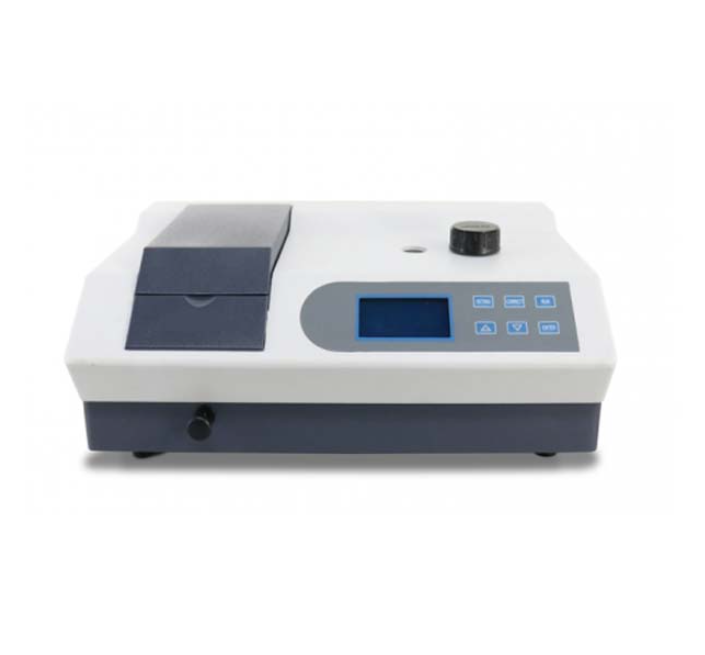
Characteristics of Textile Formaldehyde Content Testing Instrument
Nowadays, people pay increasing attention to the formaldehyde content in textiles and adopt various methods to remove formaldehyde. Using a textile formaldehyde content testing instrument for verification is highly beneficial. To help everyone better understand the textile formaldehyde content testing instrument, the equipment characteristics are introduced as follows:
The textile formaldehyde content testing instrument adopts a 7.1-inch LCD touch screen, allowing direct operation on the standalone unit without the need to connect to an external display system or control system.
The equipment is equipped with 12 testing channels, which can test 11 samples simultaneously, significantly improving testing efficiency.
The instrument adopts a high-precision rotating colorimetric cell design and uses the same light source calibration method to ensure measurement accuracy, making the test results more precise and reliable.
The instrument is equipped with a data storage function. It can store up to 100.000 sets of data, allowing users to visually check historical records on the screen and export data conveniently.
The built-in scanning function enables unlimited printing of sample information and test results.
The instrument adopts a highly integrated modular design and is equipped with an information management module and wireless transmission module. The test results can be analyzed, uploaded directly to a big data platform, and shared efficiently, facilitating future data statistics, analysis, and management.
The instrument features a high level of intelligence. It can automatically compare test results with the limit values specified in national standards and automatically determine whether the sample meets the requirements, making the results more intuitive.
Combined with sample information, the instrument allows independent editing of the parameters for each testing channel, such as the tested organization, testing personnel, and other relevant information.
The equipment is equipped with overvoltage protection, anti-static interference protection, magnetic field interference resistance, and other protective functions.
This equipment supports professional remote upgrading and software updates without the need to return the instrument for maintenance. In addition, future software versions will continue to be upgraded free of charge, reducing maintenance costs and transportation-related risks.
Principle of Textile Formaldehyde Content Testing Instrument
The textile formaldehyde content testing instrument adopts a high-sensitivity electrochemical sensor, combined with microcontroller technology and network communication technology, to collect and analyze formaldehyde contained in samples. The formaldehyde in textiles is first extracted with water and then absorbed by a phenol reagent solution to generate azomethine. Under acidic conditions, the azomethine is oxidized by ferric ions to form a blue-green compound. According to the color intensity of the solution after the reaction, the formaldehyde concentration can be quantitatively determined through on-site colorimetric analysis.
The results obtained through traditional detection methods are easily affected by environmental factors such as temperature, humidity, and atmospheric pressure, which may lead to numerical deviations. Relying on mature detection principles and intelligent algorithms, this instrument can automatically correct the interference caused by environmental factors, ensuring accurate measurement and strong stability. The equipment features reliable performance and wide applicability, and can meet the requirements for rapid and accurate formaldehyde concentration detection in multiple scenarios, including indoor home environments, office areas, textile workshops, and other application fields.
Operating Method of Textile Formaldehyde Content Testing Instrument
I. Preliminary Preparation
Sample Preparation:
Cut the textile sample into pieces of approximately 1 cm in size, and accurately weigh 1 g of the test sample.
Reagent Preparation:
Prepare the phenol reagent absorption solution, color-developing reagent, and distilled water, and prepare the required equipment including colorimetric tubes, volumetric flasks, and a constant-temperature water bath.
Turn on the instrument, allow it to complete the preheating process, calibrate the blank baseline, and set the required testing wavelength.
II. Extraction Operation
Place the accurately weighed sample into a conical flask, add a specified amount of distilled water, and seal the flask.
Place the conical flask into a constant-temperature water bath and perform constant-temperature oscillation for 60 minutes to ensure that the formaldehyde in the textile is fully extracted.
After standing and cooling, filter the solution to obtain a colorless extraction solution for testing.
III. Color Development Reaction
Take an appropriate amount of filtrate and place it into a colorimetric tube. Add the phenol reagent and mix thoroughly.
Then add the acidic color-developing reagent. Allow the solution to stand for a certain period of time in a warm water environment to ensure complete reaction and generate a blue-green complex compound.
IV. Instrument Testing
First, place the blank control solution into the instrument to complete zero adjustment and calibration.
Transfer the reacted test solution into a colorimetric tube and place it into the instrument’s colorimetric cell.
The instrument automatically performs spectrophotometric colorimetric analysis, reads the formaldehyde content value, automatically converts the data, and displays the test result.
V. Completion Procedures
After testing, remove the colorimetric tube, clean the laboratory utensils, turn off the instrument, and save the test data properly.
Importance of Textile Formaldehyde Content Testing Instrument
The textile formaldehyde content testing instrument plays a crucial role in quality control and safety assurance throughout the textile industry chain. Its importance is mainly reflected in the following aspects:
1. Ensuring Consumer Health and Safety
Formaldehyde, as a common industrial chemical, is widely used in textile processing for wrinkle resistance, shrink resistance, and durable printing treatments. However, residual free formaldehyde can be released through skin contact or inhalation, causing irritation and allergic reactions, and may even pose potential carcinogenic risks. The hazards are particularly significant for infants, young children, and sensitive groups.
The testing instrument can accurately and quantitatively detect the extractable free formaldehyde content in textiles, ensuring that products comply with relevant standards and preventing potential health risks at the source.
2. Ensuring Compliance and Market Access
Countries and regions around the world have strict regulatory requirements regarding the limits of harmful substances in textiles. Professional testing instruments use scientific methods such as ultraviolet-visible spectrophotometry to provide accurate and traceable testing data, helping enterprises obtain authoritative test reports, overcome international trade barriers, and avoid risks such as product recalls, fines, and legal disputes caused by excessive formaldehyde levels.
3. Improving Enterprise Quality Control Capability and Brand Reputation
This instrument is applied throughout the entire process, including raw material procurement, production process monitoring, and finished product inspection before shipment. Through rapid and accurate quantitative analysis, enterprises can adjust production processes and auxiliary agent usage in a timely manner, achieving refined quality management.
This not only helps reduce production costs but also builds a green and safe brand image, enhances market competitiveness, and promotes the textile industry toward sustainable development.
4. Ensuring the Scientific Accuracy and Fairness of Testing Data
Compared with portable household formaldehyde detectors on the market, which often have relatively large measurement errors, professional textile formaldehyde content testing instruments are equipped with high-precision optical gratings, automatic calibration systems, and strict environmental control capabilities. They can effectively eliminate interference factors and ensure accurate and reliable measurement data within the testing range.
The instrument serves as a technical foundation for third-party testing institutions, regulatory authorities, and large enterprise laboratories to conduct fair evaluations and quality assessments.
Conclusion
In conclusion, textile formaldehyde content testing instruments play a vital role in ensuring the health and safety of textile products. Although challenges still exist, with continuous technological advancement and improvements in regulatory systems, these instruments will continue to play a key role in ensuring that our clothing products are safe and environmentally friendly.They contribute to protecting consumer health, promoting sustainable development of the textile industry, and improving product quality assurance. We sincerely welcome everyone to leave inquiries or contact us directly. We will provide more detailed product information and technical support.