

What is the abrasion test for material?
In the fields of construction materials, home decoration, and industrial flooring, the abrasion resistance of flooring materials (such as floors, ceramic tiles, carpets, epoxy flooring, etc.) is a key indicator for evaluating their service life, safety, and maintenance costs. The Flooring Materials Abrasion Resistance Tester, as a professional device for evaluating this critical performance, provides scientific references for material research and development, quality control, and engineering acceptance by simulating the friction and wear conditions encountered during actual use.
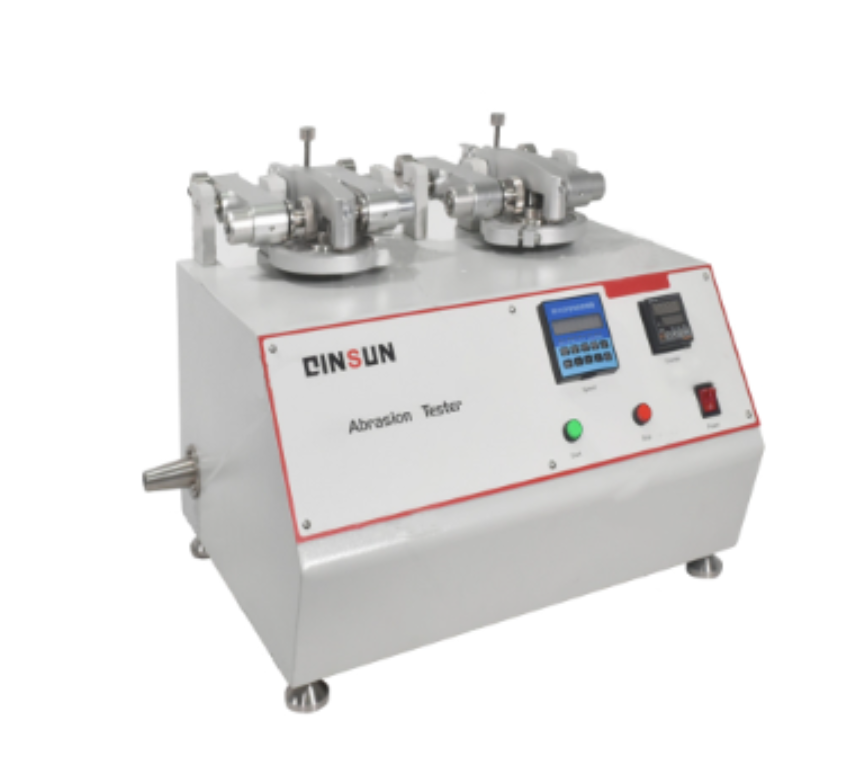
Principle of Flooring Materials Abrasion Resistance Tester
The core principle of the Flooring Materials Abrasion Resistance Tester is based on simulating the rolling friction, rolling fatigue, and reciprocating wear mechanisms that occur under actual usage conditions. Through applying a constant load, using standard casters, and controlling the specified speed and number of cycles, the instrument performs continuous reciprocating rolling friction on the surface of the specimen, creating controlled, repeatable, and comparable wear effects. The abrasion resistance performance is finally evaluated through appearance grading, weight loss measurement, thickness variation, or gloss change analysis.
The instrument simulates real-life situations where wheelchairs, carts, and chair casters repeatedly roll and slide across flooring surfaces, simplifying complex actual wear conditions into a standardized mechanical model consisting of vertical loading + cyclic reciprocating rolling motion. During the test, the specimen is fixed on a horizontal platform, and a set of standard casters is pressed against the specimen surface under a constant pressure. The motor drives either the platform or the casters to perform uniform linear reciprocating motion, causing the contact area to continuously experience rolling friction, compression, and shearing forces. As the number of reciprocating cycles increases, the material surface gradually develops wear, scratches, fuzzing, peeling, or damage.
This testing method complies with internationally and domestically recognized abrasion resistance testing standards. By controlling key parameters such as load weight, caster material and diameter, reciprocating speed, stroke length, and total number of cycles, the tester ensures that test results from different laboratories and different specimens are comparable. The instrument accurately records the number of wear cycles through a counter, and after the test is completed, the specimen is evaluated to quantitatively determine the ability of flooring materials to withstand caster rolling abrasion.
The fundamental principle is accelerated aging and equivalent wear simulation. By applying high-intensity and repetitive caster abrasion within a relatively short period, the tester effectively simulates months or even years of actual service wear, enabling rapid evaluation of whether the material meets practical application requirements.
Main Types of Equipment and Technical Features
According to different testing materials and motion methods, Flooring Materials Abrasion Resistance Testers can mainly be divided into the following categories:
1. Taber Abrasion Tester (Rotary Type)
Applicable Materials:
Plastics, rubber, coatings, textiles, floor tiles, glass, leather, paper, and other materials.
Technical Features:
High-Precision Control:
Equipped with a microcomputer control system, it can accurately set the rotation speed (such as 60 or 72 rpm), applied load, and number of test cycles.
Multi-Function Capability:
Supports various standard abrasive wheels and can simulate different testing conditions, including dry abrasion and wet abrasion.
Data Recording:
Equipped with a vacuum dust collection system to remove wear debris and ensure testing accuracy. It also features power-off memory function and real-time monitoring of abrasion data.
Standard Compliance:
Complies with international and domestic standards such as ASTM, ISO, and GB/T.
2. Cement Mortar Abrasion Testing Machine
Applicable Materials:
Cement mortar, concrete, stone materials, and other road and construction base materials.
Technical Features:
Specialized Structure:
Consists of a main unit, dust collector, and control box. The horizontal rotating disc maintains a stable speed of 17.5 ± 0.5 r/min.
Load Adjustment:
Supports load adjustment from 0.20 to 0.40 kN. Different pressure levels can be achieved by adding weights.
Automatic Operation:
Features digital cycle display with an error of ≤1/4 revolution. The machine automatically stops and provides an alarm when the preset number of cycles is reached.
Industry Standard Compliance:
Complies with industry standards such as JC/T and is widely used for road cement quality inspection.
3. Ceramic / Floor Tile Abrasion Tester
Applicable Materials:
Glazed tiles, polished tiles, antique tiles, sanitary ceramics, and other ceramic flooring materials.
Technical Features:
Abrasion Grade Determination:
Determines abrasion resistance grades (such as PEI grades) by evaluating material wear loss or visual changes under specified abrasives and loads.
Comprehensive Performance Evaluation:
Some high-end models can simultaneously evaluate the coefficient of friction (slip resistance) and scratch resistance.
Microscopic Analysis:
Combined with microscopes or profilometers, the tester can quantitatively analyze the width, depth, and morphology of worn areas.
4. Other Specialized Models
Akron Abrasion Tester:
Specially designed for vulcanized rubber materials (such as shoe soles and tires). It evaluates abrasion volume loss through inclined friction between a rubber wheel and an abrasive wheel.
Steel Wheel Abrasion Tester:
Suitable for metals, plastics, and surface-treated layers. It uses a standard steel wheel to perform rolling or sliding friction tests for evaluating wear resistance.
Operating Procedures and Maintenance Recommendations
To ensure the accuracy of test results and the long-term stability of the equipment, the following procedures should be followed:
Specimen Preparation:
Prepare and cut specimens strictly according to the relevant standards, clean the surface, and weigh and record the initial mass.
Parameter Setting:
Select the appropriate abrasive wheel, applied load, and number of test cycles according to the material type. For example, soft materials should use elastic abrasive wheels with a lower load, while hard materials should use ceramic abrasive wheels with a higher load.
Pre-Grinding Treatment:
For rough surfaces such as cement mortar specimens, pre-grinding should be performed to remove the surface laitance layer and improve the contact condition during testing.
Daily Maintenance:
Regularly clean the dust collection system and remove wear debris to prevent dust accumulation from affecting test accuracy.
Check the wear condition of the abrasive wheel and replace or calibrate it in time when necessary (for example, a new abrasive wheel should be pre-ground for 50 cycles before use).
Keep the equipment properly lubricated, regularly inspect transmission components and electrical connections, and ensure safe grounding.
Perform regular instrument calibration to ensure the traceability and reliability of test data.
Functions and Applications of Flooring Materials Abrasion Resistance Tester
The Caster Chair Abrasion Test is one of the most direct and practical methods for evaluating the durability of flooring materials, as it closely simulates real application scenarios. By simulating long-term wear caused by wheelchairs, carts, and office chair casters, the tester can accurately determine whether materials are prone to abrasion, exposure of the base layer, or damage under high-frequency use. It provides scientific data for predicting service life and supports product labeling with service life information and abrasion resistance grades.
In high-traffic environments such as hospitals, nursing homes, airports, shopping malls, and office buildings, flooring materials must have excellent caster abrasion resistance. The standardized test results provided by the instrument can serve as an important basis for engineering tenders, material selection, incoming material inspection, and quality arbitration. This helps prevent large-area damage caused by improper material selection, thereby reducing subsequent maintenance costs.
New material development companies can use the caster chair abrasion test to compare the effects of different formulations, structures, and surface treatment processes on abrasion resistance. By optimizing parameters such as base materials, wear-resistant layers, density, and thickness, manufacturers can improve the core competitiveness of their products. For products that fail to meet abrasion resistance requirements, the test can help identify weak points in wear performance and guide improvements in manufacturing processes.
The caster chair abrasion test complies with multiple domestic and international flooring material testing standards and is an essential inspection item for products entering the market and obtaining certifications such as green building materials, fire-resistant building materials, and engineering approvals. Through testing with this instrument, products can be ensured to comply with industry requirements and meet market access standards.
Flooring materials with poor abrasion resistance are prone to surface fuzzing, cracking, uneven surfaces, and other defects, which may create safety hazards such as tripping and slipping risks. By selecting high-quality materials through abrasion resistance testing, floor safety can be improved, replacement frequency can be reduced, and long-term usage costs can be lowered.
Different application environments have significantly different abrasion resistance requirements for flooring materials: residential environments generally require lower resistance levels, while hospitals and transportation facilities require extremely high durability. The caster chair abrasion test can classify products into different abrasion resistance grades, helping consumers and designers select suitable materials according to specific application conditions and achieve scientific material matching.
Products with reliable abrasion resistance performance are more likely to gain recognition from engineering customers, designers, and end users. Through standardized abrasion testing, manufacturers can provide authoritative data to demonstrate product quality, enhance brand credibility, and improve market competitiveness.
In summary, the Flooring Materials Abrasion Resistance Tester focuses on simulating real-life wear mechanisms and uses standardized, repeatable, and quantitative testing methods to accurately evaluate the abrasion resistance of various flooring materials. It is an essential quality inspection instrument in the modern building materials industry. The tester not only provides scientific support for product development, quality control, and engineering material selection but also plays an important role in ensuring usage safety, extending service life, and reducing overall social costs.We sincerely welcome your inquiries or direct contact with us, so that we can provide more detailed product information and technical support.