

What is the circular locus method?
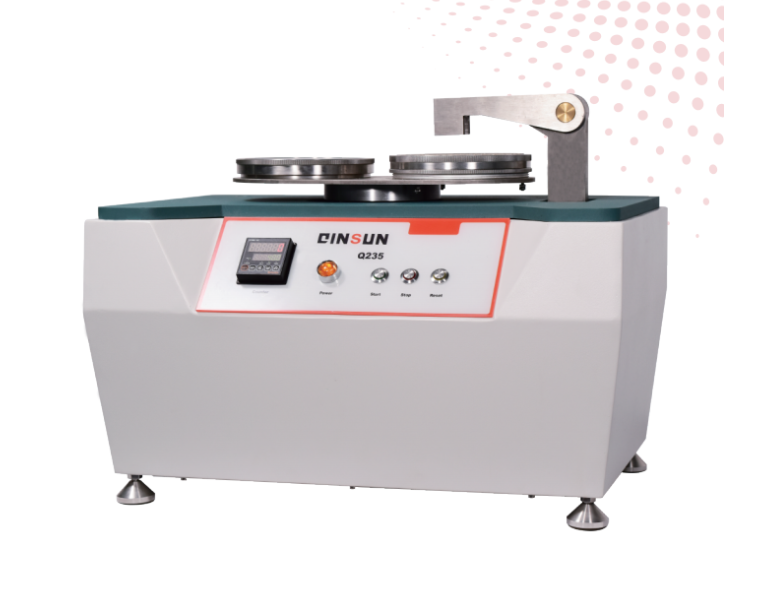
The Circular Locus Pilling Tester is one of the important quality testing instruments in the textile industry. It is designed to simulate the fuzzing and pilling phenomenon caused by friction during actual wearing and use of fabrics, thereby evaluating the abrasion resistance and anti-pilling performance of textiles.This article will provide a detailed introduction to the working principle, structural characteristics, operation process, and importance of the Circular Locus Pilling Tester, aiming to provide comprehensive technical references for textile enterprises and testing institutions.
Core Principle of Circular Locus Testing
First, compared with ordinary one-directional friction testing methods, the circular locus method can simulate the multi-directional and irregular rubbing friction conditions experienced by fabrics during human wearing, providing a high degree of simulation of actual fabric usage conditions.
During the test, the instrument drives the specimen to move along a standard circular locus, while a standard abrasive material or nylon brush is used for friction. This process fully reproduces the complete fabric process of “fuzzing → fiber entanglement → pilling.”
The working principle of the Circular Locus Pilling Tester is to simulate the friction, stretching, and other mechanical effects experienced by fabrics during wearing, thereby evaluating the degree of fabric fuzzing and pilling.
During the test process, the specimen mounted on the specimen holder continuously rubs against the friction wheel as the main unit rotates. At the same time, the specimen is also subjected to the stretching force applied by the friction wheel.
Under the combined effects of friction and stretching, the fibers on the fabric surface gradually become loose and form fuzz. When these fibers become entangled and gather into fiber clusters, pilling occurs.
By evaluating the degree of fuzzing and pilling, the quality and service life of the fabric can be assessed.
According to different fabric characteristics, two testing modes can be flexibly selected:
For lightweight fabrics that are prone to fuzzing, a combined friction test using a nylon brush and abrasive material is adopted.
For dense and stable fabrics, only abrasive friction testing can be performed under standard temperature and humidity conditions.
After the test is completed, the fabric’s anti-pilling performance grade can be obtained through visual evaluation by comparing the tested samples with standard photographic rating scales, providing a quantitative assessment of textile pilling resistance.
Structural Features of Circular Locus Pilling Tester
I. Main Components
The Circular Locus Pilling Tester mainly consists of the following parts:
1. Main Unit
Includes the mechanical transmission system and control system. The mechanical transmission system is responsible for driving the specimen to rotate, while the control system is responsible for controlling the entire testing process.
2. Specimen Holder
A support fixture used for placing the test specimen, generally made of metal materials.
3. Friction Wheel
A component that contacts the specimen during testing, generally made of soft materials such as rubber.
4. Power Supply
Provides electrical power support for the instrument.
II. Technical Features
The core technical features of the Circular Locus Pilling Tester are as follows:
1. Core Motion and Control
The instrument adopts a standard circular locus friction movement with a diameter of 40 mm. Most models are equipped with a PLC control system and a color touchscreen, supporting Chinese and English language switching. It provides convenient operation, stable running performance, and low operating noise.
2. Pressure and Brush Adaptability
The tester supports multiple adjustable specimen pressure levels and can be adapted to different fabrics, including chemical fiber fabrics, combed wool, and carded wool fabrics.
It is equipped with a standard nylon brush with an adjustable height range of 2–12 mm, ensuring uniform and stable fuzzing performance.
3. Testing Efficiency and Accuracy
Some multi-station models can complete tests on multiple samples simultaneously. The friction cycle number can be freely preset within the range of 1–99.999 cycles, and the rotation speed is stably controlled at 60 r/min, providing excellent test repeatability.
4. Compliance and Durability
The instrument complies with domestic and international standard requirements. The core components are mainly made of stainless steel materials, supporting long-term continuous operation.
Some models are equipped with built-in printing functions, making it convenient for test data storage and record keeping.
Operating Procedure of Circular Locus Pilling Tester
The circular locus method for fuzzing and pilling testing mainly follows the procedures below:
I. Test Preparation
Specimen Preparation
Cut five circular specimens with a diameter of 113 ± 0.5 mm from the fabric to be tested, and mark the reverse side of each specimen.
Additionally, cut one comparison specimen required for rating.
Place the specimens under standard atmospheric conditions (temperature: 20 ± 2°C, relative humidity: 65 ± 5%) for conditioning. The conditioning time is generally at least 16 hours.
Instrument Preparation
Ensure that the Circular Locus Pilling Tester is placed in a horizontal position and that the nylon brush remains clean.
If there are protruding nylon bristles on the nylon brush, use scissors to trim them evenly. If the brush fibers have become loose, remove them with tweezers.
Prepare the following materials:
Foam plastic pad;
Test specimens;
Fabric abrasive materials.
II. Test Procedures
Specimen Installation
Install the foam plastic pad, specimen, and fabric abrasive material sequentially onto the test clamp and abrasion platform.
The front side of the specimen must face outward.
The specimen clamp and abrasion platform perform relative vertical movement with a stroke of 40 ± 1 mm.
The relative movement trajectory between the specimen clamp and abrasion platform is a circle with a diameter of 40 ± 1 mm.
The relative movement speed is 60 ± 1 r/min.
Parameter Setting
Select the appropriate parameter category according to the type of fabric being tested.
For other fabrics not listed in the applicable table, similar fabric categories in the table or relevant regulations can be referred to when selecting suitable parameters.
The appropriate parameter category can also be selected according to the requirements for multi-directional abrasion resistance corresponding to the pilling test. However, the selected parameter category must be specified in the test report.
Start Testing
Press the “RUN” button, and the instrument will automatically operate according to the preset number of cycles.
When the preset number of cycles is reached, the instrument will automatically stop.
III. Rating and Recording
Rating Environment
Rating shall be carried out in the rating cabinet of a dark room to ensure that the evaluation environment meets standard requirements.
Along the fabric warp (longitudinal) direction, place one tested specimen and one untested specimen side by side in the center of the specimen board inside the rating cabinet.
The tested specimen shall be placed on the left side, and the untested specimen shall be placed on the right side.
Rating Method
The visual assessment method is used to evaluate the fuzzing or pilling grade of the specimen.
At least two evaluators shall independently rate each specimen according to the visual description standard.
If the evaluation result falls between two grades, a half-grade shall be recorded, such as 3.5 grade.
The test result of the sample shall be calculated as the average value of all evaluators’ ratings.
If the average value is not an integer, it shall be rounded to the nearest 0.5 grade, and a “-” symbol shall be used to indicate the range, such as “3-4”.
If the difference between an individual test result and the average value exceeds half a grade, the rating grade of each individual specimen shall be reported separately.
IV. Precautions
During testing, ensure that the instrument remains in good working condition and that the nylon brush and abrasive materials remain clean.
The specimen must be correctly and firmly clamped in the specimen holder to prevent falling off or shifting during the test.
During rating, unified standards and procedures shall be followed to ensure that the rating results are accurate and reliable.
By following the above procedures, the circular locus method can be used to complete the fuzzing and pilling test and obtain the corresponding rating results.
Importance of Circular Locus Pilling Tester
In the highly competitive textile market, product quality is the foundation for the survival and development of enterprises. Fabric fuzzing and pilling has always been one of the major challenges faced by textile manufacturers. The emergence of the Circular Locus Pilling Tester provides strong support for quality control in textile enterprises.
1. Efficient Testing Improves Production Efficiency
The Circular Locus Pilling Tester features efficient testing capabilities and can complete tests on multiple fabric samples within a short period of time, significantly improving testing efficiency.
Compared with traditional testing methods, this instrument reduces manual operation time and human errors, enabling fast and accurate test results.
For textile enterprises, this means they can promptly understand product quality conditions, adjust production processes and quality control measures, thereby improving production efficiency and reducing manufacturing costs.
For example, during the production process, enterprises can regularly conduct sampling inspections on products and use the Circular Locus Pilling Tester to quickly evaluate fabric fuzzing and pilling performance.
If fuzzing or pilling problems are found, enterprises can timely adjust raw materials, production processes, and other related factors to prevent unqualified products from entering the market and reduce economic losses.
2. Accurate Evaluation Supports Product Development
During the research and development process of textile products, the Circular Locus Pilling Tester plays a crucial role.
R&D personnel can use this instrument to evaluate the performance of different fabric materials, fabric structures, and finishing processes, and identify key factors affecting fabric fuzzing and pilling performance.
By studying and optimizing these factors, researchers can develop new fabrics with improved resistance to fuzzing and pilling.
For example, R&D engineers can try different fiber materials, adjust fabric structures, and adopt different finishing processes. The prepared samples can then be tested using the Circular Locus Pilling Tester.
By comparing the test results, the optimal process solution can be determined to improve product performance and quality.
At the same time, the instrument can provide detailed data support for researchers, helping them gain a deeper understanding of the mechanism of fabric fuzzing and pilling, and laying a foundation for further research and innovation.
3. Standardized Management Promotes Quality Improvement
The application of the Circular Locus Pilling Tester helps textile enterprises establish a standardized quality management system.
According to relevant standards and specifications, enterprises can develop detailed testing procedures and quality standards, and implement strict quality control throughout the processes of raw material purchasing, production process management, and finished product inspection.
Through regular testing with the Circular Locus Pilling Tester, enterprises can identify product quality issues in a timely manner and take effective corrective actions.
Meanwhile, enterprises can also use test results as an important reference for employee performance evaluation, encouraging employees to improve quality awareness and strengthen quality control during production.
This standardized management model helps improve the overall quality level of enterprises and enhance market competitiveness.
In conclusion, as an indispensable quality testing instrument in the textile industry, the Circular Locus Pilling Tester plays an extremely important role.By gaining an in-depth understanding of its working principle, structural features, operating procedures, and maintenance methods, we can make better use of this tool and contribute to the development of the textile industry.At the same time, we look forward to future technological innovations driving the Circular Locus Pilling Tester toward greater intelligence and efficiency, bringing more convenience and value to the textile industry.We sincerely welcome your comments or direct inquiries, so that we can provide you with more detailed product information and professional solutions.